Dinner · Part 1 of 3: Ingredients
Crockpot Boursin Sausage Rigatoni: 5-Ingredient Dump Dinner
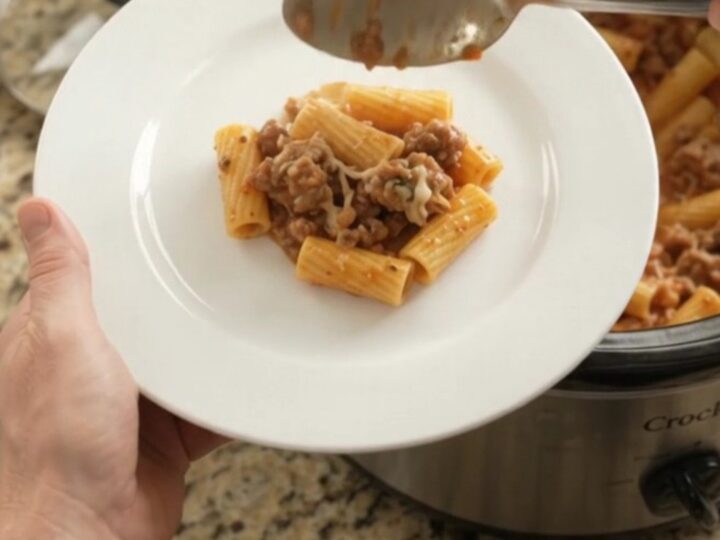
- Prep
- Cook
- Total
- Serves
- 6
This slow cooker rigatoni is the ultimate weeknight win: just brown some sausage, dump in pasta, sauce, and two kinds of cheese, then walk away. The Boursin melts into a creamy, garlicky sauce that clings to every tube, while the fontina adds a stretchy, golden top. It's a complete, hearty dinner that tastes like you simmered it for hours—because you did, but without any stirring. Perfect for busy evenings or lazy Sundays.
This recipe turns five simple ingredients into a rich, comforting pasta bake that cooks itself in the slow cooker. Browned Italian sausage brings savory depth, rigatoni holds up to the long cooking, and a jar of roasted garlic tomato sauce provides the base.
The Boursin cheese melts into a luscious, herb-flecked cream that mingles with the tomato sauce, while fontina adds a nutty, melty finish. Just layer everything in the Crockpot, set it, and forget it until dinnertime.
Ingredients
- 1 lb sweet Italian pork sausage, browned and crumbled
- 1 lb rigatoni pasta
- 1 jar (24 oz) roasted garlic tomato basil sauce
- 1 wheel (5.2 oz) garlic and fine herbs Boursin cheese
- 1 1/2 cups shredded Italian fontina cheese
Why this recipe works
The slow cooker does all the work: the low, steady heat gently cooks the pasta and sausage together, allowing the flavors to meld without any attention.
The Boursin, with its garlic and herbs, melts into the sauce, creating a creamy, luxurious texture that would normally require constant stirring. Because you don't stir during cooking, the cheeses stay on top, forming a golden, bubbly crust that contrasts with the saucy pasta beneath.
Rigatoni is the ideal shape for this dish: its ridges and wide tubes catch the sauce and meat, ensuring every bite is packed with flavor. The sausage is browned first, which adds a caramelized, savory note and renders some fat that helps keep the pasta moist.
This dump-and-go method means minimal prep and maximum reward—a meal that tastes like it came from a slow-simmered Italian kitchen, but with only 10 minutes of hands-on time.
Notes and substitutions
Choose a high-quality roasted garlic tomato basil sauce for the best flavor, as it's the backbone of the dish. If you prefer a spicier kick, use hot Italian sausage instead of sweet.
The Boursin cheese is essential for the creamy, herby sauce; don't substitute with plain cream cheese, as the herbs and garlic are key. Fontina melts beautifully, but you can also use mozzarella or provolone for a similar stretchy texture.
This recipe is designed for a 6-quart slow cooker; if yours is smaller, reduce the pasta to 3/4 pound. To ensure even cooking, spread the sausage and pasta in an even layer and pour the sauce evenly over the top. Resist the urge to stir during cooking—the layering helps the pasta cook evenly and the cheese to melt properly. If the sauce seems too thick at the end, stir in a splash of warm water or extra sauce to loosen it.
- sweet Italian sausage: spicy Italian sausage or ground pork with 1 teaspoon fennel seeds and 1/2 teaspoon red pepper flakes
- rigatoni: penne, ziti, or other short tube pasta—adjust cooking time if using a smaller shape
- roasted garlic tomato basil sauce: any high-quality marinara or tomato basil sauce (use about 3 cups)
- fontina: mozzarella or provolone for a similar melty texture
Equipment
- 6-quart slow cooker
- Large skillet
- Wooden spoon
- Measuring cups
- Serving spoon
- White dinner plate
Up next · Part 2 of 3
5 steps · 4 h of cooking · what to look for at each stage
Step-by-step instructions (Part 2)