Dinner · Part 1 of 3: Ingredients
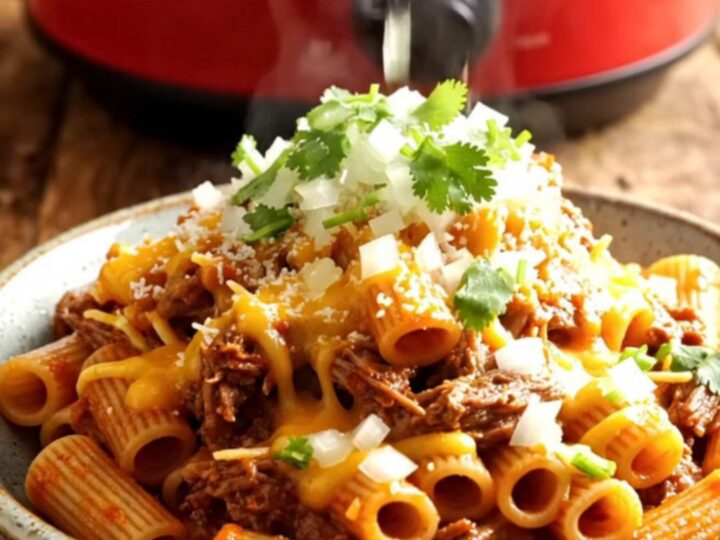
Crockpot Beef Birria Queso Pasta
- Prep
- Cook
- Total
- Serves
- 6
Transform your weeknight dinner routine with this viral Crockpot beef birria queso pasta. This dish masterfully blends the deep, complex flavors of traditional Mexican birria with the comforting, cheesy texture of a hearty pasta bake, creating a unique culinary experience that is both simple to prepare and incredibly satisfying for the entire family to enjoy during any busy week.
The beauty of this recipe lies in its simplicity and deep flavor profile. By utilizing a slow cooker, the tough beef chuck roast breaks down into tender, succulent strands while infusing with a rich consomme made from guajillo and ancho chilies, roasted tomatoes, and aromatic spices.
Once the beef is perfectly tender, it is combined with rigatoni and topped with Oaxaca cheese, which melts into the sauce to create a luxurious, creamy texture. It is a perfect dish for those who love bold flavors and comforting, substantial meals that feel like they come straight from a gourmet kitchen.
Ingredients
Birria Base
- 3 lb beef chuck roast
- 1 cup blended guajillo and ancho chilies
- 1 cup roasted tomatoes
- 4 cloves garlic
- 1 tbsp Mexican oregano
- 1/2 tsp cinnamon
- 4 cups beef stock
Pasta and Cheese
- 16 oz rigatoni
- 2 1/2 cups Oaxaca cheese
Garnish
- 1/2 cup diced white onion, for serving
- 1/4 cup fresh cilantro, for serving
- 1 unit lime, cut into wedges for serving
Why this recipe works
The slow-cooking method is essential for achieving the perfect tenderness in the beef chuck roast. By cooking the meat on a low setting for six hours, the connective tissues gradually break down, allowing the beef to become fork-tender and absorb the spicy, savory essence of the guajillo and ancho chili consomme.
This slow process ensures that every fiber of the meat is infused with deep, complex flavors that define classic birria.
Using the Crockpot also serves to concentrate the flavors of the sauce. As the beef cooks, the juices combine with the roasted tomatoes, garlic, and spices to create a thick, flavorful consomme.
This liquid acts as the perfect base for the pasta, ensuring that the rigatoni is coated in a rich, velvety sauce that is enhanced by the addition of the melted Oaxaca cheese, which adds a distinctively stretchy texture and mild creaminess to the final dish.
Notes and substitutions
When selecting the beef, choose a well-marbled chuck roast to ensure the final result is juicy and tender. The fat content in the roast is crucial for the richness of the consomme. If you cannot find Oaxaca cheese, a high-quality low-moisture mozzarella or a mild Monterey Jack will work as excellent substitutes, providing the necessary melt and stretch that this pasta dish requires for its signature texture.
The choice of rigatoni is deliberate because its sturdy, tubular shape is perfect for holding onto the thick, flavorful consomme and the shredded beef. If you do not have rigatoni on hand, you can substitute it with penne or ziti, which will also hold the sauce well.
Ensure the pasta is cooked al dente before mixing it with the birria, as it will continue to absorb the sauce while it sits with the cheese in the Crockpot.
- Oaxaca cheese: low-moisture mozzarella or Monterey Jack cheese
- Rigatoni: penne or ziti
Equipment
- 6-quart Crockpot
- large pot for boiling pasta
- colander
- tongs
- shredding forks
Up next · Part 2 of 3
3 steps · 6 h of cooking · what to look for at each stage
Step-by-step instructions (Part 2)