Dinner · Part 2 of 3: Instructions
Crockpot Apple Cider Sage Pot Roast Step-by-step instructions
- Prep
- Cook
- Total
- Serves
- 6
Before you start
Start by ensuring the beef is removed from the refrigerator about 20 minutes before you begin to allow it to take the chill off. Wash the butternut squash thoroughly and peel it before cutting it into uniform one-inch cubes.
Gather all your aromatics and ensure your slow cooker is clean and ready. Having everything prepped before you start the layering process makes the assembly quick and efficient, ensuring you spend less time working and more time enjoying the process.
Ingredients at a glance (6)
- 3 lb beef chuck roast
- 400 g butternut squash, cubed
- 300 ml unfiltered apple cider
- 1 cinnamon stick
- 8 fresh sage leaves
- 60 g salted butter
Instructions
Layering the Pot
- Prepare the CrockpotPlace the 3-pound beef chuck roast into the base of the slow cooker. Arrange the 400 grams of cubed butternut squash around the meat. The arrangement ensures even cooking throughout the long simmer time.Look for The beef and squash should fit comfortably in the base of the pot.Tip Ensure the squash is cut into uniform cubes for consistent tenderness.
At this stage, the crockpot should look full but not stuffed. The beef and squash are positioned to cook evenly, and the aromatics are strategically placed to begin the infusion process as soon as the heat is turned on.
Ensure that the pot is positioned on a stable, heat-resistant surface away from any water sources or flammable materials in the kitchen.
Infusing Flavors
- Add Aromatics and LiquidPour the 300 milliliters of unfiltered apple cider over the beef and squash. Add the single cinnamon stick and the 8 fresh sage leaves. Finally, place the 60 grams of salted butter on top of the roast. Cover the slow cooker with the lid.Look for The cider should partially submerge the ingredients.Tip Layering the butter on top helps it melt slowly into the cider as it heats.
The liquid is added to the pot, creating the base for the glaze. The butter sits on top, ready to melt slowly into the cider. Everything is now covered and ready to begin the transformation. Check that the seal of the lid is tight to ensure that moisture is retained throughout the long, slow-cooking process, which is critical for the final texture.
Simmering and Shredding
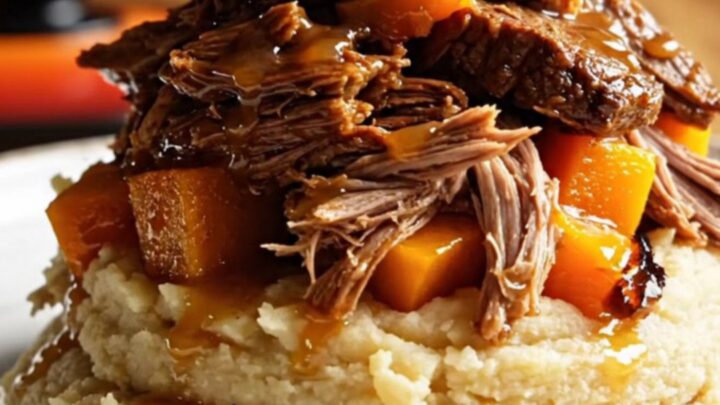
- Slow Cook and ShredSet the slow cooker to LOW and cook for 7.5 hours. The liquid will reduce into a thick, glossy amber glaze. Once the time is up, use two forks to shred the beef while mixing it with the glaze and squash. Ensure the beef reaches an internal temperature of at least 145°F (63°C) and let it rest for 10 minutes before serving.Look for The beef is done when it pulls apart easily with two forks and the cider has thickened.Safe temperature 145°F (63°C) internal temperature (steaks, chops and roasts)Tip If the sauce is too thin, remove the lid for the final 30 minutes of cooking.
After the long simmer, the kitchen will smell incredible. The beef should be extremely tender, and the cider glaze should have thickened considerably. When you lift the lid, the steam carries the scent of sage and cinnamon. Shred the meat directly in the pot, allowing it to soak up the remaining juices before serving it immediately while it is still hot.
Common mistakes
A common mistake is overcrowding the slow cooker with too many ingredients, which can prevent the cider from reducing properly. Another potential issue is lifting the lid too often during the cooking process; every time the lid is lifted, heat escapes and the cooking time is extended.
Finally, ensure you do not use salted butter if you are sensitive to sodium, as the reduction of the cider can concentrate the saltiness of the sauce significantly.
How to tell it’s done
The roast is perfectly cooked when the beef reaches an internal temperature of 145°F (63°C) and the fibers pull apart easily with minimal pressure from two forks. The butternut squash should be tender and hold its shape, not mushy.
Once the beef is shredded, the cider should have reduced into a glossy, amber-colored glaze that coats the meat and vegetables. Always use a digital thermometer to confirm the beef is done safely.
- Steaks, chops and roasts: 145°F (63°C) in the thickest part, then a 3-minute rest
Up next · Part 3 of 3
2 variations · storage & make-ahead · 3 answers · printable card
Tips, FAQ & printable recipe (Part 3)← Back to the ingredients (Part 1)