Dinner · Part 2 of 3: Instructions
Crockpot Apple Bourbon Pork Chops for an Easy Weeknight Dinner Step-by-step instructions
- Prep
- Cook
- Total
- Serves
- 4
Before you start
Before starting, ensure your slow cooker is clean and positioned on a stable, heat-resistant surface. Peel and slice your apples into uniform wedges to ensure they cook evenly.
Have your measured bourbon and brown sugar ready to go. If you are using a programmable slow cooker, ensure the settings are clear and the lid fits snugly to retain heat and moisture throughout the cooking duration.
Ingredients at a glance (4)
- 4 boneless pork chops
- 2 cups sliced apples
- 1/4 cup brown sugar
- 1/4 cup bourbon
Instructions
Preparation and Layering
- Prepare the Slow CookerPlace the raw boneless pork chops at the bottom of the slow cooker in an even layer. Ensure the meat is not overlapping excessively to allow for even cooking throughout the process.Look for The pork chops should cover the bottom of the slow cooker.Tip Pat the pork chops dry with paper towels before placing them in the cooker for a cleaner sear if desired, though not required here.
The pork chops are neatly arranged at the bottom of the slow cooker, ready to receive the flavorings.
Ensure the apples are distributed evenly over the meat, and the brown sugar is sprinkled across the surface to start the caramelization process once the heat is applied.
Flavor Infusion
- Add IngredientsScatter the sliced apples over the pork chops. Evenly sprinkle the brown sugar over the apples and the meat. Finally, pour the bourbon over the entire mixture to ensure all ingredients are lightly coated.Look for Ensure the sugar and bourbon are distributed as evenly as possible.Tip Use firm baking apples like Granny Smith or Honeycrisp to ensure they hold their shape during the long cooking time.
The bourbon is poured over the ingredients, beginning the infusion process. At this stage, the slow cooker is covered, and the environment is set to begin the slow breakdown of the pork fibers and the softening of the apple slices, creating a fragrant base for the sauce.
Final Cooking and Resting
- Cook and RestCover and cook on low for 4 to 6 hours or on high for 2 to 3 hours. Once the pork reaches an internal temperature of 145°F (63°C), remove the chops from the cooker. Let them rest on a plate for at least 3 minutes before serving to ensure the juices redistribute properly.Look for The pork is tender and the apples have softened significantly.Safe temperature 145°F (63°C) internal temperature (steaks, chops and roasts)Tip Use a meat thermometer to check the thickest part of the chop to ensure it has reached the safe temperature.
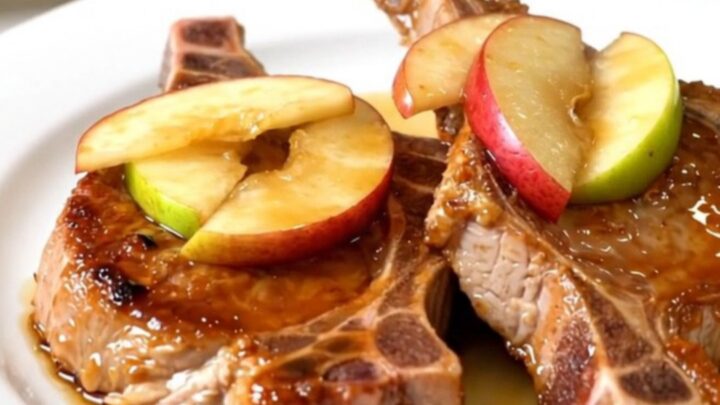
The pork has reached the required temperature and is tender to the touch. The sauce has thickened into a glossy, aromatic glaze. After resting, the meat is ready to be plated alongside the softened apples, ensuring the juices have settled for the best possible texture.
Common mistakes
A common mistake is overcrowding the slow cooker, which can prevent the pork from cooking evenly and may lead to excess liquid that does not reduce properly. Another error is using apples that are too soft, which will turn to mush during the long cooking time.
Avoid lifting the lid frequently, as each time you open the cooker, you lose heat and significantly extend the cooking time, which can lead to inconsistent results and tougher meat textures.
How to tell it’s done
The pork chops are done when they reach an internal temperature of 145°F (63°C). At this point, the meat should be opaque, tender, and easily pierced with a fork. The apples should be soft and translucent, having absorbed the bourbon and sugar juices.
Always use a meat thermometer inserted into the thickest part of the chop to verify the temperature, ensuring it has reached the safe level before removing it from the appliance.
- Steaks, chops and roasts: 145°F (63°C) in the thickest part, then a 3-minute rest
Up next · Part 3 of 3
2 variations · storage & make-ahead · 3 answers · printable card
Tips, FAQ & printable recipe (Part 3)← Back to the ingredients (Part 1)