Breakfast · Part 2 of 3: Instructions
Crispy Warm Katmer: Flaky Buttery Flatbread Step-by-step instructions
- Prep
- Cook
- Total
- Serves
- 8
Before you start
Before starting, gather all your ingredients and equipment. Measure the flour and salt into a large mixing bowl. Warm the water to about 110°F (43°C)—it should feel comfortably warm to the touch, not hot.
Melt the butter and mix it with the vegetable oil in a small bowl. Have a rolling pin, pastry brush, and a clean, floured surface ready. Line a tray with parchment paper for the dough balls. Set a damp kitchen towel nearby for covering the dough.
Ingredients at a glance (5)
- 4 1/2 cups all-purpose flour
- 1 tsp salt
- 2 cups warm water
- 200 g melted butter
- 1/2 cup vegetable oil
Instructions
Prepare the Dough
- Make the DoughIn a large bowl, combine the flour and salt. Gradually add the warm water, stirring until a shaggy dough forms. Turn the dough out onto a lightly floured surface and knead for about 8 minutes, until smooth and elastic. Divide the dough into 8 equal portions and shape each into a ball. Place the balls on a floured tray, cover with a damp towel, and let rest for 20 minutes.Look for The dough should be soft, smooth, and not sticky.Tip If the dough is too sticky, add a little flour; if too dry, add a teaspoon of water.
- Roll Out Thin LayersAfter resting, take one dough ball and roll it out on a floured board into a large, paper-thin circle, about 12 inches in diameter. The dough should be translucent enough to see your hand through. Repeat with the remaining balls, keeping the rolled-out sheets covered with a damp towel to prevent drying.Look for The dough should be thin and even, without tears.Tip Roll from the center outward, rotating the dough for an even circle.
- Brush with Butter MixtureIn a small bowl, mix the melted butter and vegetable oil. Using a pastry brush, generously brush the entire surface of each rolled-out dough sheet with the butter-oil mixture. Make sure to cover the edges well.Look for The dough should be fully coated and glistening.Tip Don't skimp on the butter—this creates the flaky layers.
- Fold and Roll into SpiralsFold the buttered dough sheet in thirds like a letter, then roll it up tightly from one short end to form a spiral wheel. Repeat with all sheets. Place the spirals on a plate, cover, and refrigerate for 15 minutes to solidify the butter layers.Look for The spirals should be tight and compact.Tip Chilling is essential for distinct layers.
At the end of this phase, you should have a smooth, elastic dough divided into 8 balls, rested for 20 minutes. The rolled-out sheets should be translucent and generously brushed with the butter-oil mixture.
The spirals should be tightly rolled and chilled for 15 minutes. The dough should feel cool and firm, ready for rolling.
Cook the Katmer
- Roll Out the SpiralsAfter chilling, take one spiral and roll it out with a rolling pin into a flat circle about 8 inches in diameter, just large enough to fit your skillet. The layers will become visible as you roll.Look for The dough should be flat and even, with visible spiral patterns.Tip Roll gently to avoid pressing the layers together.
- Cook in Hot SkilletHeat a dry skillet or griddle over medium-high heat. Place one rolled-out katmer in the skillet and cook for 1-2 minutes, until the bottom is golden and crispy. Brush the top with a little extra butter, then flip and cook the other side for another 1-2 minutes, until golden and puffed. Repeat with the remaining katmers.Look for The katmer should bubble and turn golden brown with crispy edges.Tip Adjust heat if browning too quickly; keep the skillet hot but not smoking.
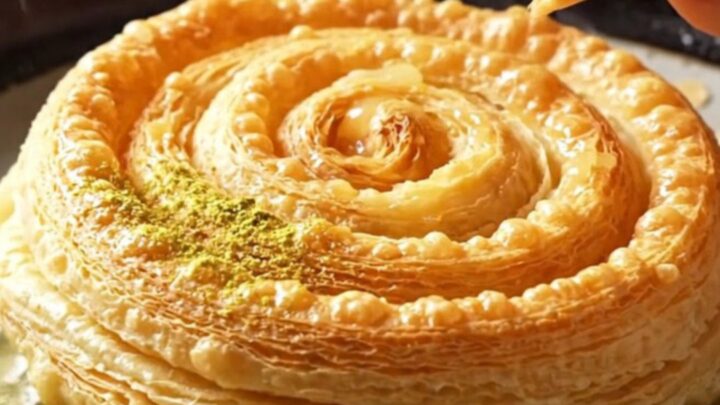
As you cook, the katmer should bubble and turn golden brown, with the edges crisping up. The aroma of butter will fill the kitchen. Each katmer should be cooked until both sides are deeply golden and the layers are visibly puffed. The finished bread should feel crisp on the outside and soft within.
Finish and Serve
- Shatter and ServeRemove the cooked katmer from the skillet and place on a cutting board. While still warm, squeeze the katmer between your hands to shatter the crispy crust, revealing the flaky layers. Serve immediately, warm, with additional butter if desired.Look for The crust should shatter audibly, revealing steamy, buttery layers.Tip Serve right away to enjoy the crisp texture.
The final katmer should be warm, with a shattering crust that reveals hundreds of flaky layers. When squeezed, it should crackle audibly. The interior should be steamy and buttery. Serve immediately to enjoy the contrast of crispy exterior and tender, layered interior.
Common mistakes
One common mistake is rolling the dough too thick, which prevents the layers from separating properly. Aim for paper-thin sheets. Another pitfall is not chilling the spirals long enough; if the butter is soft, the layers will merge, resulting in a denser bread.
Also, avoid overcrowding the skillet—cook one katmer at a time to ensure even browning. Finally, don't skip the final squeeze; it's what creates the shattering effect that makes katmer so fun to eat.
How to tell it’s done
The katmer is done when it is golden brown on both sides and feels crisp to the touch. When you squeeze it, the crust should shatter with a satisfying crunch, revealing steamy, flaky layers inside.
The bread should be cooked through, with no raw dough in the center. If you're unsure, you can peek at the layers—they should be fully set and lightly browned. Serve immediately for the best texture.
Up next · Part 3 of 3
4 variations · storage & make-ahead · 5 answers · printable card
Tips, FAQ & printable recipe (Part 3)← Back to the ingredients (Part 1)