Dinner · Part 2 of 3: Instructions
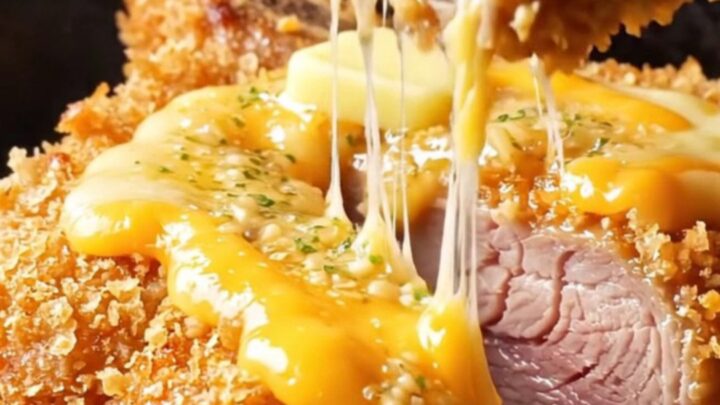
Crispy Tonkatsu Pork Chops with Torched Garlic Cheddar Step-by-step instructions
- Prep
- Cook
- Total
- Serves
- 2
Before you start
Before beginning, ensure all ingredients are measured and ready to go. Take the pork chops out of the refrigerator about 20 minutes before cooking to allow them to lose their chill, which ensures more even cooking. Prepare the breading station by arranging the flour, eggs, and panko in three separate, wide bowls.
Having everything organized will make the breading process smooth and prevent the breading from becoming messy. Ensure the kitchen torch is fueled and ready for the final step, and have a wire rack nearby to let the pork rest after frying.
Ingredients at a glance (6)
- 2 bone-in pork rib chops
- 1/2 cup all-purpose flour
- 2 large eggs, beaten
- 1 cup panko breadcrumbs
- 1 cup sharp cheddar cheese, shredded
- 3 tbsp garlic herb butter
Instructions
Breading the Chops
- Prepare the PorkPat the bone-in pork rib chops dry with paper towels. Set up a breading station with three shallow bowls: one with flour, one with beaten eggs, and one with panko breadcrumbs. Dredge each chop first in the flour, shaking off any excess. Dip the chop into the beaten eggs to coat completely, ensuring the eggs reach 160°F (71°C) when fully cooked in the next step, then press firmly into the panko until well-adhered on all sides.Look for The panko should form a thick, uniform crust around the entire pork chop surface.Safe temperature 160°F (71°C) internal temperature (egg dishes)Tip Press the panko firmly into the meat to ensure it does not fall off during the frying process.
The pork chops should be fully coated with a uniform layer of panko that clings firmly to the meat. The breading should not have any bare spots, and the flour should be invisible under the egg and panko layers. Check that the panko is pressed on securely; if it easily falls off when you lift the chop, press it again. Ensure the breading station is clean and the pork is ready for the hot oil.
Frying to Gold
- Pan-Fry to PerfectionHeat a heavy cast-iron skillet over medium-high heat with enough oil to cover the bottom. Once the oil reaches 355°F (180°C), carefully place the pork chops into the pan. Fry for 4 minutes per side until the crust is deep golden brown and the internal temperature reaches at least 145°F (63°C). Remove from heat, let the meat rest for 5 minutes, and prepare the toppings.Look for The panko crust should turn a rich, golden brown and the meat should be opaque throughout.Safe temperature 145°F (63°C) internal temperature (steaks, chops and roasts)Tip Maintain the oil temperature consistently to ensure the crust crisps without burning.
The pork chops should be a beautiful, deep golden brown on both sides. The sound of the frying should be constant and vigorous. If the sound is weak, the temperature is too low; if the crust turns dark brown instantly, the heat is too high. The meat should feel firm and the crust should appear dry and crisp. The internal temperature must be verified with a thermometer to ensure it has reached the target of 145°F (63°C).
Torching the Cheese
- Torch and ServeTop the cooked pork chops with the garlic herb butter and an even layer of shredded sharp cheddar cheese. Use a kitchen torch to melt the cheese until it is blistered, bubbling, and slightly browned. Serve immediately while the cheese is hot and stretchy, ensuring the pork remains juicy and the crust stays perfectly crunchy.Look for The cheese should be completely melted, bubbling, and show charred spots from the torch.Tip Move the torch in steady, sweeping motions to avoid burning the cheese unevenly.
The cheese should be completely melted, bubbling, and have a slight charred appearance from the torch. The garlic herb butter should be melted into the cheese and the panko crust. The dish should smell intensely of toasted garlic and savory, browned cheese.
If the cheese is still solid in areas, continue torching in small, controlled movements until it is entirely liquid and bubbly. Serve immediately while the cheese is at its peak texture and temperature.
Common mistakes
A common mistake is overcrowding the skillet, which drops the oil temperature and leads to a soggy crust rather than a crispy one. Always fry in batches if necessary. Another error is not patting the pork dry before breading; excess moisture prevents the flour from adhering and creates steam that ruins the crunch.
Finally, do not rush the torching process. If the torch is held too close or in one spot for too long, the cheese will burn before it has a chance to melt through the panko crust.
How to tell it’s done
The pork is done when the internal temperature reaches 145°F (63°C). Use a digital meat thermometer inserted into the thickest part of the chop, away from the bone, to confirm. The outside should be a deep, golden brown and feel firm to the touch.
Once reached, let the meat rest for at least 5 minutes. This resting period is critical, as it allows the juices to redistribute throughout the muscle fibers, ensuring the final bite is succulent, tender, and perfectly cooked throughout.
- Steaks, chops and roasts: 145°F (63°C) in the thickest part, then a 3-minute rest
- Egg dishes: 160°F (71°C) in the thickest part
Up next · Part 3 of 3
2 variations · storage & make-ahead · 3 answers · printable card
Tips, FAQ & printable recipe (Part 3)← Back to the ingredients (Part 1)