Dinner · Part 2 of 3: Instructions
Crispy Taiwanese Beef Shank Scallion Pancake Rolls Step-by-step instructions
- Prep
- Cook
- Total
- Serves
- 2
Before you start
Before beginning, ensure all ingredients are measured and ready for assembly. Thaw the scallion pancakes if they were frozen, and slice the beef shank into thin, uniform pieces. Prepare the cilantro by washing and drying it thoroughly, then chopping it into manageable sprigs.
Have your workstation clear, with the griddle preheated and a sharp knife ready for the final slicing step. This organization ensures that the cooking process moves quickly and efficiently once the heat is applied to the pancakes.
Ingredients at a glance (6)
- 2 pieces scallion pancake, store-bought or made ahead
- 50 ml sweet bean paste
- 1/2 lb five-spice sliced beef shank
- 2 slices provolone cheese
- 1/4 cup fresh cilantro, chopped
- 4 spears raw scallion spears
Instructions
Layering the pancake
- Prepare the layersLay the scallion pancakes flat on a clean workspace. Using a pastry brush, spread the sweet bean paste evenly across the surface of each pancake. Arrange the five-spice sliced beef shank, raw scallion spears, and fresh cilantro over the sauce. Top each with a slice of provolone cheese.Look for The sauce should cover the pancake surface completely to ensure every bite is flavorful.Tip Ensure the beef is sliced thinly to make rolling easier and to improve the final texture.
The pancake should be laid flat, with the sweet bean sauce spread evenly to the edges. The beef, scallion, and cheese should be distributed in a balanced manner to ensure each segment of the roll contains all components. Check that the ingredients are not piled too high, as this will prevent the pancake from rolling tightly and could lead to leakage during the searing process on the hot griddle.
Searing the roll
- Sear the pancakePreheat the iron flat-top griddle to 400°F. Place the loaded pancakes onto the dry surface. Sear for 2 minutes per side. The internal temperature of the beef must reach 145°F (63°C) to ensure it is thoroughly heated through. Let the meat rest for at least 3 minutes before final assembly.Look for The pancake should puff up and develop a shatteringly crisp, golden brown exterior.Safe temperature 145°F (63°C) internal temperature (steaks, chops and roasts)Tip Watch the griddle temperature closely to prevent burning the delicate layers while the cheese melts.
The pancake should be sizzling as soon as it hits the iron surface. Watch for the golden color developing on the bottom and the puffing of the layers. The cheese should begin to melt, creating a slight drip that caramelizes against the griddle.
Ensure the beef is heated through to 145°F (63°C) and the pancake is sufficiently crisp on both sides before removing it from the heat for the final assembly.
Rolling and slicing
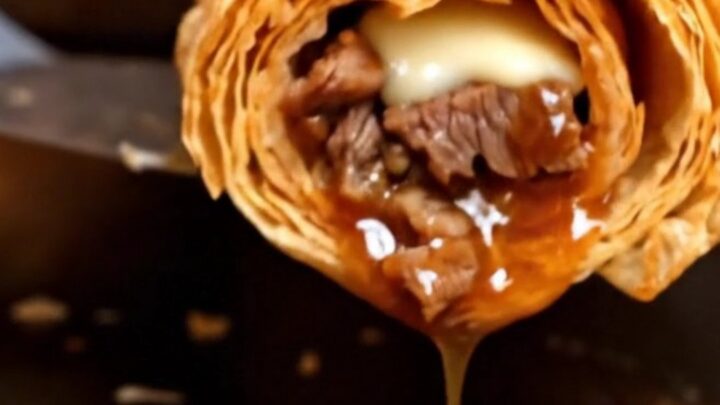
- Roll and serveOnce the pancakes are crisp and the cheese is melted, remove them from the heat. Roll each pancake tightly into a cylinder. Slice the rolls diagonally to reveal the layers, beef, and melted cheese inside. Serve immediately while the crust remains hot and crunchy.Look for The roll should be tight enough to hold its shape but loose enough to maintain the airy, flaky layers.Tip Use a serrated knife to slice the roll to ensure the crust does not crumble during the process.
The roll should be tight and firm to the touch. When slicing diagonally, the interior should reveal a beautiful spiral of pancake, savory beef, and melted cheese. The crust should sound crisp when the knife cuts through it. Verify that the roll is stable and the ingredients are securely held within the layers before plating and serving immediately to maintain the ideal temperature and texture.
Common mistakes
A common mistake is overcrowding the griddle, which lowers the surface temperature and prevents the pancake from becoming crispy. Always work in batches if necessary to maintain the 400°F heat.
Another error is using meat that is too thick, which prevents it from heating through quickly and makes the roll difficult to wrap. Finally, ensure the pancake is not over-sauced, as excess moisture will cause the layers to become soggy rather than crispy during the searing process.
How to tell it’s done
The dish is done when the scallion pancake has reached a deep golden brown color and the layers are visibly crisp and puffed. The internal temperature of the beef shank must reach 145°F (63°C) to ensure it is thoroughly heated.
The provolone cheese should be fully melted, acting as a binder for the meat and herbs inside the roll. When sliced, the roll should hold its structure while showing distinct, flaky layers that provide a satisfying crunch upon the first bite.
- Steaks, chops and roasts: 145°F (63°C) in the thickest part, then a 3-minute rest
Up next · Part 3 of 3
2 variations · storage & make-ahead · 3 answers · printable card
Tips, FAQ & printable recipe (Part 3)← Back to the ingredients (Part 1)