Appetizers · Part 1 of 3: Ingredients
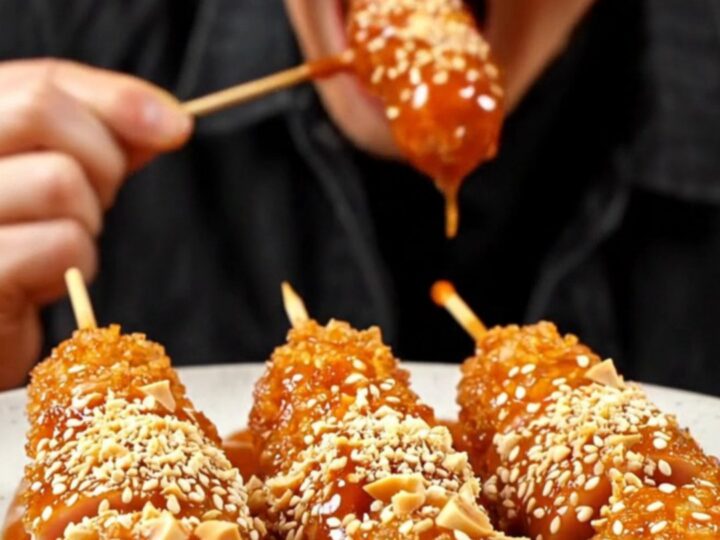
Crispy Sotteok Sotteok Skewers with Sweet Spicy Glaze
- Prep
- Cook
- Total
- Serves
- 4
Sotteok sotteok — the Korean highway snack that combines chewy rice cakes and snappy sausages on a stick — gets the full street-food treatment at home. Pan-fried until the rice cakes blister and the sausages split, then brushed with a sticky gochujang-honey glaze, these skewers deliver a perfect contrast of textures and flavors.
Crushed peanuts and sesame add crunch, while the glaze caramelizes into a glossy, finger-licking coating. Ready in under 30 minutes, they're perfect for parties, game-day snacking, or a fun weeknight treat.
These skewers are a beloved Korean street food, often sold at highway rest stops and night markets. The name 'sotteok sotteok' comes from the Korean words for sausage and rice cake, repeated to reflect the alternating pattern.
The magic lies in the contrast: crispy-chewy rice cakes with a soft interior, juicy sausages with a snappy casing, and a sweet-spicy glaze that clings to every bite. This recipe captures the authentic flavor and texture without requiring a grill or special equipment — just a skillet and a few pantry staples.
Ingredients
- 12 oz cylindrical Korean rice cakes
- 8 cocktail sausages or small smoked sausages
Glaze
- 2 tbsp gochujang
- 2 tbsp honey
- 1 tbsp ketchup
- 1 clove garlic, minced
- 2 tbsp neutral oil (such as vegetable or grapeseed)
Garnish
- 2 tbsp crushed peanuts
- 1 tsp toasted sesame seeds
Why this recipe works
The combination of rice cakes and sausages creates a textural symphony. Rice cakes, when pan-fried, develop a crisp, blistered exterior while staying wonderfully chewy inside. The sausages, scored and fried, become plump and juicy with a satisfying snap. The glaze, made with gochujang, honey, and ketchup, balances heat, sweetness, and tang, caramelizing onto the skewers for a sticky, savory finish.
Pan-frying in a hot skillet mimics the high-heat cooking of street vendors. The oil ensures even browning and crisping, while the glaze is applied at the end to prevent burning. This method allows the rice cakes to puff up and the sausages to split, creating nooks and crannies that catch the glaze. The result is a dish that tastes as authentic as the roadside original, with minimal fuss.
Notes and substitutions
Korean rice cakes (tteok) are available in the refrigerated or frozen section of Asian grocery stores. They come in cylindrical shapes, perfect for skewering. If they are very hard, soak them in warm water for 20 minutes or blanch briefly to soften.
Cocktail sausages are ideal for bite-size skewers, but any small smoked sausage or hot dog cut into chunks works. Choose sausages with a natural casing for the best snap.
Gochujang, a fermented chili paste, is essential for the glaze's depth of flavor. It is found in Korean markets or online. If unavailable, a mix of miso and gochugaru can substitute, though the taste will differ slightly.
The glaze can be adjusted to taste — add more honey for sweetness or extra gochujang for heat. Use a neutral oil with a high smoke point, like grapeseed or vegetable, for frying.
- Cylindrical Korean rice cakes: Use tteokbokki rice cakes, or substitute with short, thick mochi pieces for a similar chewy texture.
- Cocktail sausages: Use small smoked sausages, hot dogs cut into 2-inch pieces, or vegetarian sausages for a meatless version.
- Gochujang: Mix 1 tbsp miso with 1 tsp gochugaru (Korean chili flakes) and a pinch of sugar for a similar fermented chili paste.
- Honey: Use maple syrup or brown rice syrup for a vegan alternative.
Equipment
- Bamboo skewers, soaked in water for 30 minutes
- Large nonstick or cast-iron skillet
- Pastry brush
- Tongs
- Cutting board
- Chef's knife
Up next · Part 2 of 3
6 steps · 10 min of cooking · what to look for at each stage
Step-by-step instructions (Part 2)