Dinner · Part 2 of 3: Instructions
Crispy Smashed Potatoes with Molten Raclette Cheese Step-by-step instructions
- Prep
- Cook
- Total
- Serves
- 4
Before you start
Gather every ingredient and tool before you turn on the stove, because the potatoes move quickly from the pot to the skillet. Scrub the small yellow potatoes and place them in a large pot with cold water and kosher salt. Set a colander in the sink, and have the cast iron skillet, a sturdy knife, a box grater and a wooden cutting board close at hand.
Peel the garlic cloves lightly and crush them with the flat of the knife, and pick the rosemary into sprigs. Slice the green onions into thin rings and set them aside on a small plate. Cut the raclette into a block that fits your grater. Measure the butter and keep it at room temperature until you need it.
Ingredients at a glance (9)
- 2 lb small yellow potatoes, scrubbed
- 1 tbsp kosher salt, for the boiling water
- 4 tbsp unsalted butter
- 4 cloves garlic, lightly crushed
- 3 sprigs fresh rosemary
- 8 oz raclette cheese, cut into a block for grating
- 2 green onions, thinly sliced into rings
- flaky salt, for serving
- black pepper, to taste
Instructions
Boiled and drained potatoes
- Boil the potatoes until tenderPut the potatoes in a large pot, cover them with cold water and add the kosher salt. Bring to a boil over high heat, then reduce to a steady simmer and cook until a knife slides into the center with little resistance. Drain well in a colander and let them steam dry for a few minutes.Look for A paring knife slides through the center with only slight resistance and the skins look dry.Tip Start the potatoes in cold water so they cook evenly from the outside to the middle.
- Set up the aromaticsPlace the drained potatoes on a wooden cutting board. Arrange the rosemary sprigs, crushed garlic cloves and sliced green onions beside them, within easy reach. Keep the raclette block ready for grating.Look for Everything is laid out on the board and the potatoes are cool enough to handle.Tip Wear gloves or wait a few minutes so the hot potatoes do not burn your hands while smashing.
The potatoes are tender all the way through, with a knife sliding into the center with only slight resistance. The skins look dry after draining and the potatoes are cool enough to hold. They should feel soft and fluffy inside when pressed gently.
Before going on, check that every potato is cooked evenly and that none are breaking apart, since the smashing step depends on sturdy halves that will flatten without crumbling. Drain them thoroughly so they do not steam the skillet later on, and let them rest a few minutes so excess water evaporates from the surface.
Smashed and crisped potatoes
- Smash the potatoes flatPlace each potato under the flat of a sturdy knife and press down with your hand until it splits and flattens to about half an inch thick. Keep the pieces intact so the edges stay ragged and crisp.Look for Each potato is flattened and split open, with the skins still attached.Tip Press firmly from the center outward so the potato spreads evenly without falling apart.
- Brown the potatoes in garlic butterMelt the butter in a cast iron skillet over medium-high heat. Add the garlic cloves and rosemary sprigs and let them sizzle for about a minute. Transfer the smashed potatoes to the skillet in a single layer and fry, turning once, until the edges are golden and crisp.Look for The edges turn deep golden and crackle when the potatoes are pressed with a spatula.Tip Leave the potatoes undisturbed for several minutes so they form a crust before turning.
The smashed potatoes are about half an inch thick, with split edges that look ragged and dry. In the skillet, the butter should be foaming gently and the garlic and rosemary fragrant. After frying, the edges turn deep golden and make a crackling sound when pressed. The centers should be hot and tender. Before adding the cheese, check that the bottoms are browned and crisp, and that the potatoes are in a single layer with room between them so they fry rather than steam. If pieces look pale, give them a few more minutes undisturbed before turning them.
Molten raclette and finished plate
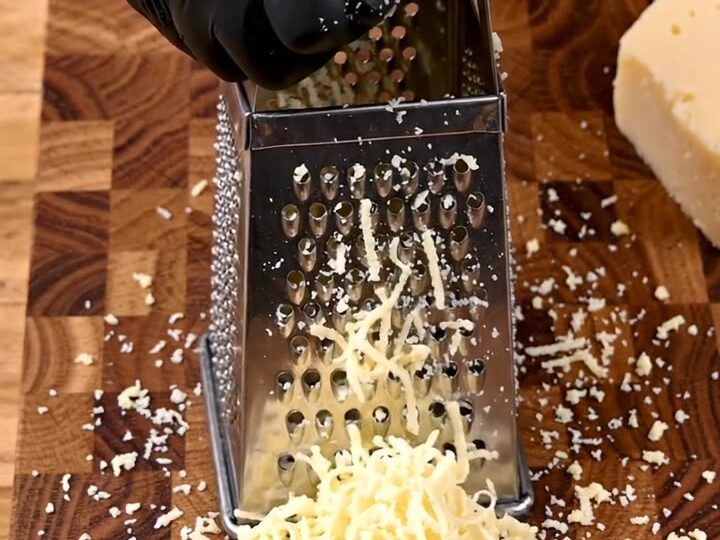
- Melt the raclette over the potatoesGrate the raclette on a box grater into a fluffy pile. Remove the skillet from the heat or lower it, then pile the cheese generously over the potatoes. Cover loosely and let the cheese melt until soft, gooey and stretchy.Look for The grated cheese has softened into a glossy, molten layer that stretches when lifted.Tip Grate the cheese just before you use it so it melts quickly and evenly.
- Finish and serve on a boardSlide the potatoes and molten cheese onto a wooden board. Scatter the green onion rings and rosemary over the top, then finish with flaky salt and black pepper. Pull the cheese apart with two forks to show the stretch and serve right away.Look for The cheese stretches in long, gooey strands between the forks and the potatoes stay crisp underneath.Tip Serve the potatoes while the cheese is still warm and stretchy.
The grated raclette forms a fluffy pile over the potatoes and softens into a glossy, gooey layer as it melts. When lifted with two forks, the cheese should stretch in long strands while the potatoes stay crisp underneath. The green onion rings and rosemary sit bright on top, and the flaky salt and black pepper are visible across the surface. Check that the cheese has melted fully on every piece and that nothing has burned at the bottom of the skillet, then move the potatoes to a wooden board while they are still warm and serve without delay.
Common mistakes
The most common mistake is overcrowding the skillet, which lowers the temperature and makes the potatoes steam instead of brown. Fry in a single layer and work in batches if needed. Another frequent error is smashing the potatoes too thin, which makes them break apart in the butter. Aim for about half an inch and press from the center outward.
Adding the cheese while the heat is high can scorch the butter and the bottom crust, so lower the flame before piling on the raclette. Finally, do not let the cheese cool on the skillet for too long, since it firms quickly and loses its stretch. Serve soon after it melts so the texture stays at its best.
How to tell it’s done
The dish is done when the potato edges are deep golden, crisp and crackling, and the centers are soft and hot all the way through. The raclette should be fully melted, glossy and stretchy, pulling into long strands when lifted with two forks. There is no meat or egg in this recipe, so there is no protein temperature to reach.
Look for the visual cues: golden crust on the potatoes, a cheese layer that has softened into a continuous, gooey blanket, and a steady aroma of garlic and rosemary. If the cheese still looks firm or grainy, cover the skillet for another minute over low heat until it becomes smooth and molten.
Up next · Part 3 of 3
2 variations · storage & make-ahead · 5 answers · printable card
Tips, FAQ & printable recipe (Part 3)← Back to the ingredients (Part 1)