Appetizers · Part 1 of 3: Ingredients
Crispy Smashed Potatoes with Molten Raclette Cheese
- Prep
- Cook
- Total
- Serves
- 4
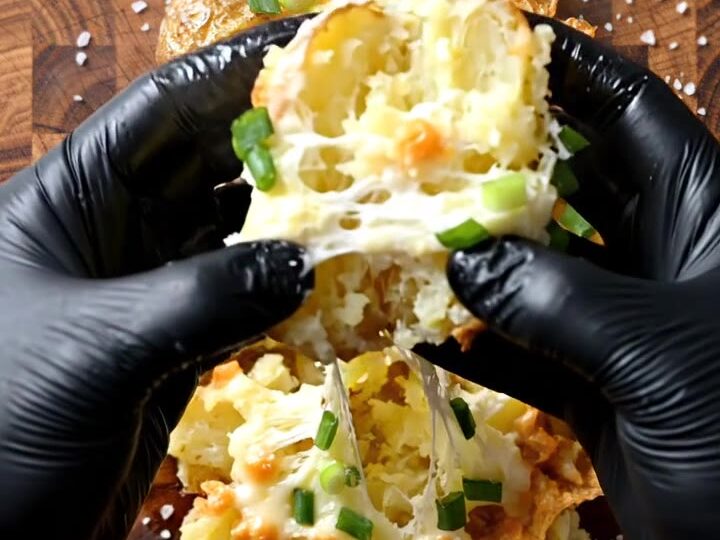
Imagine a skillet of baby potatoes, smashed flat and crackling at the edges, with raclette melting into every crevice. This is the kind of platter that disappears in minutes at the table. It takes one pan, a short list of pantry basics and a little patience while the bottoms turn gold and crisp.
This dish turns humble baby potatoes into a showpiece. Boil them until tender, press each one into a rough disc, and crisp them in a hot mix of butter and olive oil. Once the bottoms are golden, you flip the potatoes and scatter a generous layer of freshly grated raclette so it melts into the gaps.
The skillet then goes to the board, the potatoes are arranged in a ring, and the center is filled with more molten cheese, minced garlic, rosemary and green onion. Every bite pairs a crisp, salty edge with soft, stretchy cheese, and the bright aromatics keep the richness balanced. It works as a shared starter for a casual evening, or as a main dish alongside a crisp green salad.
Ingredients
- 2 lb baby potatoes, scrubbed
- 4 green onions, white and light green parts, finely chopped, plus more sliced for garnish
- 1 head garlic, cloves peeled and minced
- 1 sprig fresh rosemary, leaves finely chopped
- 8 oz raclette cheese, coarsely grated on a box grater
- 2 tbsp unsalted butter
- 2 tbsp olive oil
- kosher salt, to taste
- flaky salt, for serving
Why this recipe works
Boiling first makes the potatoes fully tender inside, so the smashing step gives you a thin, flat disc with a creamy center rather than a dry crumble. Pressing them while they are still warm helps the surfaces stay intact, which creates more ragged edges that will catch the heat and turn crisp.
The mix of butter and olive oil matters here: butter adds flavor and browning, while the oil has a higher smoke point and keeps the butter from burning as the potatoes cook over medium-high heat.
Flipping the potatoes only once, after the bottoms have set, is what gives the crust its structure. Adding the cheese after the flip lets it melt over the crisp side and seep into the cracks without scorching the bottoms. Finally, moving the skillet to the board and arranging the potatoes in a circle keeps the cheese pooled in the center, so the molten part stays generous and every guest gets a piece with both crunch and melt.
Notes and substitutions
Raclette is the star, so buy a block you can grate yourself rather than pre-shredded cheese, which often contains anti-caking starch that stops it from melting smoothly. Grate it on the large holes of a box grater just before cooking, so the shreds stay fluffy and melt quickly.
Keep the cheese cool until it goes into the pan. Gruyère or Swiss is a good stand-in if raclette is hard to find, and it melts in a similar way with a slightly nuttier flavor.
A cast iron skillet is the best tool for this dish because it holds heat evenly and goes from stovetop to table without a transfer. A large nonstick skillet works too, though the crust may be a little lighter.
Use baby potatoes with thin skins, such as red, Yukon Gold or fingerling, and keep the size similar so they cook at the same rate. Use a drinking glass or a potato masher to smash the potatoes, and a santoku knife for clean, fine chopping of the green onions and garlic.
- raclette cheese: Gruyère or Swiss cheese, grated, for a milder melt
- unsalted butter: ghee, which tolerates the hot skillet longer without browning
- baby potatoes: fingerling or small Yukon Gold potatoes, halved if larger than 2 inches
Equipment
- large pot
- colander
- cast iron skillet
- box grater
- santoku knife
- cutting board
- drinking glass or potato masher
Up next · Part 2 of 3
8 steps · 35 min of cooking · what to look for at each stage
Step-by-step instructions (Part 2)