Dinner · Part 2 of 3: Instructions
Crispy Smashed Potatoes with Molten Raclette Cheese in One Skillet Step-by-step instructions
- Prep
- Cook
- Total
- Serves
- 4
Before you start
Gather everything before you turn on the stove, because the potatoes move quickly from the pot to the skillet. Scrub the baby potatoes well and place them in a large pot with cold water and kosher salt. Finely mince the garlic, green onions and rosemary leaves so they are ready to add in a moment.
Chill the block of raclette for about 10 minutes, then shred it on a box grater and keep the shreds in a bowl near the stove. Set out the butter, olive oil, a potato masher, a spatula and a cutting board. Having the cheese grated and the herbs chopped means you can add each element at exactly the right moment, which keeps the potatoes hot and crisp during the cheese step.
Ingredients at a glance (10)
- 2 lb small yellow baby potatoes, scrubbed
- 1 tbsp kosher salt, for the boiling water
- 3 tbsp unsalted butter
- 2 tbsp olive oil
- 4 cloves garlic, minced
- 3 green onions, white and light green parts, minced
- 1 sprig fresh rosemary, leaves chopped
- 8 oz raclette cheese, finely shredded
- flaky salt, for serving
- creamy sour cream dip, for serving
Instructions
Boil and mash the potatoes
- Boil the baby potatoesPlace the baby potatoes in a large pot, cover them with cold water, and add the kosher salt. Bring to a boil over high heat, then reduce to a steady simmer and cook until a knife slides through the center with little resistance. Drain well and let them steam dry for a few minutes.Look for Potatoes are tender at the center and the skins look slightly split.Tip Start the potatoes in cold water so they cook evenly from the outside in.
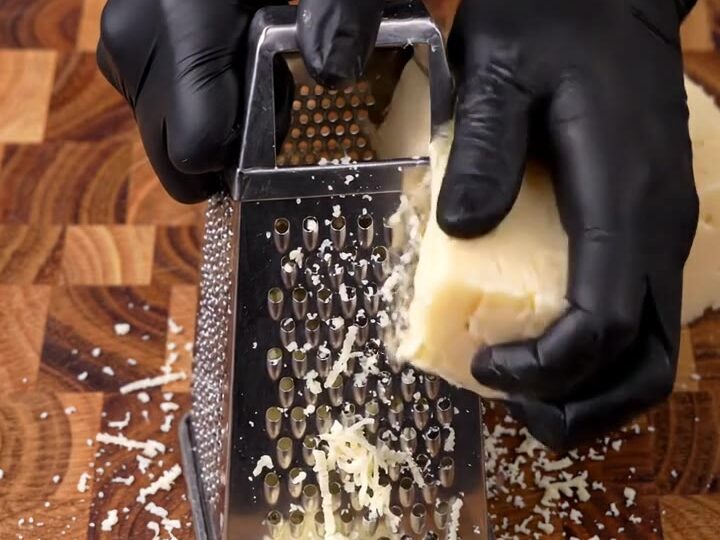
- Mince the aromatics and grateFinely mince the garlic, green onions and rosemary leaves on a chef's knife. Grate the raclette over a box grater, letting the fine shreds fall onto a board or plate. Keep the cheese cold until it goes into the pan so it shreds cleanly.Look for Cheese forms fine, fluffy shreds and the herbs are finely chopped.Tip Chill the raclette for 10 minutes before grating for cleaner shreds.
The baby potatoes are tender all the way through, with a knife sliding into the centers easily. Drain them well and let them steam dry for a few minutes so the skins are not wet. Press each potato with the masher until it flattens into a thick round about half an inch tall, keeping the pieces whole. The flattened potatoes should look rustic with cracked edges and a dry surface. Before moving on, check that no potato has fallen apart, because whole pieces crisp far better than broken ones. Keep them on the board until the skillet is hot and the butter has melted and foamed.
Crisp the potatoes in the skillet
- Smash the potatoes flatArrange the drained potatoes on a dark wooden board or cutting board. Press each one with a potato masher until it flattens into a thick round, keeping the pieces intact so they hold their shape in the pan.Look for Each potato is flattened to about half an inch thick with cracked edges.Tip Press firmly and evenly so every piece crisps at the same rate.
- Crisp the potatoes in butterHeat the cast-iron skillet over medium-high heat until hot. Add the butter and olive oil and let the butter melt and foam. Carefully slide in the smashed potatoes in a single layer and cook without moving them until the bottoms turn deep golden and crisp at the edges.Look for Potatoes sizzle loudly and the edges turn golden brown and crisp.Tip Do not crowd the pan; work in two batches if needed.
- Season with garlic and rosemaryFlip the potatoes and cook the second side until golden. Scatter the minced garlic, chopped rosemary and a pinch of kosher salt over the potatoes, and toss gently in the butter and oil for about 1 minute until the garlic smells fragrant.Look for Garlic smells fragrant and turns pale gold without browning.Tip Add the garlic late so it does not scorch in the hot fat.
- Melt the raclette over the potatoesSpread a generous, even layer of shredded raclette over the potatoes with a spatula, covering the surface. Reduce the heat to medium-low and let the cheese melt into bubbling, golden strands that fill the gaps between the potatoes.Look for Cheese is fully melted, bubbling and golden at the edges.Tip Cover the skillet briefly if the top does not melt evenly.
The skillet is hot, the butter and olive oil are melted and shimmering, and the potatoes sizzle as they go in. After several minutes, the bottoms turn deep golden and the edges start to crisp and pull away from the pan. Flip each piece and cook the second side until it matches the first.
The potatoes should smell toasty and buttery, and their surfaces should look crackling rather than pale. Check that the pieces are not stuck to the pan before flipping, and lift gently with a spatula. When both sides are golden, scatter the garlic, rosemary and a pinch of salt over the top and toss briefly so the aromatics bloom in the fat.
Melt the raclette and serve
- Serve on the boardSlide the skillet off the heat and let the cheese set for about 2 minutes. Transfer the potatoes to the wooden board, pull the crisp pieces apart so the stretchy cheese shows, and scatter the green onions over the top.Look for Cheese pulls in long strands when the potatoes are separated.Tip Use a spatula to lift the crisp pieces so the cheese stays attached.
- Finish with salt and dipFinish with a sprinkle of flaky salt and serve with a drizzle of creamy sour cream dip on the side or spooned over the top. Serve at once while the cheese is still molten and the potatoes are crisp.Look for Cheese is molten, potatoes are crisp, and the dip is glossy.Tip Serve straight from the skillet so the crisp edges stay crunchy.
The raclette is spread evenly across the potatoes and melts into bubbling, golden strands that run into every gap. The cheese should look glossy and form soft ridges across the surface, with the garlic and rosemary visible in the fat around the edges. Turn off the heat once the cheese has fully melted and let it set for about 2 minutes so it clings to the potatoes. The top should look golden and blistered, not burnt. Before serving, check that the cheese can be pulled into long strands when a piece is lifted, which tells you it is ready to be pulled apart and enjoyed on the board.
Common mistakes
The most common mistake is crowding the skillet. When too many potatoes share the pan, they steam instead of searing, and they never reach the crackling golden crust that makes this dish. Use a large enough skillet, or cook in two batches and keep the first batch warm. Another frequent error is moving the potatoes too early.
They need several uninterrupted minutes on the first side to form a crust, so resist the urge to stir. Adding the raclette before the potatoes are golden is also a problem, because the cheese can scorch on the bottom before the potatoes crisp. Finally, do not pile the cheese in one spot. Spread it evenly with a spatula so each bite gets a fair share of molten strands.
How to tell it’s done
The dish is done when the potatoes are deep golden and crisp at the edges, the raclette has melted completely into bubbling, golden strands, and the cheese pulls into long, stretchy ribbons when you lift a piece. The potato centers should be soft and creamy, which the boiling step already ensures. There is no protein in this recipe, so no internal temperature applies.
Use visual and tactile cues instead: the surface should look blistered and gold, the sizzle should quiet slightly as the cheese sets, and a fork should separate the crisp exterior from the tender interior easily. If the cheese is still pale and firm, leave the skillet on low heat for another minute and check again.
Up next · Part 3 of 3
4 variations · storage & make-ahead · 5 answers · printable card
Tips, FAQ & printable recipe (Part 3)← Back to the ingredients (Part 1)