Dinner · Part 1 of 3: Ingredients
Crispy Smashed Potatoes with Molten Raclette Cheese Skillet
- Prep
- Cook
- Total
- Serves
- 4
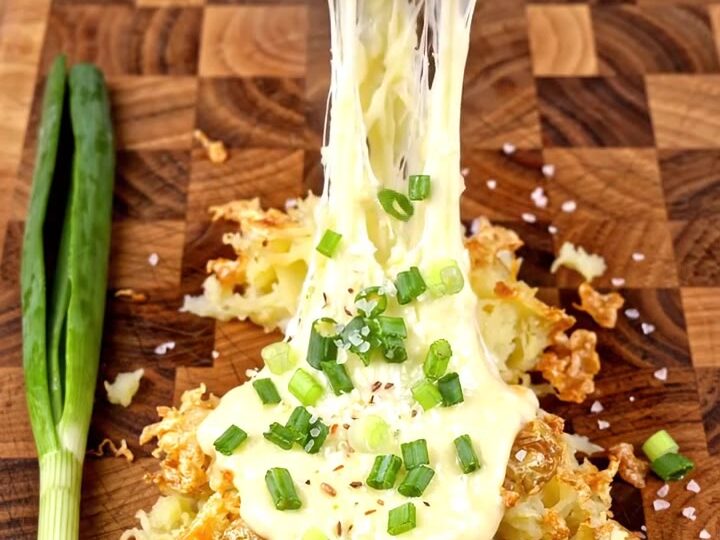
This skillet brings together two beloved comfort foods: crispy smashed potatoes and molten raclette cheese. The potatoes are boiled until tender, smashed flat, then pan-fried in foaming garlic-rosemary butter until they're shatteringly crisp.
A generous blanket of shredded Alpine raclette cheese melts over the top, turning golden and bubbly. A final shower of chopped scallions and flaky sea salt adds freshness and crunch. The result is a rustic, shareable dish that's perfect for a cozy dinner or a crowd-pleasing appetizer.
Golden potatoes are boiled, smashed, and pan-fried until their edges are deeply crisp and their centers are fluffy. A fragrant butter of garlic and rosemary infuses every crevice. Then comes the star: a thick layer of Alpine raclette cheese, shredded and melted until it's molten and bubbling.
The cheese pulls into long, satisfying strands with every serving spoonful. Finished with scallions and flaky salt, this skillet is a study in texture and flavor. It's simple enough for a weeknight yet impressive enough for guests.
Ingredients
- 2 lb golden potatoes
- 2 tbsp fresh rosemary, minced
- 4 cloves garlic, minced
- 4 tbsp unsalted butter
- 12 oz Alpine raclette cheese, shredded
- 3 scallions, chopped
- flaky sea salt, to taste
Why this recipe works
Boiling the potatoes first ensures they're fully cooked and tender on the inside, so the final pan-fry only needs to focus on crisping the exterior. Smashing them flat maximizes surface area, creating more craggy edges that turn golden and crunchy in the hot butter. The combination of a tender interior and a shatteringly crisp crust is the hallmark of this dish.
Raclette cheese is specifically designed to melt into a creamy, stretchy pool. Its nutty, slightly sweet flavor pairs beautifully with the earthy rosemary and sharp garlic.
Pan-frying in butter that has been allowed to foam and brown adds a rich, toasted note that complements the cheese without overpowering it. The final hit of flaky salt brightens everything and cuts through the richness.
Notes and substitutions
Choose golden potatoes like Yukon Gold for their buttery flavor and ability to hold their shape when smashed. Waxy varieties such as red potatoes also work well. Avoid starchy russets, which can break apart too easily during smashing. The potatoes should be boiled until just fork-tender, not falling apart, so they can be flattened without crumbling.
Raclette cheese is the traditional choice here, but if it's hard to find, Gruyère or fontina are excellent substitutes. Both melt smoothly and have a similar nutty character.
Fresh rosemary is preferable to dried; if using dried, use about one teaspoon and crush it between your fingers. A cast iron skillet is ideal for even browning, but any heavy-bottomed skillet will work.
- golden potatoes: Yukon Gold or red potatoes work well; waxy varieties hold their shape when smashed.
- Alpine raclette cheese: Gruyère or fontina can replace raclette, though the flavor will be slightly nuttier.
- fresh rosemary: Dried rosemary can be used, but reduce to 1 tsp and crush it before adding.
- unsalted butter: Salted butter works, but reduce the flaky salt added at the end.
Equipment
- Large pot for boiling potatoes
- Cast iron skillet
- Box grater
- Chef's knife
- Cutting board
- Measuring spoons
- Spatula
Up next · Part 2 of 3
5 steps · 25 min of cooking · what to look for at each stage
Step-by-step instructions (Part 2)