Dinner · Part 3 of 3: Tips & recipe card
Crispy Skin Oven-Baked Chicken Thighs Tips, FAQ & printable recipe

- Prep
- Cook
- Total
- Serves
- 4
Tips for success
To achieve an even crispier skin, try placing the chicken uncovered in the refrigerator for an hour before seasoning.
This drying process draws out excess moisture from the skin, leading to a much more pronounced crunch after roasting. Keep the chicken on a plate or tray to avoid any cross-contamination with other foods in your fridge.
If you find the skin is not browning as quickly as the meat is cooking, do not hesitate to move the oven rack to a higher position or use the broiler for the final two minutes. Keep a close watch during this time to prevent the skin from burning, as the broiler provides intense, direct heat.
Variations
- Herbed Garlic Chicken: Add three cloves of smashed garlic and a sprig of fresh rosemary to the baking dish before roasting. The garlic infuses the broth with a savory aroma that complements the crispy skin perfectly.
- Lemon Zest Chicken: Sprinkle the chicken with the zest of one lemon before roasting. The bright citrus notes cut through the richness of the chicken skin, adding a fresh dimension to the final dish.
Storage and make-ahead
- Fridge
- Store in an airtight container for up to 3 days. Ensure the chicken has cooled to room temperature within 2 hours before refrigerating.
- Freezer
- Freeze in a heavy-duty freezer bag for up to 2 months. Thaw overnight in the refrigerator before reheating.
- Reheat
- Reheat in a 350°F oven until the skin is crispy and the meat is heated through, approximately 15 minutes.
Store any leftovers in an airtight container to maintain freshness. The chicken can be kept in the refrigerator for up to 3 days.
To maximize quality, try to remove the meat from the bone before storing if you plan to use it for later meals, though keeping it on the bone is fine for preserving moisture during reheating.
You can season the chicken thighs up to 4 hours in advance and keep them covered in the refrigerator. Bring the chicken to room temperature for about 20 minutes before placing it in the oven.
Do not add the broth until right before you are ready to start the roasting process to avoid making the skin soggy.
Serving ideas
Serve these crispy chicken thighs immediately while the skin is at its peak texture. They pair beautifully with roasted root vegetables, a fresh garden salad, or a side of steamed greens.
The flavorful pan juices created by the broth and rendered chicken fat can be drizzled over the meat or a side of grains for added flavor.
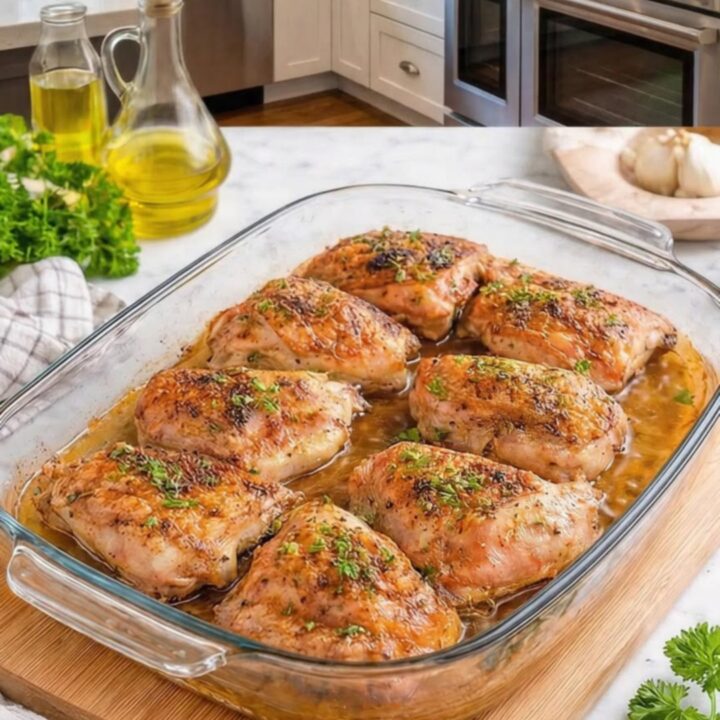
For a casual presentation, serve the chicken directly from the glass baking dish used for roasting, garnished with freshly chopped parsley to add a bright, herbaceous note. This rustic look highlights the quality of the dish and keeps the focus on the golden, crispy skin and the tender, juicy meat.
Frequently asked questions
Can the chicken be cooked without the broth?
Why is the skin not getting crispy?
Is it necessary to use bone-in thighs?
Crispy Skin Oven-Baked Chicken Thighs
Ingredients
- 4 bone-in, skin-on chicken thighs
- 1 tbsp kosher salt
- 1/2 cup chicken broth
- fresh parsley, chopped, for serving
Instructions
- Place the bone-in, skin-on chicken thighs into a glass baking dish. Generously season the meat with kosher salt, ensuring the skin is dry to promote crispiness during the cooking process.
- Pour the chicken broth into the base of the baking dish, taking care not to pour it directly over the chicken skin. This helps maintain moisture while the high heat browns the skin.
- Roast the chicken in a preheated oven until the skin is golden brown and the internal temperature reaches 165°F (74°C). If needed, finish under the broiler for a few minutes to achieve extra crispiness. Garnish with the fresh parsley before serving.
Estimated nutrition per serving
- Calories
- 320
- Protein
- 24 g
- Carbohydrates
- 1 g
- Fat
- 24 g
- Fiber
- 0 g
- Sugar
- 0 g
- Sodium
- 450 mg
Next recipe

Creamy Chicken Cordon Bleu Lasagna for Comfort
See the recipe → →This recipe is based on a short cooking video and is published under the pen name Clara Weller. It was checked before publication, but errors can slip through. Nutrition, when shown, is an estimate. Read more in our editorial policy and on our food safety page.
More recipes to try

Flavorful Fajita Chicken Casserole for Easy Weeknight Dinners
Total time: 50 min
Mississippi Meatloaf with Savory Glaze and Mashed Potatoes
Total time: 4 h 25 min
Cheesy Beef Rigatoni Pasta for a Quick Weeknight Dinner
Total time: 40 min
Cheesy Stuffed Stromboli with Herb Butter
Total time: 45 min
Cheesy Philly Cheesesteak Garlic Bread Bake
Total time: 40 min