Dinner · Part 2 of 3: Instructions
Crispy Sheet Pan Chicken Katsu with Roasted Cabbage Step-by-step instructions
- Prep
- Cook
- Total
- Serves
- 4
Before you start
Before beginning, ensure the oven is fully preheated to 400°F (200°C) to ensure the chicken starts cooking immediately upon entering the heat. Have the parchment paper ready to line your sheet pan.
Pat the chicken cutlets completely dry with paper towels to ensure the panko adheres properly and the crust turns crispy rather than soggy. Prepare all ingredients and have your butter melted and ready to drizzle to minimize time spent with the oven door open.
Ingredients at a glance (5)
- 4 pieces chicken breast cutlets, pounded to even thickness
- 1 1/2 cups panko breadcrumbs
- 1 head green cabbage, cut into thick wedges
- 3 tbsp unsalted butter, melted
- 1 tbsp white sesame seeds
Instructions
Assembling the Pan
- Prepare the panPreheat the oven to 400°F (200°C). Line a large rimmed aluminum sheet pan with parchment paper to ensure easy cleanup and prevent sticking. Arrange the chicken cutlets and cabbage wedges in a single layer on the prepared pan, ensuring they do not overlap for even browning.Look for Space the ingredients evenly across the pan surface.Tip Use a meat mallet to pound the chicken breasts to a uniform thickness before coating to ensure they cook at the same rate as the cabbage.
The ingredients should be neatly arranged on the parchment-lined pan, with each chicken cutlet and cabbage wedge having sufficient space.
The surface of the chicken should look dry and ready for the butter, and the overall setup should appear tidy and ready for the oven without any overlapping components that might hinder the roasting process.
Baking and Browning
- Season and bakeEvenly coat the chicken and cabbage with the melted butter using a brush or a small pitcher. Sprinkle the panko breadcrumbs and white sesame seeds over the top. Place the pan in the oven and bake until the chicken reaches an internal temperature of 165°F (74°C) and the panko is golden brown.Look for The chicken should be opaque and firm, and the cabbage edges should be tender and lightly golden.Safe temperature 165°F (74°C) internal temperature (poultry)Tip Watch the oven closely during the final minutes to ensure the panko crust reaches a deep golden hue without burning.
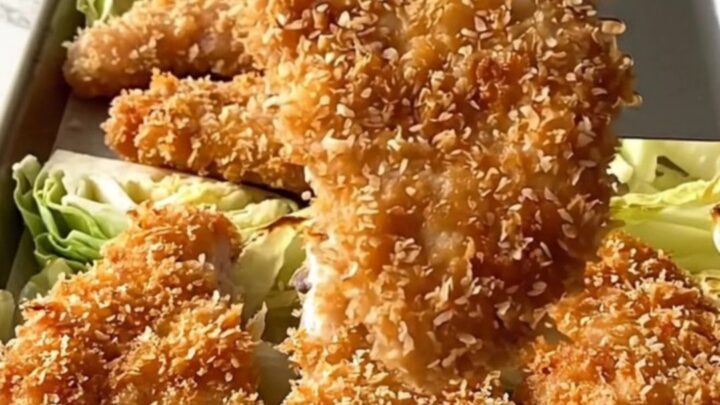
During the baking phase, the kitchen should fill with the aroma of roasted cabbage and toasted panko. The chicken should be turning a beautiful golden brown as the butter and sesame seeds toast. Check that the panko is not darkening too quickly; if it browns before the chicken is cooked through, you may lightly tent it with foil.
Resting and Serving
- Rest and serveRemove the sheet pan from the oven and allow the chicken to rest for at least 5 minutes before serving. This resting period allows the juices to redistribute, keeping the cutlets moist while maintaining the crispness of the panko coating. Serve immediately while hot.Look for The meat should be fully opaque with no pink juices.Tip Do not cover the chicken while it rests, as this will trap steam and soften the crispy breadcrumb crust.
Once removed from the oven, the chicken should look crisp and vibrant. The resting phase is essential; the meat should feel firm to the touch, and the cabbage should be tender and slightly wilted at the edges. Everything should be hot and fragrant, ready for immediate service to ensure the best possible texture of the crispy coating.
Common mistakes
A common mistake is overcrowding the pan, which traps steam and prevents the panko from crisping properly; always leave at least an inch of space between pieces. Another error is failing to dry the chicken before coating, which leads to a gummy crust.
Avoid using too much butter, as it can cause the breadcrumbs to become greasy; a light, even drizzle is all that is required for a perfect, golden finish. Finally, do not skip the resting period, as the chicken needs that time to retain its natural juices.
How to tell it’s done
The chicken is done when the internal temperature reaches 165°F (74°C) as measured by a meat thermometer inserted into the thickest part of the cutlet. The coating should be a uniform, deep golden brown, and the meat should be opaque white throughout with no visible pink.
The cabbage should be soft enough to be easily pierced with a fork, with caramelized, golden-brown edges that indicate it has roasted to perfection without becoming mushy.
- Poultry: 165°F (74°C) in the thickest part
Up next · Part 3 of 3
2 variations · storage & make-ahead · 3 answers · printable card
Tips, FAQ & printable recipe (Part 3)← Back to the ingredients (Part 1)