Dinner · Part 2 of 3: Instructions
Crispy Sesame Beef Rice Bowl with Sticky Ginger Soy Glaze Step-by-step instructions
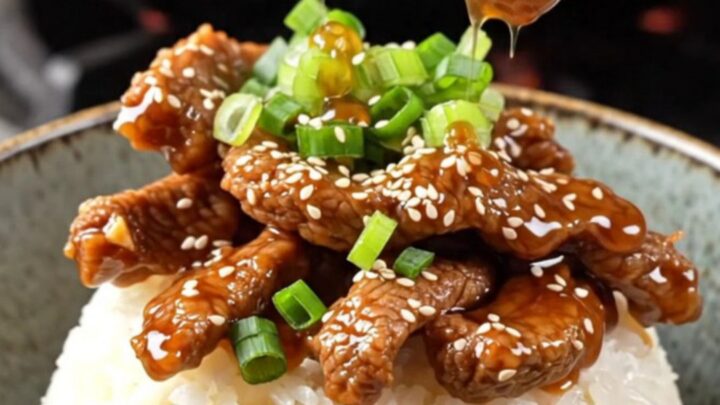
- Prep
- Cook
- Total
- Serves
- 4
Before you start
Before you start, make sure your flank steak is well-chilled so it slices easily. Freeze it for 15 minutes if needed. Slice the steak thinly against the grain and set aside. Whisk the egg white in a large bowl until frothy. Measure out all the glaze ingredients and have them ready near the stove.
Heat the oil in a wok or large skillet over high heat. Have a wire rack set over a baking sheet ready for draining the fried beef. Steam the jasmine rice in advance or start it before you begin frying, so everything is ready to serve at the same time.
Ingredients at a glance (13)
- 1 lb flank steak, thinly sliced against the grain
- 4 tbsp cornstarch
- 1 egg white
- 1/4 cup soy sauce
- 3 tbsp brown sugar
- 2 tbsp honey
- 1 tbsp grated fresh ginger
- 3 cloves garlic, minced
- 1 tbsp sesame oil
- 2 tbsp toasted sesame seeds
- 2 cups vegetable oil, for frying
- 4 cups steamed jasmine rice, for serving
- 3 scallions, sliced
Instructions
Prep and Coat
- Prep and Coat the BeefPat the flank steak dry with paper towels. In a large bowl, whisk the egg white until frothy. Add the sliced beef and toss to coat evenly. Sprinkle the cornstarch over the beef and toss until every strip is coated in a powdery, dry layer. Let the coated beef sit at room temperature while you prepare the glaze.Look for Each beef strip should be completely covered in a white, powdery coating.Tip Slice the beef as thinly as possible against the grain for maximum tenderness.
- Make the Sticky GlazeIn a small bowl, combine the soy sauce, brown sugar, honey, grated ginger, minced garlic, and sesame oil. Stir until the sugar dissolves. Set aside. This glaze will reduce and thicken in the wok later.Look for The glaze mixture should be smooth and well combined.Tip Grate the ginger on a microplane for the finest texture.
The beef strips should be evenly coated in a powdery white layer of cornstarch and egg white. The glaze ingredients should be measured and ready. The oil should be heating up. The kitchen will smell of fresh ginger and garlic. The coating should feel dry to the touch, not wet. If it feels sticky, add a little more cornstarch.
Fry and Reduce Glaze
- Flash Fry the BeefHeat the vegetable oil in a wok or large skillet over high heat until it reaches 375°F (190°C). Working in batches, carefully add the coated beef strips and fry for about 3 minutes, until golden and crispy. Use a slotted spoon to transfer the beef to a wire rack set over a baking sheet to drain. Let it rest for 3 minutes before slicing.Look for The beef should be deeply golden and crisp, with a shatteringly crunchy exterior.Safe temperature 145°F (63°C) internal temperature (steaks, chops and roasts)Tip Do not overcrowd the wok; fry in small batches to keep the oil temperature steady.
- Reduce the GlazePour out the frying oil from the wok, leaving about 1 tablespoon. Return the wok to medium-high heat. Add the prepared glaze mixture and bring to a boil. Reduce the heat to medium and simmer, stirring frequently, until the glaze is syrupy and thick enough to coat the back of a spoon.Look for The glaze should be glossy, dark, and bubbling with a syrupy consistency.Safe temperature 160°F (71°C) internal temperature (egg dishes)Tip Watch closely—the glaze can burn quickly once it thickens.
The beef should be golden brown and crisp, draining on a wire rack. The glaze should be bubbling and turning glossy, with a sweet, savory aroma filling the kitchen. The beef should make a satisfying crunch when you press on it. The glaze should be thick enough to coat the back of a spoon. If it's too thin, simmer a little longer.
Toss and Serve
- Toss Beef in GlazeAdd the fried beef strips to the wok with the glaze. Toss quickly with tongs to coat every piece evenly. Let the beef sit in the glaze for 30 seconds to absorb the flavor while staying crisp. Let it rest for 3 minutes before slicing.Look for The beef should be evenly coated with a shiny, sticky glaze.Safe temperature 145°F (63°C) internal temperature (steaks, chops and roasts)Tip Keep the heat on medium to avoid making the glaze too thick.
- Plate and GarnishDivide the steamed jasmine rice among four bowls. Top with the glazed crispy beef. Sprinkle with toasted sesame seeds and sliced scallions. Serve immediately.Look for The bowls should be steaming hot with vibrant green scallions and white sesame seeds.Tip For extra crunch, add a few extra sesame seeds right before serving.
The beef should be glistening with sticky sauce, each piece coated evenly. The sesame seeds and scallions should be ready to sprinkle. The rice should be steamed and fluffy.
The final bowls should look vibrant and appetizing, with the crispy beef piled high and garnished with green scallions and white sesame seeds. Serve immediately to enjoy the crunch.
Common mistakes
One common mistake is overcrowding the wok when frying the beef. Adding too many strips at once drops the oil temperature, resulting in soggy, greasy beef instead of crispy bites. Fry in small batches and let the oil return to temperature between batches.
Another pitfall is overcooking the glaze—it can go from syrupy to burnt very quickly. Keep the heat medium and stir constantly once it starts to bubble. Finally, don't skip the wire rack; draining the beef on paper towels can make the coating stick and turn soft.
How to tell it’s done
The beef is done when it reaches an internal temperature of 145°F (63°C) and the crust is deep golden brown. The glaze is ready when it coats the back of a spoon and leaves a trail when you run your finger through it.
When you toss the beef in the glaze, it should cling to each piece without pooling at the bottom of the wok. The rice should be fluffy and separate. Taste a piece of beef—it should be crispy on the outside, tender inside, and coated with a sweet-savory glaze that isn't too thick or too runny.
- Steaks, chops and roasts: 145°F (63°C) in the thickest part, then a 3-minute rest
- Egg dishes: 160°F (71°C) in the thickest part
Up next · Part 3 of 3
4 variations · storage & make-ahead · 5 answers · printable card
Tips, FAQ & printable recipe (Part 3)← Back to the ingredients (Part 1)