Appetizers · Part 2 of 3: Instructions
Crispy Cheddar Potato Bombs with Jammy Egg Step-by-step instructions
- Prep
- Cook
- Total
- Serves
- 4
Before you start
Before starting, make sure the mashed potatoes are prepared and cooled. You can use leftover mashed potatoes or make them fresh: boil and mash about 2 medium Russet potatoes with a little butter and salt, then let them cool completely.
Cook the bacon bits and chop the scallions and chives. Set up a breading station with flour, beaten eggs, and panko in separate shallow dishes. Have a deep-fry thermometer ready and fill a deep skillet or Dutch oven with enough oil to submerge the bombs (about 4 cups).
Ingredients at a glance (12)
- 4 large eggs
- 1 1/2 cups mashed Russet potatoes (about 2 medium potatoes)
- 1/2 cup sharp cheddar cheese, shredded
- 2 tbsp scallions, thinly sliced
- 2 tbsp cooked bacon bits
- 1 cup panko breadcrumbs
- 1/2 cup all-purpose flour
- 2 large eggs, beaten
- 4 cups vegetable oil, for frying
- 1/2 cup Dijon mustard aioli
- Flaky salt, for sprinkling, to taste
- 1 tbsp fresh chives, chopped
Instructions
Soft-Boil and Wrap
- Soft-Boil the EggsBring a small saucepan of water to a rolling boil. Carefully lower the 4 eggs into the water and boil for exactly 6 minutes. While the eggs cook, prepare an ice water bath. After 6 minutes, transfer the eggs to the ice water and let them cool for 5 minutes. Gently crack and peel the eggs under cold running water. Set them aside on a paper towel.Look for The whites should be set but the yolks still soft and jammy.Safe temperature 160°F (71°C) internal temperature (egg dishes)Tip Use a slotted spoon to lower the eggs into the water to avoid cracking.
- Make the Cheddar MashIn a mixing bowl, combine the mashed potatoes, shredded cheddar, scallions, and bacon bits. Season with salt and pepper. Mix until well combined. The mixture should be thick and hold together when pressed.Look for The mash is cohesive and slightly sticky but not wet.Tip If the mash is too dry, add a teaspoon of milk or water; if too wet, add a little more potato.
- Wrap the EggsDivide the potato mixture into 4 equal portions. Flatten one portion into a disk in your palm. Place a peeled egg in the center and gently wrap the potato around it, sealing the edges. Repeat with the remaining eggs and potato. The potato layer should be about 1/4 inch thick.Look for Each egg is fully encased in an even layer of potato.Tip Wet your hands slightly to prevent sticking.
After this phase, you should have four peeled, jammy eggs with set whites and soft yolks. The potato mixture should be well combined and seasoned.
Each egg should be fully wrapped in an even layer of potato, with no cracks or gaps. The wrapped bombs should feel firm and hold their shape when handled. If any egg is not fully covered, patch it with a little extra potato.
Bread and Fry
- Set Up the Breading StationPlace the flour in a shallow dish, the beaten eggs in another, and the panko in a third. Working with one potato-wrapped egg at a time, roll it in the flour, shaking off excess. Dip it into the beaten eggs, then roll it in the panko, pressing gently to adhere. Set the breaded bombs on a plate.Look for Each bomb is evenly coated with a thick layer of panko.Tip For extra crunch, repeat the egg and panko coating.
- Heat the OilIn a deep skillet or Dutch oven, heat the vegetable oil over medium-high heat until it reaches 375°F (190°C) on a deep-fry thermometer. Adjust the heat to maintain the temperature.Look for The oil shimmers and a small piece of panko sizzles immediately when dropped in.Tip Use a thermometer for accuracy; too hot will burn the crust, too cool will make it greasy.
- Fry the Potato BombsCarefully lower 2 potato bombs into the hot oil using a slotted spoon. Fry for 2.5 minutes, turning occasionally, until the crust is deep golden brown and crisp. Transfer to a paper towel-lined plate. Repeat with the remaining bombs.Look for The crust is deeply golden and blistered, and the interior is hot.Safe temperature 160°F (71°C) internal temperature (egg dishes)Tip Do not overcrowd the pan; fry in batches if needed.
The breaded bombs should have a thick, even coating of panko. The oil should be at a steady 375°F (190°C). After frying, the crust should be deep golden brown and blistered, and the bombs should feel firm when gently pressed. They should be crispy and not greasy. The interior should be hot, but the yolk should still be soft and creamy when cut.
Serve and Enjoy
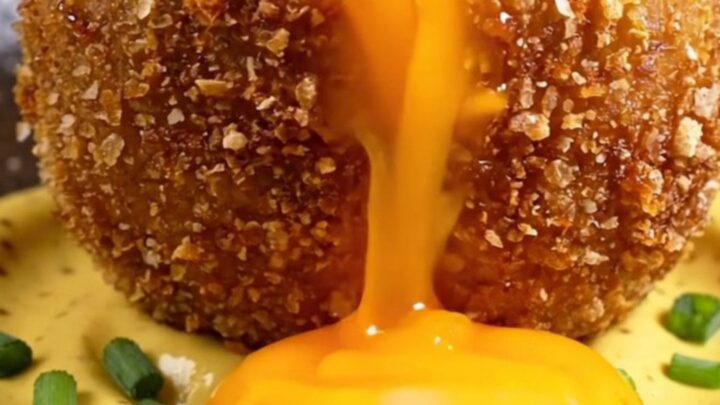
- Serve with AioliSpread the Dijon mustard aioli on a serving platter. Place the fried potato bombs on top. Sprinkle with flaky salt and chopped chives. Serve immediately while the yolks are still warm and creamy.Look for The aioli is spread, the bombs are golden, and the chives add a fresh green contrast.Tip Cut one open at the table to show the yolk flow.
The fried bombs should be placed over the Dijon aioli, sprinkled with flaky salt and chives. When cut, the yolk should flow out slowly, combining with the melted cheddar and crispy potato. The crust should remain crunchy, and the flavors should be balanced between the rich egg, savory cheddar, and tangy aioli. Serve immediately to enjoy the best texture.
Common mistakes
One common mistake is overfilling the potato layer, which makes the bombs too large and difficult to fry evenly. Keep the potato layer about 1/4 inch thick. Another issue is not sealing the potato completely around the egg, which can cause the egg to leak during frying.
Press the edges firmly to seal. Also, avoid frying at too low a temperature, which makes the crust greasy, or too high, which burns the panko before the inside is warm. Use a thermometer and adjust the heat as needed.
How to tell it’s done
The potato bombs are done when the crust is deep golden brown and crisp, and the interior is heated through. To check for doneness, insert an instant-read thermometer into the center of a bomb; it should read at least 160°F (71°C) for the egg to be fully cooked.
If you prefer a runny yolk, the bombs are done when the crust is golden and the egg is warm, but the yolk remains soft. Remember that the yolk will continue to cook slightly from residual heat, so remove the bombs from the oil as soon as the crust is perfectly browned.
- Egg dishes: 160°F (71°C) in the thickest part
Up next · Part 3 of 3
4 variations · storage & make-ahead · 5 answers · printable card
Tips, FAQ & printable recipe (Part 3)← Back to the ingredients (Part 1)