Appetizers · Part 1 of 3: Ingredients
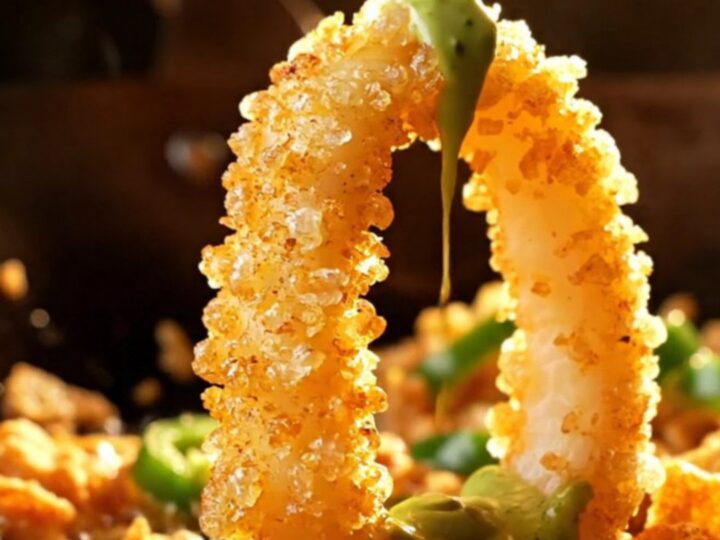
Crispy Salt and Pepper Calamari with Yuzu Kosho Aioli
- Prep
- Cook
- Total
- Serves
- 4
Master the secret to restaurant-style calamari that is never chewy. By using a quick milk and baking soda soak, you transform the texture of the squid into something tender and succulent.
Finished with a high-heat flash-fry, this salt and pepper calamari delivers a shatteringly crisp exterior that contrasts perfectly with the creamy citrus dip.
Calamari is a beloved appetizer, but it is notoriously difficult to cook at home without ending up with rubbery rings. This recipe eliminates that common struggle by focusing on two essential techniques: an alkaline tenderizing soak and a high-temperature short-duration fry.
By coating the squid in potato starch, you achieve a light, airy crunch that holds its texture even after being tossed with aromatic garlic and jalapeños. This dish is designed for those who appreciate the balance of savory, spicy, and zesty flavors in a single, perfectly executed bite.
Ingredients
Calamari
- 1.5 lb squid rings
- 1/2 cup milk
- 1/2 tsp baking soda
- 1 cup potato starch
- 1 tbsp Sichuan salt and pepper
- 4 cups frying oil
Wok Toss
- 3 tbsp crispy fried garlic
- 2 whole green jalapeño slices
Sauce
- 1/2 cup yuzu kosho aioli
Serving
- 1 whole lime, cut into wedges
Why this recipe works
The milk and baking soda soak is the key to tenderness. The baking soda slightly raises the pH of the squid surface, which helps break down tough connective tissues during the short cooking time, while the milk provides a gentle, neutral medium for the tenderizing process to occur without affecting the flavor profile.
Flash-frying at exactly 390°F (199°C) ensures that the potato starch coating crisps up instantly before the squid has a chance to overcook and become rubbery.
Potato starch is naturally better for this than wheat flour because it creates a thinner, more durable, and crispier crust that absorbs less oil during the rapid frying process.
Notes and substitutions
Use fresh or well-thawed squid rings that have been thoroughly patted dry before coating. Moisture is the enemy of a crispy crust, so take a moment to ensure the surface of each ring is dry before adding the potato starch. If you prefer, you can cut the rings yourself from whole cleaned squid tubes.
A heavy-bottomed pot or a dedicated deep fryer is essential for maintaining the high temperature required for flash-frying. Keep a digital thermometer nearby to monitor the oil temperature constantly.
If the temperature drops too low, the coating will absorb excess oil and become heavy, ruining the delicate crunch you are aiming for in this dish.
- potato starch: cornstarch can be used as a direct substitute, though potato starch provides a slightly lighter, crispier texture.
- yuzu kosho aioli: mix mayonnaise with a squeeze of fresh lemon juice and a dash of hot sauce if yuzu kosho is unavailable.
Equipment
- mixing bowl
- deep fryer or heavy-bottomed pot
- thermometer
- wok
- slotted spoon
Up next · Part 2 of 3
3 steps · 2 min of cooking · what to look for at each stage
Step-by-step instructions (Part 2)