Appetizers · Part 3 of 3: Tips & recipe card
Crispy Rice Salmon Tartare Bites with Spicy Mayo Tips, FAQ & printable recipe

- Prep
- Cook
- Total
- Serves
- 6
Tips for success
For the crispiest rice, make sure the oil is hot enough—around 350°F (175°C). If the oil isn't hot enough, the rice will absorb oil and become greasy. Use a thermometer to check.
Also, let the fried rice drain on paper towels to remove excess oil. The rice cakes can be kept warm in a low oven (200°F) for up to 30 minutes, but they're best right out of the pan.
When dicing the salmon, use a sharp knife and keep the pieces uniform in size, about 1/4-inch. This ensures even coating and a nice texture.
For the avocado, mash it with a fork and season with a pinch of salt and a squeeze of lime if desired, though the video doesn't show this. Keep the avocado covered with plastic wrap to prevent browning.
Variations
- Spicy Tuna: Substitute the salmon with sushi-grade tuna, finely diced. Keep the same spicy mayo mixture. The tuna's firm texture works beautifully with the crunchy rice.
- Veggie Version: For a vegetarian option, replace the salmon with finely diced cucumber, avocado, and mango. Toss with the same spicy mayo mixture for a fresh, vibrant topping.
- Extra Heat: Add a few drops of chili oil or a pinch of cayenne to the salmon tartare. For more heat, use serrano pepper instead of jalapeño, or leave the seeds in.
- Sesame Crunch: Before frying, press the rice rectangles into toasted sesame seeds on one side. This adds a nutty flavor and extra crunch to the crispy rice.
Storage and make-ahead
- Fridge
- Store fried rice cakes and salmon tartare separately in airtight containers in the refrigerator for up to 2 days. Avocado should be used fresh.
- Freezer
- Freeze the pressed rice block for up to 2 months. Wrap tightly in plastic wrap and then foil. Thaw in the refrigerator before cutting and frying.
- Reheat
- Reheat fried rice cakes in a toaster oven at 350°F (175°C) for 5 minutes, or in a skillet over medium heat until crisp.
Leftover assembled bites are best eaten immediately, as the rice will lose its crunch. If you have leftover components, store the fried rice cakes in an airtight container in the refrigerator for up to 2 days.
The salmon tartare can be refrigerated separately for up to 1 day. Reheat the rice cakes in a toaster oven or skillet to restore crispness, then top with fresh tartare and avocado.
You can press and freeze the rice block up to 2 days ahead. Once frozen, cut into rectangles and fry just before serving. The salmon tartare can be mixed up to 4 hours in advance and kept chilled. Mash the avocado just before assembling to prevent browning. This make-ahead approach makes these bites perfect for entertaining.
Serving ideas
Serve these crispy rice salmon tartare bites as an appetizer at your next party. They're best enjoyed immediately after assembling, while the rice is still crunchy.
Arrange them on a platter with extra jalapeño slices on the side for guests who want more heat. A sprinkle of sesame seeds or microgreens would be a nice touch, though not shown in the video.
These bites are also great as a light lunch or dinner when paired with a simple green salad. The richness of the salmon and avocado is balanced by the crisp rice and spicy mayo. For a more substantial meal, serve them alongside a bowl of miso soup. They are sure to impress with their elegant presentation and bold flavors.
Frequently asked questions
Can this recipe be made ahead of time?
What is the best type of rice to use?
Is it safe to eat raw salmon?
Can you use regular mayonnaise instead of kewpie?
How do you keep the rice cakes crispy?
Crispy Rice Salmon Tartare Bites with Spicy Mayo
Ingredients
- 2 cups cooked sushi rice, warm
- 1 tbsp rice vinegar
- 1 tsp sugar
- 8 oz sashimi-grade salmon, finely diced
- 2 tbsp kewpie mayonnaise
- 1 tbsp sriracha
- 1 tsp sesame oil
- 2 tbsp sliced scallions
- 1 ripe avocado, mashed
- 1 jalapeño, thinly sliced into wheels
- 1/2 cup vegetable oil, for frying
Instructions
- In a large bowl, combine the warm cooked sushi rice with the rice vinegar and sugar. Stir gently with a spatula until the seasoning is evenly distributed. Line an 8x8-inch baking pan with parchment paper, leaving some overhang for easy removal. Transfer the seasoned rice to the pan and press it down firmly with a spatula or your hands, compacting it into an even 1/2-inch thick layer. Make sure the surface is level and tightly packed.
- Place the pan with the pressed rice into the freezer for 1 hour, until the rice is fully chilled and firm. This step is essential for clean, neat cuts. The rice should be cold and solid enough to hold its shape when sliced.
- Remove the chilled rice from the pan using the parchment overhang. Place it on a cutting board. Using a sharp chef's knife, slice the rice block into bite-sized rectangles, about 1-inch by 2-inches each. You should get about 24 pieces. Wipe the knife clean between cuts if rice sticks.
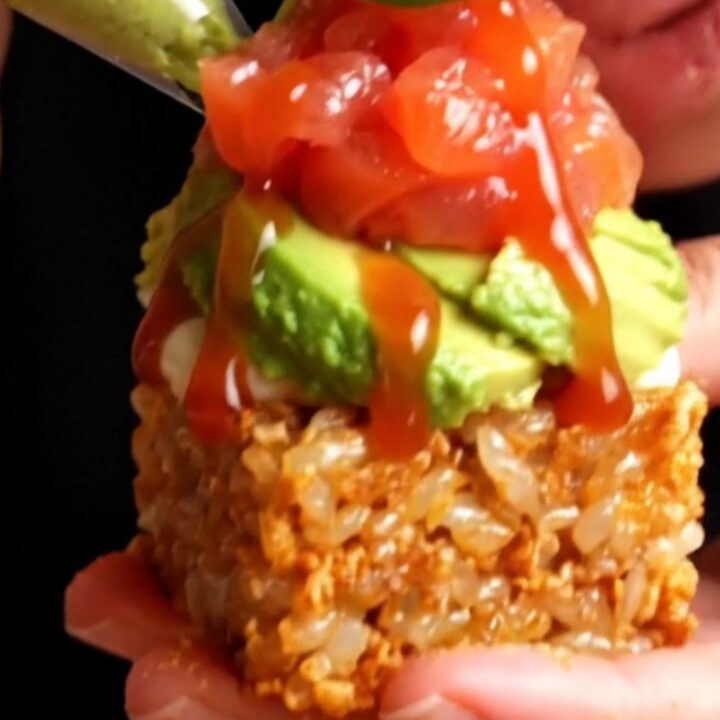
- Heat the vegetable oil in a large skillet over medium-high heat until shimmering, about 350°F (175°C). Carefully place the rice rectangles into the hot oil in a single layer, working in batches if needed. Fry for about 3 minutes per side, until deeply golden, blistered, and crunchy. Use tongs to turn them gently. Transfer to a paper towel-lined plate to drain.
- In a glass bowl, combine the finely diced salmon, kewpie mayonnaise, sriracha, sesame oil, and sliced scallions. Gently fold everything together with a spatula until the salmon is evenly coated and the mixture is creamy and vibrant red. Be careful not to overmix, as the salmon should remain in small, distinct pieces.
- Spoon or pipe a small amount of mashed avocado onto each crispy rice cake, spreading it slightly. Top with a generous mound of the spicy salmon tartare. Crown each bite with a thin jalapeño wheel. Serve immediately while the rice is still crunchy.
Estimated nutrition per serving
- Calories
- 280
- Protein
- 12 g
- Carbohydrates
- 20 g
- Fat
- 17 g
Next recipe

Cheesy Garlic Butter Pull-Apart Brioche Wreath
See the recipe → →This recipe is based on a short cooking video and is published under the pen name Clara Weller. It was checked before publication, but errors can slip through. Nutrition, when shown, is an estimate. Read more in our editorial policy and on our food safety page.
More recipes to try

Cheesy Skillet Spinach Artichoke Dip Stuffed Pull-Apart Bagels
Total time: 45 min
Crispy Garlic Parmesan Potato Balls with Molten Mozzarella Center
Total time: 45 min
Golden Sesame Marble Snack Crackers
Total time: 55 min
Crispy Garlic Parmesan Chicken Tortilla Chips
Total time: 32 min
Crispy Golden Paçanga Börek with Melted Cheese
Total time: 40 min