Appetizers · Part 2 of 3: Instructions
Crispy Rice Paper Spring Rolls with Sweet Nuoc Cham Dip Step-by-step instructions
- Prep
- Cook
- Total
- Serves
- 4
Before you start
Before starting, gather all ingredients and equipment. Soak the glass noodles in hot water for about 10 minutes until soft, then drain and chop. Mince the shrimp, grate the carrot, and mince the wood ear mushrooms. Thinly slice the green onions.
In a large bowl, combine all filling ingredients and mix well. Set up a shallow dish of warm water for dipping the rice paper, and have a clean work surface ready. Ensure the oil is at the correct temperature before frying.
Ingredients at a glance (11)
- 12 round Vietnamese rice paper sheets
- 250 g ground pork
- 100 g minced shrimp
- 50 g glass noodles, soaked and chopped
- 1 grated carrot
- 2 wood ear mushrooms, minced
- 2 green onions, thinly sliced
- 1 egg
- 1 tbsp fish sauce
- 500 ml oil for frying
- Nuoc Cham dipping sauce, for serving
Instructions
Make the Filling and Roll
- Prepare the FillingIn a large bowl, combine the ground pork, minced shrimp, chopped glass noodles, grated carrot, minced wood ear mushrooms, sliced green onions, egg, and fish sauce. Mix thoroughly with clean hands or a spoon until everything is evenly distributed and the mixture holds together slightly.Look for The filling should be well blended, moist but not wet, and slightly sticky.Tip Chop the glass noodles and mushrooms finely so they don't tear the rice paper.
- Soften the Rice PaperFill a shallow dish with warm water. Dip one rice paper sheet into the water for about 2 seconds, just until it softens slightly. Remove and lay it flat on a clean, dry surface. The sheet should be pliable but not overly wet.Look for The sheet should be flexible enough to fold without cracking, but not so wet that it tears.Tip Work with one sheet at a time; keep the others covered with a damp towel to prevent drying.
- Roll the Spring RollsPlace about 2 tablespoons of the filling near the bottom edge of the rice paper, shaping it into a log. Fold the bottom edge over the filling, then fold in the sides, and roll tightly into a slender cylinder. Press gently to seal. Repeat with the remaining sheets and filling.Look for The rolls should be firm, evenly filled, and sealed closed.Tip Keep the rolls snug but not too tight, or they may burst during frying.
The filling should be well combined, moist, and slightly sticky. The rice paper rolls should be tight, sealed, and uniform in size. They may look pale and soft at this stage, but they will crisp up during frying. Check that no filling is exposed, as it could leak into the oil.
Double-Fry to Crisp
- First Fry at Medium HeatIn a large skillet or wok, heat the oil to 325°F (160°C). Carefully add the spring rolls in a single layer, without overcrowding. Fry for about 5 minutes, turning occasionally, until they are lightly golden and cooked through. Remove with tongs and drain on paper towels.Look for The rolls should be pale golden and firm to the touch.Safe temperature 160°F (71°C) internal temperature (ground meat)Tip Maintain the oil temperature; adjust the heat as needed.
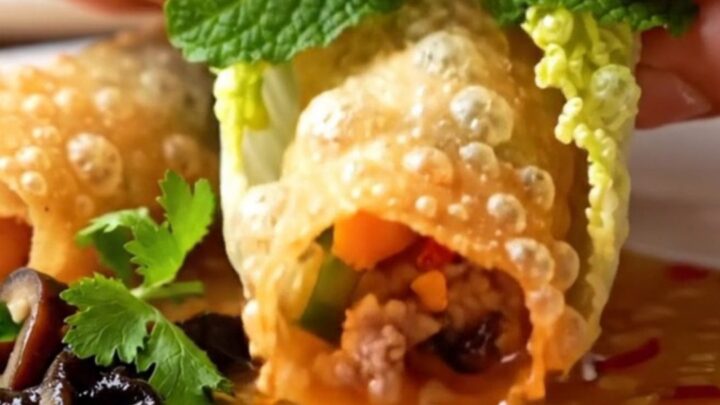
- Second Fry for Extra CrispnessIncrease the oil temperature to 375°F (190°C). Return the spring rolls to the hot oil in batches and fry for about 2 minutes, turning constantly, until they are deeply golden, blistered, and very crisp. Remove and drain on fresh paper towels.Look for The rolls should be deep golden brown, with a blistered, crackly surface.Safe temperature 160°F (71°C) internal temperature (ground meat)Tip The second fry at higher heat creates the signature shatteringly crisp shell.
After the first fry, the rolls should be lightly golden and firm. After the second fry, they should be deep golden brown, with a blistered, crackly surface.
The oil should be at the correct temperatures throughout. The rolls should feel very crisp and sound crunchy when tapped.
Serve with Dip
- Serve with Nuoc ChamArrange the hot crispy rolls on a platter. Serve immediately with the Nuoc Cham dipping sauce on the side. For a traditional touch, offer crisp butter lettuce leaves, fresh mint, and cilantro for wrapping, if desired.Look for The rolls should be hot, crisp, and ready to dunk.Tip Encourage guests to wrap rolls in lettuce with herbs for a fresh contrast.
The rolls should be hot, crisp, and ready to serve. The Nuoc Cham should be tangy, sweet, and slightly spicy. Arrange on a platter with lettuce, herbs, and the dip. The rolls should be eaten immediately for maximum crunch.
Common mistakes
A common mistake is using oil that is not hot enough, which causes the rolls to absorb oil and become greasy. Always use a thermometer to maintain the correct temperatures.
Another issue is overfilling the rolls, which can cause them to burst during frying. Use about 2 tablespoons of filling per roll and roll tightly. Also, avoid overcrowding the pan, as this lowers the oil temperature and leads to uneven cooking.
How to tell it’s done
The spring rolls are done when they are deeply golden brown and blistered all over, and the filling is cooked through. To verify, insert an instant-read thermometer into the center of a roll; it should read at least 160°F (71°C) for the pork and shrimp.
The exterior should be very crisp and make a loud crunch when bitten. Let the rolls rest for a minute on paper towels to drain excess oil before serving.
- Ground meat: 160°F (71°C) in the thickest part
- Shellfish: 145°F (63°C) in the thickest part
- Egg dishes: 160°F (71°C) in the thickest part
Up next · Part 3 of 3
4 variations · storage & make-ahead · 5 answers · printable card
Tips, FAQ & printable recipe (Part 3)← Back to the ingredients (Part 1)