Dinner · Part 2 of 3: Instructions
Crispy Prosciutto Fig Pappardelle with Balsamic Glaze Step-by-step instructions
- Prep
- Cook
- Total
- Serves
- 4
Before you start
Before you start, bring a large pot of salted water to a boil for the pasta. Have all ingredients measured and within reach: prosciutto sliced thin, figs quartered, rosemary chopped, and chèvre crumbled. Set a large skillet over medium heat and a colander in the sink.
Because the dish comes together quickly, having everything ready ensures the sauce doesn’t wait for you. Also, reserve a coffee cup of pasta water before draining—it’s your secret weapon for adjusting the sauce’s consistency.
Ingredients at a glance (9)
- 4 oz thinly sliced prosciutto
- 3 tbsp unsalted butter
- 4 fresh Black Mission figs, quartered
- 1 tbsp fresh rosemary, finely chopped
- 3 tbsp aged balsamic vinegar
- 1/2 cup chicken stock
- 2 oz chèvre goat cheese, crumbled
- 12 oz fresh egg pappardelle
- cracked black pepper, for serving
Instructions
Phase 1: Build the Flavor Base
- Crisp the ProsciuttoHeat a large skillet over medium heat. Add the prosciutto slices in a single layer and cook for 2 to 3 minutes per side, until deeply golden and shatteringly crisp. Transfer to a paper towel-lined plate and set aside. Leave the rendered fat in the skillet.Look for The prosciutto turns deep amber and feels brittle when lifted.Tip Do not overcrowd the pan; cook in batches if needed to ensure even crisping.
- Glaze the FigsIn the same skillet, melt the butter over medium heat. Add the quartered figs and chopped rosemary. Cook, stirring occasionally, for 2 minutes until the figs soften slightly. Pour in the balsamic vinegar and let it bubble, scraping up any browned bits, until the vinegar reduces to a glossy syrup that coats the figs, about 1 minute.Look for The vinegar has thickened and clings to the figs like a glaze.Tip Use a wooden spoon to release the crispy bits from the bottom—they add flavor.
- Build the SaucePour the chicken stock into the skillet and bring to a gentle simmer. Reduce the heat to low and add the crumbled chèvre. Whisk constantly until the cheese melts into a silky, glossy sauce, about 2 minutes. Season with a pinch of salt and cracked black pepper.Look for The sauce is smooth, pale ivory, and coats the back of a spoon.Tip Keep the heat low to prevent the goat cheese from curdling.
At the end of this phase, the prosciutto is crisp and deep amber, the figs are soft and glistening with balsamic, and the sauce is smooth and glossy.
The kitchen smells of roasted figs, rosemary, and tangy vinegar. Before moving on, make sure the sauce is silky and not separated—if it looks curdled, whisk in a splash of warm stock to bring it back together.
Phase 2: Cook and Coat the Pasta
- Cook the PappardelleBring a large pot of salted water to a rolling boil. Add the fresh pappardelle and cook for 2 to 3 minutes, until just tender but still al dente. Reserve 1/2 cup of pasta water, then drain the pasta.Look for The ribbons are tender and slightly chewy at the center.Safe temperature 160°F (71°C) internal temperature (egg dishes)Tip Fresh pasta cooks quickly—watch it closely to avoid overcooking.
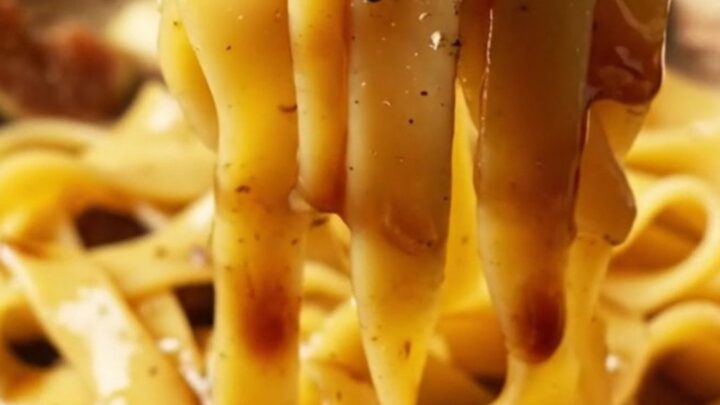
- Toss in the SauceAdd the drained pappardelle to the skillet with the fig-balsamic sauce. Toss over low heat, using tongs, until every ribbon is coated. If the sauce is too thick, add a splash of the reserved pasta water to loosen it to a silky consistency.Look for The sauce clings to the pasta, glossy and creamy.Tip Toss gently to avoid tearing the delicate pasta ribbons.
The pappardelle is al dente, with a slight chew, and every ribbon is coated in the creamy balsamic sauce. The sauce should cling to the pasta without pooling at the bottom of the pan. If it seems dry, add a splash of pasta water and toss. The overall look is glossy and inviting, with figs nestled among the noodles.
Phase 3: Finish and Serve
- Serve with Crispy ProsciuttoDivide the pasta among warm bowls. Break the crispy prosciutto into shards and scatter over the top. Finish with a generous crack of black pepper and a few fresh rosemary leaves, if desired.Look for The prosciutto shards sit atop the creamy pasta, ready to shatter.Tip Add the prosciutto just before serving to keep it crisp.
The bowls are filled with pasta, topped with crispy prosciutto shards and a final crack of black pepper. The prosciutto sits proudly on top, ready to shatter at the touch of a fork. The dish looks rustic and elegant, with a beautiful contrast of colors: deep amber prosciutto, dark purple figs, and creamy sauce.
Common mistakes
Avoid overcooking the prosciutto—it can go from crisp to bitter if burned. Keep the heat at medium and watch closely. When adding the balsamic, let it bubble but not boil away completely; it should reduce to a syrup, not a dry pan.
If the sauce seems thin, simmer it a minute longer; if it’s too thick, add pasta water a tablespoon at a time. Finally, don’t rinse the pasta after draining—the starch helps the sauce cling. Toss gently to avoid tearing the delicate ribbons.
How to tell it’s done
The pasta is done when it’s tender but still has a slight bite (al dente). Fresh pappardelle typically cooks in 2 to 3 minutes; start checking at 2 minutes. The sauce should be glossy and silky, coating the back of a spoon. When you toss the pasta, it should be evenly coated without any dry spots.
The prosciutto should be deeply browned and shatter when broken. If you’re unsure about the eggs in the pasta, note that fresh pasta is cooked through when it reaches 160°F (71°C) internally—use an instant-read thermometer if you want to be precise.
- Egg dishes: 160°F (71°C) in the thickest part
Up next · Part 3 of 3
4 variations · storage & make-ahead · 5 answers · printable card
Tips, FAQ & printable recipe (Part 3)← Back to the ingredients (Part 1)