Dinner · Part 2 of 3: Instructions
Crispy Pork Katsu Curry Bowl with Pickled Radish Step-by-step instructions
- Prep
- Cook
- Total
- Serves
- 2
Before you start
Before starting, set up your breading station: three shallow dishes with flour, beaten eggs, and panko. Have a wire rack ready for draining the fried cutlets.
Prep the vegetables: slice the onion, dice the carrot and potato. Measure the water and have the curry roux block ready. Cook the rice ahead of time or use a rice cooker so it's ready when the curry and katsu are done.
Ingredients at a glance (13)
- 2 thick pork loin chops (about 200 g each)
- salt to taste
- black pepper to taste
- 100 g all-purpose flour
- 2 large eggs, beaten
- 100 g Japanese panko breadcrumbs
- 1 block Japanese curry roux
- 1 onion, sliced
- 1 carrot, diced
- 1 potato, diced
- 500 ml water
- 2 bowls steamed Japanese short-grain rice
- pickled fukujinzuke, for serving
Instructions
Prep and Bread
- Pound and Bread the PorkPlace each pork chop between two sheets of plastic wrap and pound with a meat mallet or rolling pin until about 1/2-inch thick. Season both sides with salt and pepper. Set up three shallow dishes: one with flour, one with beaten eggs, and one with panko breadcrumbs. Dredge each chop in flour, shaking off excess, then dip in egg, letting any excess drip off, then press firmly into the panko, coating evenly.Look for The pork is evenly coated with a thick, dry layer of panko that adheres well.Tip Press the panko firmly onto the pork so it sticks during frying; let the breaded chops rest for 5 minutes before frying.
- Start the Curry SauceHeat a large pot over medium heat and add a splash of oil. Sauté the sliced onion until translucent, about 3 minutes. Add the diced carrot and potato and cook for another 2 minutes. Pour in the water and bring to a boil. Reduce heat to low and simmer until the vegetables are tender, about 10 minutes. Add the curry roux block and stir until completely melted and the sauce is thick and glossy.Look for The curry sauce is thick, glossy, and coats the back of a spoon.Tip Break the roux into smaller pieces to help it melt faster and stir continuously to prevent sticking.
At this stage, the pork chops are pounded thin, seasoned, and coated with a thick, even layer of panko.
The curry vegetables are sautéing, filling the kitchen with a sweet, oniony aroma. The breaded cutlets should feel dry to the touch and the coating should be firmly adhered.
Fry the Cutlets
- Deep-Fry the KatsuPour oil into a deep skillet or pot to a depth of about 2 inches. Heat to 350°F (175°C) over medium-high heat. Carefully slide the breaded pork chops into the hot oil, one at a time if needed. Fry for about 5 minutes, turning once, until golden brown and crispy. The internal temperature of the pork should reach 145°F (63°C). Remove and drain upright on a wire rack. Let rest for at least 3 minutes before slicing.Look for The crust is deep golden amber and the pork is cooked through; the cutlet feels firm when pressed.Safe temperature 145°F (63°C) internal temperature (steaks, chops and roasts)Tip Maintain the oil temperature; if it drops too low, the crust absorbs oil and becomes greasy.
- Slice the KatsuAfter resting, place the fried pork cutlets on a cutting board. Using a sharp knife, slice each cutlet into 1-inch wide strips, cutting through the crispy crust cleanly. The interior should be juicy and slightly pink is fine as long as it reached 145°F (63°C).Look for The slices are clean-cut with a visible crispy crust and moist interior.Safe temperature 160°F (71°C) internal temperature (egg dishes)Tip Use a serrated knife or a very sharp chef's knife to avoid tearing the crust.
The oil is at 350°F (175°C), and the breaded pork is frying to a deep golden amber. The sizzle is vigorous, and the crust turns crisp. The pork is cooked through and resting on a wire rack, releasing a tempting aroma.
Assemble and Serve
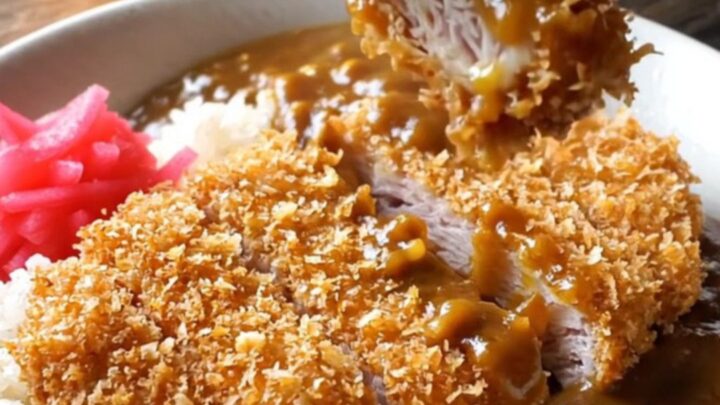
- Assemble the BowlsDivide the steamed rice between two bowls. Ladle the hot curry sauce over one side of the rice. Arrange the sliced katsu on top of the rice, leaning against the curry. Add a generous pile of pickled fukujinzuke on the side. Serve immediately.Look for The bowl is beautiful with contrasting colors: golden katsu, rich brown curry, white rice, and red pickles.Tip For extra crunch, serve the katsu on top of the curry rather than mixing it in.
The curry sauce is thick and glossy, the rice is steaming, and the sliced katsu is arranged beautifully in bowls. The pickles add a bright, tangy contrast. Everything is hot and ready to serve.
Common mistakes
One common mistake is overcrowding the pan when frying, which drops the oil temperature and results in greasy, soggy crusts. Fry in batches if necessary.
Another is not pounding the pork evenly, leading to uneven cooking—thicker parts may be undercooked while thinner parts dry out. Also, avoid skipping the rest time after frying; slicing too soon causes the juices to run out, making the pork dry.
How to tell it’s done
The pork is done when the internal temperature reaches 145°F (63°C) on an instant-read thermometer inserted into the thickest part. The crust should be deep golden brown and feel crisp when tapped.
Let the cutlets rest for at least 3 minutes before slicing to allow the juices to redistribute. The curry sauce is ready when it's thick enough to coat the back of a spoon and the vegetables are tender.
- Steaks, chops and roasts: 145°F (63°C) in the thickest part, then a 3-minute rest
- Egg dishes: 160°F (71°C) in the thickest part
Up next · Part 3 of 3
4 variations · storage & make-ahead · 5 answers · printable card
Tips, FAQ & printable recipe (Part 3)← Back to the ingredients (Part 1)