Dinner · Part 2 of 3: Instructions
Crispy Pork Belly Okonomiyaki Pancake Step-by-step instructions
- Prep
- Cook
- Total
- Serves
- 2
Before you start
Before starting, set out all the ingredients and equipment. Grate the nagaimo yam using a fine grater, being careful of the slippery texture. Shred the cabbage into thin strips, about 1/8 inch wide, so it cooks evenly.
If using a block of dashi, make it fresh; otherwise, dissolve dashi powder in warm water. Have the pork belly slices ready and a large nonstick skillet or griddle heated before mixing the batter.
Ingredients at a glance (10)
- 300 g finely shredded green cabbage
- 100 g grated nagaimo yam
- 80 g all-purpose flour
- 1/2 cup dashi
- 2 large eggs
- 1/4 cup tempura bits (tenkasu)
- 3 strips thin-sliced pork belly
- okonomiyaki sauce, for serving
- Japanese mayonnaise, for serving
- bonito flakes, for serving
Instructions
Mix and Top
- Mix the batterIn a large bowl, whisk the dashi and eggs together until combined. Add the flour and whisk just until smooth, then fold in the grated nagaimo yam. Add the shredded cabbage and tempura bits, and use a spatula to fold everything together until the cabbage is evenly coated. The mixture should be thick but still hold together; add a tablespoon of water if it seems too dry.Look for The batter is thick and clings to the cabbage without pooling liquid.Tip Do not overmix — the batter should be just combined to keep the pancake tender.
- Top with pork bellyDivide the cabbage mixture into two equal portions. Lay the pork belly strips on top of each portion, pressing them gently into the batter so they adhere. The pork belly should cover the surface but not be fully buried.Look for Each pancake has a neat layer of pork belly on top.Tip If the pork belly strips are too long, cut them in half to fit the pancake.
The batter should be thick and shaggy, clinging to the cabbage without excess liquid. The pork belly strips sit neatly on top, ready to sear. The mixture smells fresh and slightly sweet from the yam.
Sear and Cook
- Sear the pancakesHeat a large nonstick skillet or griddle over medium-high heat until a drop of water sizzles and evaporates. Add a thin layer of oil. Carefully transfer one pancake to the skillet, pork belly side down. Cook for 5 minutes, pressing gently with a spatula to flatten it to about 3/4 inch thick. The bottom should be deeply golden and the pork belly crisp. Let it rest for 3 minutes before slicing.Look for The edges look set and the pork belly renders and browns.Safe temperature 145°F (63°C) internal temperature (steaks, chops and roasts)Tip Resist the urge to move the pancake — let it develop a crust.
- Flip and cook throughFlip the pancake carefully with a wide spatula. Cook for another 5 minutes, until the second side is golden and the interior is cooked through. The cabbage should be tender and the batter fully set. If the pancake browns too quickly, lower the heat to medium. Transfer to a plate and repeat with the second pancake.Look for The pancake feels firm when pressed and the center is no longer wet.Safe temperature 160°F (71°C) internal temperature (egg dishes)Tip Use a second spatula to support the pancake while flipping to avoid breaking it.
The pancake sizzles on the griddle, with the pork belly turning golden and crisp. The edges look set and the bottom is deeply browned. The interior steams and the cabbage softens, filling the kitchen with a savory aroma.
Glaze and Serve
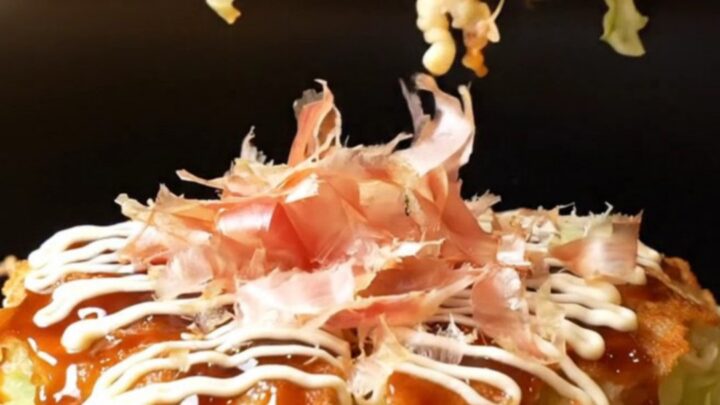
- Glaze and garnishBrush the top of each hot pancake generously with okonomiyaki sauce. Drizzle Japanese mayonnaise in a zigzag or feather pattern over the sauce. Sprinkle with bonito flakes just before serving. Cut into wedges and serve hot.Look for The sauce glistens, the mayo feathers, and the bonito flakes curl from the heat.Tip Add the bonito flakes at the last moment so they stay crisp and animated.
The sauce and mayo form a glossy, feathered pattern over the crisp surface. Bonito flakes curl and dance from the heat. The pancake is cut into wedges, revealing a tender, cabbage-filled interior with crisp edges.
Common mistakes
A common mistake is overmixing the batter, which can make the pancake tough. Another is using too much batter per pancake, resulting in a thick, undercooked center.
Keep the heat medium-high and press the pancake gently to flatten it to about 3/4 inch thick.
Also, avoid flipping too early — wait until the edges look set and the bottom is deeply browned, or the pancake may fall apart.
How to tell it’s done
The pancake is done when both sides are deeply golden and crisp, and the center is set but still moist and tender. Insert a skewer into the center — it should come out clean, with no raw batter clinging.
The pork belly should be browned and crisp at the edges. For food safety, the eggs must reach 160°F (71°C) and the pork belly should reach 145°F (63°C) with a 3-minute rest before serving.
- Egg dishes: 160°F (71°C) in the thickest part
- Steaks, chops and roasts: 145°F (63°C) in the thickest part, then a 3-minute rest
Up next · Part 3 of 3
4 variations · storage & make-ahead · 5 answers · printable card
Tips, FAQ & printable recipe (Part 3)← Back to the ingredients (Part 1)