Appetizers · Part 2 of 3: Instructions
Crispy Pork Belly Chicharrones with Fresh Guacamole Step-by-step instructions
- Prep
- Cook
- Total
- Serves
- 4
Before you start
Gather everything before the pan goes on the heat, because the recipe moves quickly once the water cooks off. Pat the pork belly dry, then cube and score it — this is the only knife work of the day. Set a wire rack over a rimmed sheet pan near the stove for draining.
Clip a frying thermometer to the pan. Have the kosher salt measured, the garlic cloves peeled, and the lime ready for juicing. Pull the guacamole and pico de gallo out of the refrigerator about fifteen minutes before serving so their flavors read fully.
Ingredients at a glance (7)
- 2 lb skin-on pork belly, cut into 1-inch strips
- 1 cup water
- 2 tsp kosher salt
- 4 cloves garlic cloves, peeled
- 1 lime, for squeezing over the hot chicharrones
- Chunky guacamole, store-bought or made ahead, for serving
- Pico de gallo, store-bought or made ahead, for serving
Instructions
Prep the pork
- Cube the pork bellyPat the pork belly dry with paper towels, then cut it into thick strips and crosscut them into 1-inch cubes. Work with a sharp knife; belly is soft, so long confident strokes beat sawing. Aim for uniform pieces so every cube fries at the same pace and finishes crisp at the same moment.Look for Each cube should hold its shape, roughly an inch square, with the skin layer intact on one face.Tip Chill the belly in the freezer for 15 minutes first; firmer fat cuts cleanly and the cubes keep sharp edges.
- Score the skin in crosshatchScore the skin side of every cube in a tight crosshatch, cutting through the skin and just into the fat beneath, about 1/4 inch apart. Do not reach the meat. The scores open channels for steam and fat, which is what lets the skin puff into blisters instead of staying flat and tough.Look for Look for an even diamond pattern on every skin face, shallow enough that no pink meat shows in the cuts.Tip A sharp paring knife or utility knife gives more control over shallow cuts than a long chef's knife.
Phase one ends with a tray of evenly cut, deeply scored pork cubes, every piece about an inch thick with a tight crosshatch on the skin side. The lines should be shallow — skin and a whisper of fat, never the meat.
The cubes look dry on the surface, which is exactly what is wanted; moisture is the enemy of blistering. Check the cuts before moving on: any piece with a score that went too deep can be turned meat-side up and forgotten, but ideally the whole batch shows clean, even, uniform scoring with no ragged edges.
Simmer, then fry in lard
- Simmer with salt and garlicNestle the scored cubes into a wide, heavy pan in a single layer, skin side down. Add the water, kosher salt, and garlic cloves, and bring to a simmer over medium heat. Let it bubble steadily, partially covered, until the water evaporates completely, about 20 minutes; the pork par-cooks while its fat begins to render.Look for Listen for the shift from a soft simmer to a sharper sizzle as the last water disappears, with the garlic pale gold, never brown.Tip Keep the heat at steady medium; rushing the water off over high heat tightens the meat before the skin gets its chance.
- Bring the lard to 375°FOnce the water has cooked off, the cubes sit in their own rendered lard. Raise the heat and bring the fat to 375°F (190°C), checking with a clip-on thermometer. Adjust the burner in small steps so the temperature holds steady; the skin sides should face the hottest fat first to start puffing immediately.Look for A lively, energetic sizzle with small bubbles rising around every cube means the fat is at temperature and working.Tip If the pan looks dry before the fat covers the cubes, give it a few more minutes; belly keeps releasing lard as it cooks.
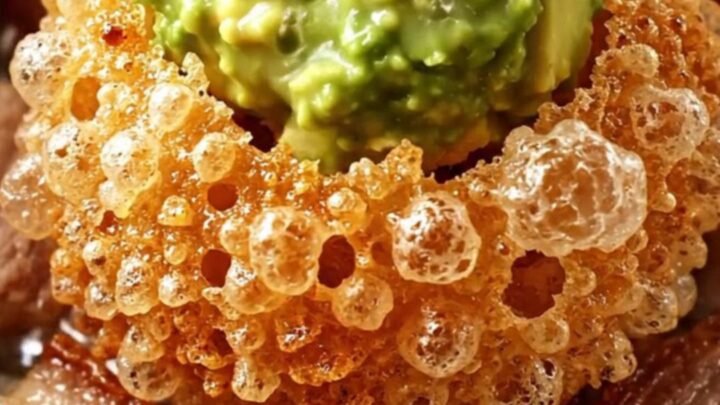
- Fry until the skin blistersFry the cubes for about 12 minutes, turning them every few minutes so each face meets the hot fat. The skin puffs into airy, golden-brown blisters while the meat underneath stays juicy. Verify doneness with an instant-read thermometer: 145°F (63°C) internal, then rest the pieces at least 3 minutes off the heat.Look for Blisters should cover the skin like golden bubble wrap, and the cubes should feel light for their size, a sign the fat has rendered.Safe temperature 145°F (63°C) internal temperature (steaks, chops and roasts)Tip Turn with tongs rather than a spatula; a spatula presses the crust flat and can pop the best blisters.
- Drain on a wire rackLift the chicharrones from the hot lard with tongs or a spider and transfer them to a wire rack set over a sheet pan. Leave space between the pieces so steam escapes on all sides. The crust firms as it cools, and the 3-minute rest settles the juices through the meat.Look for Tap a piece with tongs as it lands: a dry, crackling sound confirms a crust that will shatter, not bend.Tip Never drain on paper towels; trapped steam softens the underside within a minute, while a rack keeps every face crisp.
Phase two ends when the last of the water has sizzled away and the cubes are frying in their own clear, golden lard at 375°F (190°C). The kitchen smells like a carnitas shop — rich pork, sweet garlic, a hint of toast. The skin sides show the first small blisters, and the meat is already pale and tender from the simmer. Before the final fry, confirm the thermometer reads steady at 375°F (190°C), the garlic is pale gold rather than brown, and there is enough rendered fat for the cubes to sizzle freely.
Finish and serve hot
- Finish with fresh limeWhile the chicharrones are still hot on the rack, squeeze the fresh lime juice evenly over the top. The crust drinks in a little of the acidity and the citrus aroma lifts the whole piece. Taste one and add a light sprinkle of salt only if the batch needs it.Look for The lime should hiss faintly on contact; if it sits silently, the pieces have cooled too far for the finish to cling.Tip Roll the lime firmly under a palm before juicing; it yields nearly twice the juice with half the effort.
- Serve with guacamole and picoPile the chicharrones on a warm platter beside a generous mound of chunky guacamole and a bowl of pico de gallo, both cold from the refrigerator. Serve immediately, while the crust is at its loudest, letting everyone scoop guacamole with the crackling pieces and chase it with pico.Look for The platter should look dramatic: deep amber blisters against bright green guacamole, with lime-scented steam still rising.Tip Warm the platter with hot tap water and dry it first; cold ceramic dulls the crust within a couple of minutes.
Phase three ends at the table, and the checks are sensory. The chicharrones rest on a wire rack, their skins blistered across the whole surface, golden to deep amber, and audibly crackling as they cool. After at least a 3-minute rest, the internal temperature has held at or above 145°F (63°C) and the meat glistens but does not leak juice.
The lime has gone over the top while the crust was still hot, and the platter carries a mound of chunky guacamole and pico de gallo. If a piece bends instead of shattering, it sat too long in cooling fat.
Common mistakes
The most common failure is heat that is too low: below about 350°F (175°C), the skin dries out and toughens instead of blistering, so trust the thermometer over instinct. Crowding the pan drops the fat temperature sharply; fry in two batches rather than one crowded one. Cutting the scores deep enough to reach the meat lets juices flood out and the cubes shrink unevenly — keep the cuts shallow. Draining on paper towels softens the underside with trapped steam; a rack keeps it crisp.
How to tell it’s done
Done chicharrones announce themselves: the sizzle turns higher and drier, the skin is covered edge to edge in golden-brown blisters, and the cubes feel noticeably lighter as fat renders out. Lift one out and listen — a proper piece crackles when tapped with tongs.
For safety, check the meat with an instant-read thermometer: pork belly is fully cooked at an internal temperature of 145°F (63°C), followed by a rest of at least 3 minutes off the heat, during which the temperature holds or climbs slightly.
- Steaks, chops and roasts: 145°F (63°C) in the thickest part, then a 3-minute rest
Up next · Part 3 of 3
4 variations · storage & make-ahead · 5 answers · printable card
Tips, FAQ & printable recipe (Part 3)← Back to the ingredients (Part 1)