Appetizers · Part 1 of 3: Ingredients
Crispy Polenta Fries with Smoked Provolone and Arrabbiata
- Prep
- Cook
- Total
- Serves
- 4
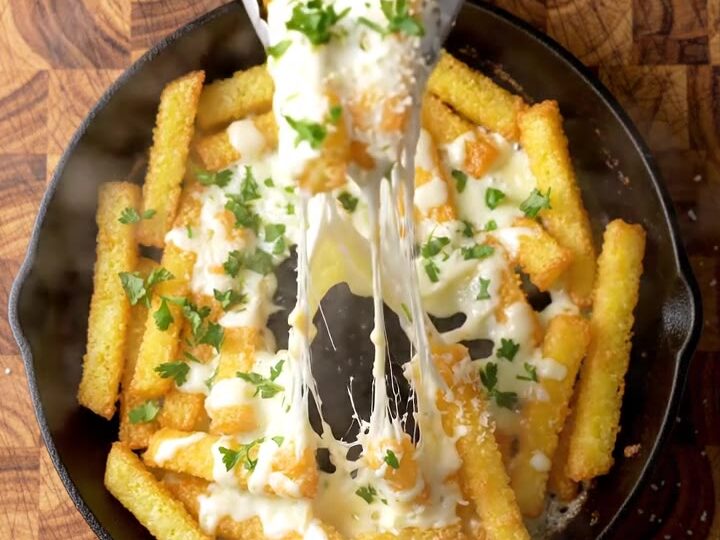
Imagine a skillet of golden polenta fries, fried until they shatter with crunch, then drenched in a fiery garlic tomato sauce and buried under a blanket of molten smoked provolone. This is that dish: a one-pan wonder that goes from stovetop to table in about 30 minutes.
The fries stay crisp on the outside, tender inside, and every bite pulls a long, cheesy ribbon. It works as a bold appetizer for four or a satisfying main for two, and it's endlessly adaptable to whatever cheese or spice level you crave.
This recipe turns a humble slab of pre-cooked polenta into the crispiest, cheesiest skillet you'll pull from the stove. The polenta is cut into thick fries and fried in herb butter oil until golden and crunchy, then nestled into a spicy garlic arrabbiata sauce that bubbles up around them.
A shower of smoked provolone melts into a gooey, stretchy layer, finished with fresh parsley and grated Parmesan. It's a rustic, Italian-inspired dish that feels both indulgent and weeknight-easy, and it all comes together in a single cast iron skillet.
Ingredients
- 1 lb pre-cooked polenta slab
- 4 cloves garlic, minced
- 1/2 cup flat leaf parsley, finely chopped
- 8 oz smoked provolone, shredded
- 1/4 cup herb butter oil (melted butter with dried herbs)
- 1 1/2 cups spicy garlic tomato arrabbiata sauce
- 1/4 cup grated Parmesan
Why this recipe works
Polenta fries are the perfect canvas: they crisp beautifully on the outside while staying creamy and tender inside. Frying them in herb butter oil adds a rich, savory depth that plain oil can't match, and the butter helps them develop a deep golden crust.
Because the fries are cut thick, they hold up to the sauce and cheese without turning mushy, giving you that satisfying contrast of textures in every bite.
The method of spooning the arrabbiata around the fries rather than over them keeps the tops crunchy, so you get a crisp edge with every forkful.
Melting the smoked provolone under a quick cover traps steam and melts the cheese evenly, creating that irresistible pull. Finishing with fresh parsley and Parmesan brightens the dish and adds a salty, nutty note that balances the spicy sauce.
Notes and substitutions
Pre-cooked polenta slabs are widely available in grocery stores, often near the pasta or in the refrigerated section. Look for one that's firm enough to slice cleanly; if it's too soft, let it drain on paper towels for a few minutes. Smoked provolone is the star here — its smoky, creamy flavor melts beautifully — but smoked mozzarella or gouda make excellent stand-ins.
The arrabbiata sauce should be spicy and garlicky; use a good-quality jarred version or make your own with crushed tomatoes, garlic, and red pepper flakes. Herb butter oil is simply melted butter with dried oregano or thyme; you can also use olive oil with herbs for a dairy-free option. Fresh flat leaf parsley is non-negotiable for that bright finish, but basil works too.
- smoked provolone: smoked mozzarella or smoked gouda for a similar smoky melt
- herb butter oil: olive oil mixed with dried oregano and thyme
- arrabbiata sauce: any spicy marinara or tomato sauce with red pepper flakes
- flat leaf parsley: fresh basil or oregano for a different herb note
Equipment
- Cast iron skillet
- Box grater
- Chef's knife
- Cutting board
- Spatula
- Measuring cups and spoons
Up next · Part 2 of 3
6 steps · 25 min of cooking · what to look for at each stage
Step-by-step instructions (Part 2)