Dinner · Part 2 of 3: Instructions
Crispy Pineapple Chicken Stir-Fry (Better Than Takeout) Step-by-step instructions
- Prep
- Cook
- Total
- Serves
- 4
Before you start
Before starting the heat, organize all your ingredients near the stove. Stir-frying is an incredibly fast-paced cooking method that requires constant attention, leaving no time to chop vegetables or open sauces once the wok is hot.
Cut the chicken, slice the bell peppers, and drain the pineapple chunks. Having everything ready in separate bowls near your cooking station ensures a smooth, stress-free cooking process.
Ingredients at a glance (4)
- 1 1/2 lb chicken breasts, cut into 1-inch chunks
- 2 bell peppers, cut into 1-inch pieces
- 1 1/2 cups pineapple chunks
- 1/2 cup thick glossy sauce, store-bought or made ahead
Instructions
Prep and Ingredient Assembly
- Prepare the IngredientsCut the chicken breasts into uniform one-inch chunks. Slice the vibrant bell peppers into matching pieces and measure out the pineapple chunks. Having all your ingredients prepped and ready near the stove is essential for a fast-paced stir-fry.Look for The chicken, peppers, and pineapple are chopped and organized.Tip Keep the chicken chunks uniform in size so they cook evenly.
- Sear the ChickenHeat a large wok or heavy skillet over high heat. Add the chicken chunks in a single, spaced-out layer. Sear the chicken without moving it for a couple of minutes to develop a beautiful golden, crispy crust, then toss and cook until done.Look for The chicken has a golden, crispy outer crust.Tip Cook in batches if your pan is small to avoid crowding and steaming the meat.
At the end of this prep phase, your chicken chunks should be cut into uniform pieces, and the bell peppers and pineapple chunks should be chopped and ready to go. The thick glossy sauce should be measured and placed near your cooking station, ensuring a seamless transition once the hot wok is ready.
Searing the Chicken and Produce
- Sear the ProduceRemove the crispy chicken from the wok and set it aside. Immediately add the vibrant bell peppers and pineapple chunks to the hot wok. Sear them over high heat, tossing frequently, for about two to three minutes until they show charred edges.Look for The peppers and pineapple are slightly charred but still firm.Tip Do not overcook the vegetables so they retain their crisp texture.
By the end of the searing phase, the chicken chunks will have a golden, crispy exterior skin, and the bell peppers and pineapple will show beautiful charred spots on their edges. The wok should smell deeply savory, sweet, and slightly smoky. The vegetables must still look bright and feel firm to the touch when pressed with a spatula.
Glazing and Final Toss
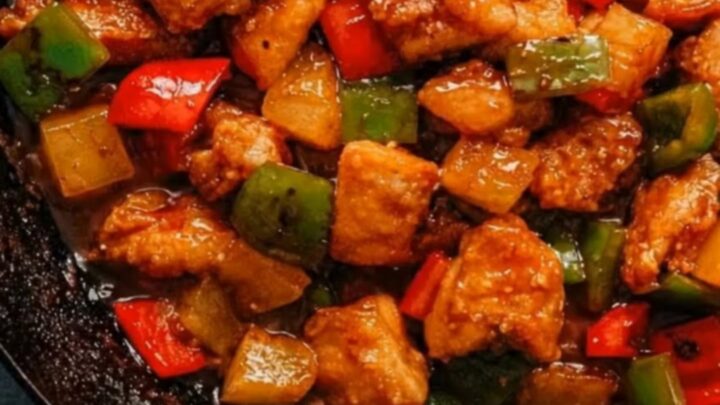
- Glaze and ServeReturn the chicken to the wok with the vegetables. Pour the thick glossy sauce over the sizzling ingredients. Toss dynamically for two minutes until the glaze is hot and clings to the chicken, and the poultry registers a safe temperature of 165°F (74°C).Look for The sauce is thick, glossy, and clings beautifully to the chicken.Safe temperature 165°F (74°C) internal temperature (poultry)Tip If the sauce is too thick, loosen it with a splash of water.
In this final phase, the sauce will bubble rapidly and transform into a thick, glossy glaze that clings perfectly to every piece of chicken and vegetable.
The entire dish will look cohesive, shimmering under the kitchen lights, and emit an irresistible sweet-and-savory aroma. The chicken is cooked through to a safe internal temperature of 165°F (74°C).
Common mistakes
The most common mistake when making this stir-fry is crowding the wok or skillet with too much chicken at once. If you dump all the meat in together, the temperature of the pan will drop instantly, causing the chicken to release its juices and steam rather than sear.
This results in rubbery chicken with a soggy texture. To prevent this, always fry the chicken in a single, spaced-out layer, working in batches if necessary, to maintain that high heat and lock in the crispy texture.
How to tell it’s done
To ensure the chicken is perfectly cooked and safe to eat, use an instant-read digital meat thermometer inserted into the thickest part of the largest chicken chunk. The chicken is fully done and safe when it registers a minimum internal temperature of 165°F (74°C).
At this point, the meat will feel firm but springy to the touch, and the juices will run completely clear. Avoid overcooking past this temperature, as chicken breast dries out quickly once it exceeds this safe threshold.
- Poultry: 165°F (74°C) in the thickest part
Up next · Part 3 of 3
3 variations · storage & make-ahead · 4 answers · printable card
Tips, FAQ & printable recipe (Part 3)← Back to the ingredients (Part 1)