Appetizers · Part 2 of 3: Instructions
Crispy Peking Duck Spring Rolls with Tangy Plum Sauce Step-by-step instructions
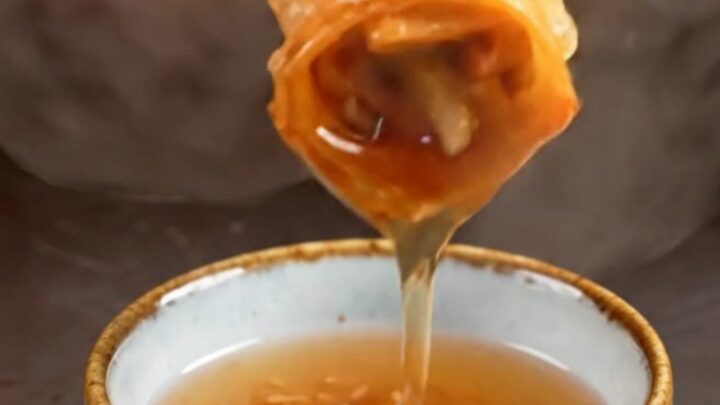
- Prep
- Cook
- Total
- Serves
- 4
Before you start
Start by preparing all your ingredients before you begin the assembly. Shred the roast duck into bite-sized pieces and ensure the cabbage and mushrooms are sliced into uniform, thin strips. This uniformity is crucial for even cooking and a consistent texture in every roll.
Have your workspace cleared and your wrappers ready, along with a small bowl of water for sealing. Keeping everything organized allows you to maintain a steady rhythm, which is key to successful frying.
Ingredients at a glance (7)
- 9 oz shredded roast duck (store-bought or made ahead)
- 3.5 oz julienned cabbage
- 1.75 oz wood-ear mushrooms
- 2 tbsp hoisin-oyster sauce glaze
- 8 thin wheat wrappers
- 1 quart peanut oil
- plum-ginger sauce for serving
Instructions
Filling Preparation
- Prepare the FillingCombine the shredded roast duck, julienned cabbage, wood-ear mushrooms, and the hoisin-oyster sauce glaze in a large mixing bowl. Toss the ingredients together thoroughly until the mixture is evenly coated with the savory glaze. Ensure the cabbage and mushrooms are well distributed among the duck for a consistent flavor in every bite.Look for The mixture should look glossy and well-combined with the glaze coating every ingredient evenly.Tip Keep the filling mixture relatively dry by squeezing excess moisture from the vegetables before mixing.
The filling should be thoroughly mixed, with the glaze evenly distributed across the duck and vegetables. The mixture should feel moist but not overly wet, which ensures the rolls remain crisp during the frying process.
Check that the cabbage and mushrooms are finely julienned, as large chunks will make the rolls difficult to roll tightly and may tear the delicate wheat wrappers.
Assembly and Rolling
- Assemble the RollsLay a thin wheat wrapper flat on a clean surface. Place a portion of the duck and vegetable filling near the bottom edge of the wrapper. Fold the sides inward and roll tightly upward to form a secure cylinder. Repeat this process until all filling is used, ensuring the seals are tight to prevent oil absorption.Look for The rolls must be wrapped tightly and sealed completely so they do not open during the frying process.Tip Use a tiny amount of water on the edge of the wrapper to act as a glue for a secure seal.
Each roll should be tightly packed into a neat cylinder with no air pockets inside. Ensure the edges are folded firmly and the final seal is secure using a touch of water. The rolls should be uniform in size, which helps them cook at the same rate. Before moving to the frying phase, verify that all rolls are sealed well to prevent the filling from leaking into the hot oil.
Frying to Perfection
- Deep Fry the RollsHeat the peanut oil in a wok or deep fryer to 360°F (182°C). Carefully lower the spring rolls into the hot oil in batches to avoid crowding. Fry for 4 minutes until the wrappers are blistered, glassy, and deep golden brown. Ensure the internal temperature of the duck reaches 165°F (74°C). Remove with a slotted spoon and drain on a wire rack. Serve with the plum-ginger sauce.Look for The wrappers will become golden, blistered, and glassy, creating a distinct shattering sound when tapped.Safe temperature 165°F (74°C) internal temperature (poultry)Tip Maintain the oil temperature consistently; if the oil is too cold, the rolls will become greasy instead of crispy.
The oil must be maintained at a steady 360°F (182°C). Watch for the wrappers to turn a uniform, glassy golden brown. The rolls will float to the surface once they are nearing completion. Use a slotted spoon to transfer them to a wire rack, allowing excess oil to drip away. Listen for a crisp, echoing sound when they are tapped, confirming the texture is achieved.
Common mistakes
A common mistake is overcrowding the fryer, which causes the oil temperature to drop rapidly and leads to greasy, heavy rolls. Always fry in small batches to maintain a steady temperature.
Another error is not sealing the rolls tightly; any loose edges will allow oil to seep into the filling, ruining the crispy texture. Finally, failing to drain the rolls on a wire rack can cause them to sit in their own steam, resulting in a loss of crunch within minutes.
How to tell it’s done
The spring rolls are perfectly done when the wrapper has turned a deep, golden brown and exhibits a glassy, blistered appearance. When lifted from the oil, they should feel firm and crisp.
The internal filling must reach an internal temperature of 165°F (74°C) to ensure the roast duck is heated through safely. They should sound hollow and crunchy when tapped with a utensil, indicating the moisture has been effectively removed from the outer layer.
- Poultry: 165°F (74°C) in the thickest part
Up next · Part 3 of 3
2 variations · storage & make-ahead · 3 answers · printable card
Tips, FAQ & printable recipe (Part 3)← Back to the ingredients (Part 1)