Dinner · Part 2 of 3: Instructions
Pecan-Crusted Maple Dijon Chicken Tenders Step-by-step instructions
- Prep
- Cook
- Total
- Serves
- 4
Before you start
Before starting, heat the oven to 415°F (215°C) and line a sheet pan with parchment paper. Finely chop the toasted pecans if they are not already chopped. Set up a small assembly line: one bowl with the pecan-panko mixture, a plate for the brushed tenders, and the sheet pan nearby.
In a small bowl, combine half of the Dijon mustard and half of the maple syrup for brushing. Keep the remaining mustard and maple syrup for the glaze. Have the butter ready and a small saucepan on the stove for the glaze.
Ingredients at a glance (7)
- 1 1/2 cups toasted Georgia pecans, finely chopped
- 1/2 cup panko breadcrumbs
- 1 tsp cayenne pepper
- 1 1/2 lb chicken tenders
- 1/4 cup Dijon mustard, divided
- 1/4 cup maple syrup, divided
- 2 tbsp butter
Instructions
Prep the Crust and Coat the Chicken
- Prep the Pecan CrustHeat the oven to 415°F (215°C). Line a sheet pan with parchment paper. In a shallow bowl, combine the finely chopped toasted pecans, panko breadcrumbs, and cayenne pepper. Stir until evenly mixed.Look for The pecan mixture should look like coarse crumbs with no large clumps.Tip Finely chop the pecans so they stick well to the chicken; large pieces may fall off.
- Brush the ChickenIn a small bowl, stir together half of the Dijon mustard and half of the maple syrup. Brush this mixture generously over both sides of each chicken tender.Look for Each tender should be fully coated with a glossy, amber layer.Tip Use a pastry brush for even coverage; a thin coating is enough.
- Coat with Pecan MixturePress each brushed tender into the pecan-panko mixture, turning to coat both sides. Gently pat the coating so it adheres, then place the tenders on the prepared sheet pan in a single layer.Look for The crust should cover the chicken completely with no bare spots.Tip Press firmly but gently; the coating should cling without falling off.
At the end of this phase, the chicken tenders are brushed with a glossy maple-Dijon mixture and coated in a pecan-panko crust. The coating should be evenly distributed and adhere well to the chicken.
The sheet pan is ready with the tenders in a single layer, and the oven is preheated. The pecan mixture should look like coarse crumbs with a warm, nutty aroma from the toasted pecans. The chicken should look golden and inviting, ready for the oven.
Bake and Make the Glaze
- Bake the TendersBake the tenders for 14 minutes, or until the pecans are fragrant and deeply toasted and the chicken is cooked through. The internal temperature should reach 165°F (74°C).Look for The crust will look golden brown and smell nutty; the chicken will be steaming inside.Safe temperature 165°F (74°C) internal temperature (poultry)Tip Do not overbake; the pecans can burn quickly. Check at 12 minutes if your oven runs hot.
- Simmer the GlazeWhile the chicken bakes, combine the remaining maple syrup, remaining Dijon mustard, and butter in a small saucepan. Warm over low heat, stirring occasionally, until the butter melts and the glaze is smooth and glossy.Look for The glaze should be bubbling gently at the edges and smell buttery and sweet.Tip Keep the heat low to avoid scorching the maple syrup; stir until fully combined.
The tenders are baking in the oven, and the kitchen fills with the fragrance of toasting pecans and maple. The glaze is simmering gently on the stove, a smooth, glossy mixture of maple, Dijon, and melted butter. The tenders should be golden brown and crisp to the touch, with the crust visibly toasted. The glaze should be warm and pourable. Check the chicken’s temperature to ensure it has reached 165°F (74°C) before moving on.
Drizzle and Serve
- Drizzle and ServeRemove the baked tenders from the oven. Drizzle the warm maple Dijon butter glaze over the top and serve immediately.Look for The glaze should coat the crust in a shiny, amber sheen.Safe temperature 165°F (74°C) internal temperature (poultry)Tip Serve right away so the crust stays crunchy; leftover glaze can be passed at the table.
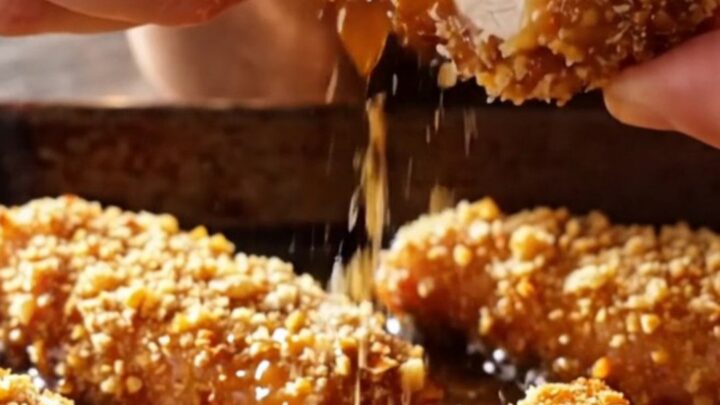
The baked tenders are out of the oven, and the warm maple Dijon butter glaze is drizzled generously over the top. The glaze should coat the crust in a shiny, amber sheen, pooling slightly on the plate. The tenders are ready to serve immediately, with the crust still crunchy and the chicken tender and moist. The aroma is buttery, nutty, and sweet — pure Southern comfort on a plate.
Common mistakes
One common mistake is using untoasted pecans, which can taste raw and lack depth. Always toast them first. Another issue is overcoating the chicken with the pecan mixture; a thick layer can fall off during baking. Press gently but evenly. Overbaking is another pitfall — the pecans can burn and turn bitter.
Check the tenders at 12 minutes and rely on the internal temperature rather than just visual cues. Also, avoid using cold chicken straight from the fridge; let it sit at room temperature for up to 30 minutes before coating for even cooking.
How to tell it’s done
The chicken tenders are done when the internal temperature reaches 165°F (74°C) on an instant-read thermometer inserted into the thickest part of a tender. The crust should be deep golden brown and fragrant with toasted pecans. The chicken should be steaming inside when you cut into it, with no pink remaining.
If the crust is browning too quickly but the chicken is not yet cooked, tent the pan loosely with foil and continue baking until the temperature is reached. Let the tenders rest for a minute or two before serving to allow the juices to settle.
- Poultry: 165°F (74°C) in the thickest part
Up next · Part 3 of 3
4 variations · storage & make-ahead · 5 answers · printable card
Tips, FAQ & printable recipe (Part 3)← Back to the ingredients (Part 1)