Dinner · Part 1 of 3: Ingredients
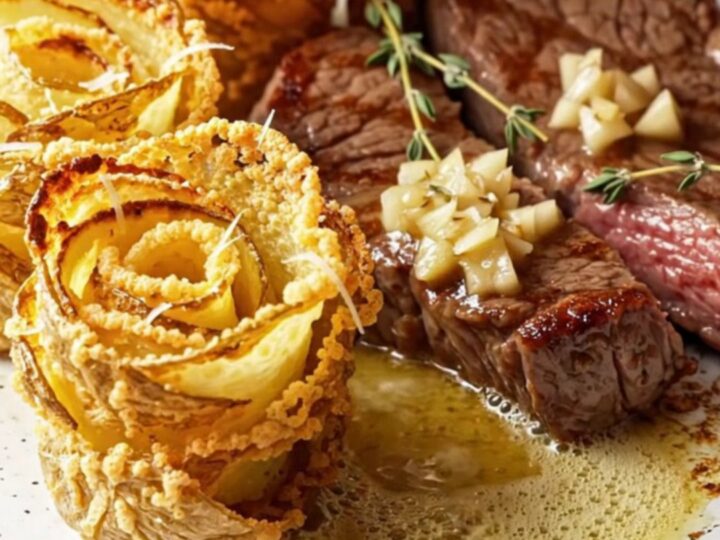
Crispy Parmesan Potato Flowers with Garlic Butter Steak
- Prep
- Cook
- Total
- Serves
- 4
Imagine a dinner that looks like a chef's tasting plate but comes together in under an hour. These crispy parmesan potato flowers are made by rolling paper-thin potato slices into rosettes, baking them until the edges are deeply golden and shatteringly crisp, then pairing them with juicy ribeye strips seared in foaming garlic butter.
The contrast of textures—crunchy, buttery, tender—is pure magic. This recipe is perfect for a special weeknight or a showstopping weekend meal.
This dish turns humble potatoes and a good steak into something extraordinary. The potato flowers are a clever twist on roasted potatoes: mandoline-thin slices are coated in olive oil and parmesan, rolled into rose shapes, and baked in a muffin tin until the petals are crisp and golden.
The steak is simply seasoned and seared in a screaming-hot skillet, then finished with butter, garlic, and fresh thyme. The result is a restaurant-worthy plate that’s surprisingly simple to make at home.
Ingredients
- 1 1/2 lb russet potatoes (about 3 medium)
- 3 tbsp olive oil, divided
- 1/2 cup finely grated parmesan cheese
- 1 tsp kosher salt, plus more for seasoning
- 1/2 tsp black pepper, plus more for seasoning
- 1 lb ribeye steak, sliced into 1/2-inch strips
- 4 tbsp unsalted butter
- 4 cloves garlic, minced
- 4 sprigs fresh thyme
Why this recipe works
The potato flowers work because of the thin, even slices and the high heat of the oven. Slicing the potatoes on a mandoline ensures they cook uniformly and become crisp without drying out.
The parmesan melts and forms a savory crust on the edges, while the interior stays tender and moist. Rolling the slices tightly creates layers that crisp up beautifully, giving you a flower that’s both delicate and crunchy.
The steak benefits from a hot skillet and a quick sear. Searing over high heat creates a deep brown crust full of flavor, while the inside stays medium-rare and juicy.
Finishing with butter, garlic, and thyme—a classic technique—adds richness and aromatic depth. The foaming butter bastes the steak, infusing it with garlic and herb flavor. Resting the meat allows the juices to redistribute, so every bite is succulent.
Notes and substitutions
Choose russet potatoes for their high starch content, which helps them crisp up nicely. Yukon Golds also work well. A mandoline is essential for getting paper-thin, even slices; a sharp knife will be too inconsistent. Use a good-quality parmesan and grate it finely so it melts and clings to the potato slices. The olive oil helps the parmesan stick and promotes browning.
For the steak, ribeye is ideal for its marbling and flavor, but sirloin or strip steak will also work. Slice the steak into strips before cooking so it sears quickly and evenly. Use a cast iron skillet if you have one—it holds heat well and gives a great crust. Fresh thyme is best, but dried can be used in a pinch. The garlic should be minced finely so it doesn’t burn in the butter.
- russet potatoes: Yukon Gold potatoes work well; they hold their shape and have a buttery flavor.
- ribeye steak: Sirloin or strip steak can replace ribeye; adjust cooking time to keep medium-rare.
- fresh thyme: Use 1 tsp dried thyme if fresh is unavailable, adding it with the garlic.
- parmesan cheese: Pecorino Romano or asiago cheese can be used for a sharper, saltier flavor.
Equipment
- Mandoline slicer
- 12-cup muffin tin
- Large cast iron skillet
- Pastry brush
- Mixing bowl
- Tongs
- Measuring spoons
- Chef's knife and cutting board
Up next · Part 2 of 3
8 steps · 39 min of cooking · what to look for at each stage
Step-by-step instructions (Part 2)