Dinner · Part 2 of 3: Instructions
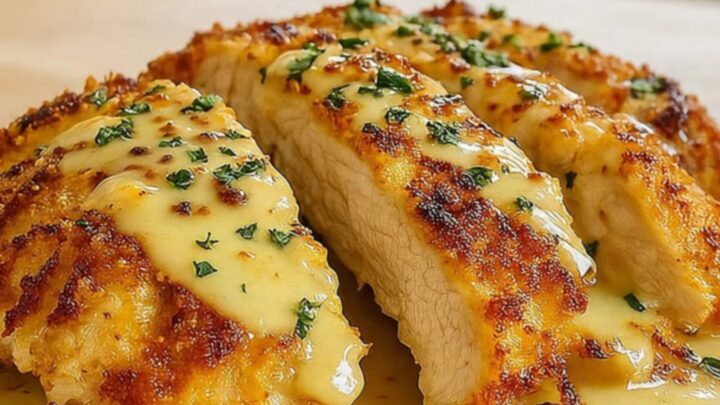
Crispy Parmesan Crusted Chicken with Creamy Garlic Sauce Step-by-step instructions
- Prep
- Cook
- Total
- Serves
- 4
Before you start
Ensure all ingredients are measured and ready before beginning. Pat the chicken breasts dry with paper towels to remove excess moisture, as this helps the coating adhere more effectively.
Preheat your oven to 400°F (200°C) and prepare a baking dish with a light coating of oil or non-stick spray to prevent sticking. Have your mixing bowls and tools clean and accessible to streamline the coating process.
Ingredients at a glance (3)
- 4 pieces boneless skinless chicken breasts
- 1 cup grated parmesan cheese
- 4 cloves garlic, minced
Instructions
Crust preparation
- Prepare the parmesan coatingPlace the grated parmesan cheese into a shallow mixing bowl. Ensure the cheese is finely grated to create a uniform and consistent crust that will melt evenly over the chicken surface during the baking process.Look for The cheese should be loose and ready for coating.Tip Use freshly grated parmesan for a superior melt and flavor profile compared to pre-shredded varieties.
The parmesan should be ready for application.
It should be finely grated to ensure it adheres to the chicken surface, creating a consistent coating that will brown evenly in the oven and provide a balanced flavor in every single bite.
Baking the chicken
- Crust and bake the chickenPress each chicken breast firmly into the parmesan cheese until coated on all sides. Place the coated chicken into a baking dish and bake in a preheated oven until the crust is golden brown and the internal temperature reaches 165°F (74°C).Look for The crust should be deep golden brown and crunchy.Safe temperature 165°F (74°C) internal temperature (poultry)Tip Avoid overcrowding the baking dish to ensure the air circulates freely, which helps the crust stay crisp rather than steaming.
The chicken is ready when the crust has developed a deep, golden-brown color and the juices run clear. The meat should feel firm to the touch, and the internal temperature must reach the required 165°F (74°C) for food safety.
Sauce and plating
- Prepare the garlic sauce and serveWhile the chicken rests, sauté the minced garlic in a small pan until fragrant. Add a splash of liquid to create the sauce base and simmer until the sauce thickens slightly. Drizzle the creamy garlic sauce over the chicken breasts and serve immediately while hot.Look for The sauce should coat the back of a spoon.Tip Keep the heat low when simmering the sauce to prevent it from separating or curdling during the reduction process.
The sauce is finished when it has reached a nappe consistency, meaning it coats the back of a spoon without running off immediately. The garlic should be soft and fragrant, and the sauce should look glossy and smooth.
Common mistakes
A common error is using chicken breasts that are too thick, which leads to the exterior burning before the inside is safely cooked. If the breasts are very thick, pound them to an even thickness before coating.
Another mistake is adding the sauce base to the pan over high heat, which causes the sauce to break or curdle. Always maintain a gentle simmer to ensure a smooth, velvety consistency.
How to tell it’s done
The chicken is done when the internal temperature, measured with a digital probe thermometer, reaches 165°F (74°C) at the thickest part. The meat should be opaque and white throughout, with no signs of pink.
The crust should be a uniform, deep golden brown. Allow the chicken to rest for at least 5 minutes after removing it from the oven to ensure the juices redistribute throughout the meat.
- Poultry: 165°F (74°C) in the thickest part
Up next · Part 3 of 3
2 variations · storage & make-ahead · 3 answers · printable card
Tips, FAQ & printable recipe (Part 3)← Back to the ingredients (Part 1)