Dinner · Part 2 of 3: Instructions
Crispy Parmesan Cauliflower Steaks with Garlic-Herb Oil Step-by-step instructions
- Prep
- Cook
- Total
- Serves
- 2
Before you start
Before starting, ensure all ingredients are measured and ready for use. Clean the cauliflower thoroughly and pat it dry, as excess moisture will hinder the browning process during the searing stage.
Preheat your oven to 425°F (220°C) well in advance to ensure the roasting environment is perfectly hot, which is vital for the parmesan to melt and crisp correctly without overcooking the cauliflower itself.
Ingredients at a glance (7)
- 1 head cauliflower
- 3 tbsp olive oil
- 1 tsp smoked paprika
- 1 tsp garlic powder
- 80 g Parmigiano-Reggiano cheese, grated
- lemon-parsley gremolata, for serving
- toasted pine nuts, for serving
Instructions
Prep the Steaks
- Prep the SteaksTrim the leaves from the cauliflower head. Using a large chef's knife, slice two thick 2.5cm center-cut steaks from the middle of the cauliflower, ensuring the core remains intact to hold the florets together. In a small bowl, whisk together the olive oil, smoked paprika, and garlic powder. Generously brush both sides of each cauliflower steak with the seasoned oil mixture, ensuring even coverage for maximum flavor absorption.Look for The steaks must be thick enough to hold their shape during the high-heat searing process without falling apart.Tip Keep the remaining cauliflower florets for another recipe like roasted vegetable soup or a simple stir-fry.
The cauliflower steaks should be uniform in thickness, with the core firmly attached to hold the florets together. The seasoned oil mixture should be evenly distributed across every surface of the cauliflower, ensuring that the smoked paprika and garlic powder are well-incorporated to provide a consistent base of flavor before the high-heat cooking begins.
Sear and Roast
- Sear and RoastHeat a heavy cast-iron skillet over high heat until it begins to smoke. Carefully place the cauliflower steaks in the pan and sear for 4 minutes per side until deeply browned. Remove the steaks, sprinkle the grated parmesan in an even layer across the base of the skillet, and return the steaks on top of the cheese. Transfer to a 425°F (220°C) oven and roast for 12 minutes, allowing the cheese to melt and fuse into a crunchy, golden crust.Look for The parmesan should be bubbling and deep golden brown, creating a distinct, unified crust attached to the cauliflower base.Tip Ensure the oven is fully preheated before placing the skillet inside to guarantee the crust forms correctly.
The cauliflower should exhibit a deep, charred sear on both sides, indicating effective flavor development. Once transferred to the oven, the parmesan should transform into a solid, golden-brown crust that is firmly bonded to the base of the steaks.
Check that the cheese has reached a nutty, toasted aroma, confirming the roasting process has been successful and the texture is perfectly crunchy.
Finish and Serve
- Finish and ServeCarefully remove the skillet from the oven. Gently flip the cauliflower steaks so the crust-side faces up. Top each steak with a generous amount of fresh lemon-parsley gremolata and toasted pine nuts. Serve immediately while the crust is at its peak crunchiness, using a sharp knife to slice through the crispy cheese layer.Look for The gremolata should add a bright, herbaceous contrast to the rich, salty, and crunchy parmesan crust.Tip Use a wide metal spatula to ensure the delicate cheese crust stays attached to the cauliflower during the flipping process.
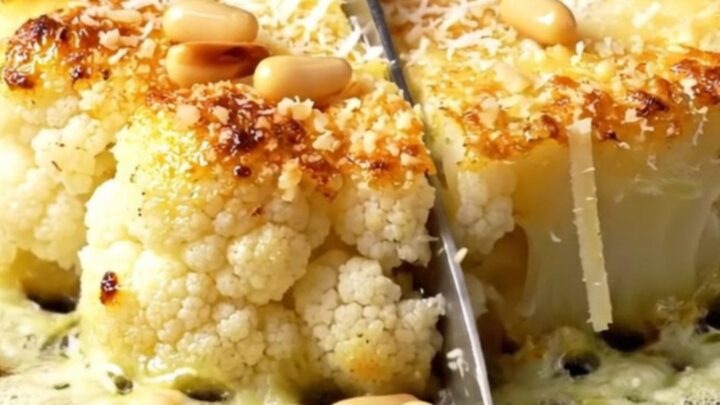
The final dish should feature vibrant colors from the fresh gremolata contrasting against the deep golden-brown cheese crust. The pine nuts should provide an additional layer of texture and a subtle richness. Ensure the steaks are served immediately while the crust is still at its crispest, as the residual heat and moisture will eventually soften the cheese layer if left to sit too long.
Common mistakes
Avoid overcrowding the skillet, as this will cause the cauliflower to steam rather than sear, preventing the development of a crispy crust.
Another common mistake is failing to brush the steaks thoroughly with the seasoned oil; inadequate coverage leads to uneven browning and dry spots. Finally, do not flip the steaks too early; allow the crust to form completely on the bottom before attempting to move them.
How to tell it’s done
The cauliflower is done when the stalks are fork-tender throughout, indicating they are fully cooked but not mushy. The parmesan crust should be deep golden brown, firm to the touch, and visibly bubbling across the base.
When you slice into the steak, the knife should meet a slight resistance from the crispy crust before gliding easily through the tender, roasted interior, signaling the perfect balance of textures.
Up next · Part 3 of 3
2 variations · storage & make-ahead · 3 answers · printable card
Tips, FAQ & printable recipe (Part 3)← Back to the ingredients (Part 1)