Appetizers · Part 2 of 3: Instructions
Crispy Parmesan Carrot Potato Rösti with Lemon-Dill Labneh Step-by-step instructions
- Prep
- Cook
- Total
- Serves
- 4
Before you start
Before you begin, set up your workstation: peel the potatoes and carrots, and have your box grater ready. Place a clean kitchen towel on the counter – you’ll use it to wring out the grated vegetables. Measure out all the ingredients so they’re within reach.
If you have a thermometer, keep it handy to monitor the butter temperature. Also, prep the topping: zest and juice the lemon, chop the dill, and toast the pistachios if they aren’t already toasted. This ensures a smooth cooking process without any last-minute scrambling.
Ingredients at a glance (12)
- 400 g Russet potatoes, peeled
- 300 g sweet orange carrots, peeled
- 1 tsp kosher salt
- 60 g Parmigiano-Reggiano, finely grated
- 1 large egg, lightly beaten
- 1/2 tsp ground cumin
- 3 tbsp clarified butter
- 1/2 cup labneh
- 1 tsp lemon zest
- 1 tbsp fresh lemon juice
- 2 tbsp fresh dill, chopped
- 1/4 cup toasted pistachios, chopped
Instructions
Prep the Vegetables
- Grate and squeeze the vegetablesGrate the peeled Russet potatoes and sweet carrots on the large holes of a box grater. Place the grated vegetables in a clean kitchen towel, add the salt, and wring the towel over the sink to extract as much liquid as possible. The drier the mixture, the crispier the rösti.Look for The towel should feel quite dry; the vegetables will be compact and not watery.Tip Work in batches if needed. Squeeze hard – moisture is the enemy of crispiness.
- Mix with parmesan, egg, and cuminTransfer the squeezed vegetables to a large bowl. Add the grated Parmigiano-Reggiano, beaten egg, and ground cumin. Toss with your hands or a fork until everything is evenly coated. The mixture should hold together when pressed.Look for The mixture clumps easily when squeezed; it should not be dripping.Tip Don't overmix – you want the strands to stay distinct for maximum crispness.
At the end of this phase, you should have a bowl of grated vegetables that are dry to the touch and well combined with the Parmesan, egg, and cumin. The mixture should hold together when pressed, and there should be no excess liquid pooling at the bottom of the bowl. The kitchen will smell of fresh vegetables and cheese, and the mixture will look vibrant orange and white. This is the foundation for a crispy rösti – if it’s too wet, squeeze it again.
Fry to Golden Perfection
- Form the rösti pucksDivide the vegetable mixture into 4 equal portions. Shape each portion into a compact puck about 8 cm (3 inches) in diameter and about 1.5 cm (1/2 inch) thick. Press firmly so they hold together during frying.Look for The pucks are uniform and hold their shape when lifted.Tip If the mixture feels too loose, add a teaspoon of flour or breadcrumbs – but only if needed.
- Heat the clarified butterPlace a large skillet over medium-high heat and add the clarified butter. Heat until the butter shimmers and a tiny piece of the vegetable mixture sizzles immediately when dropped in. The temperature should be around 365°F (185°C).Look for The butter is hot but not smoking; a test piece sizzles vigorously.Tip Use a thermometer for accuracy, or test with a pinch of the mixture.
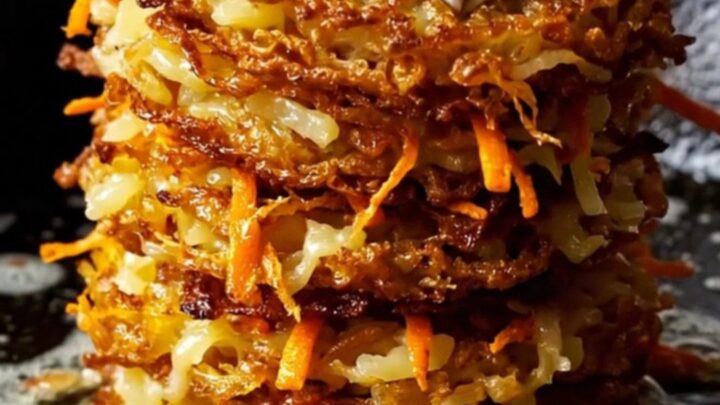
- Fry the rösti until golden and crispCarefully place the pucks into the hot butter, leaving space between them. Fry for 5 minutes per side, without moving them, until the bottoms are deep golden brown and lacy. Flip with a spatula and fry the other side for another 5 minutes. The carrot sugars and parmesan will create a mahogany crust.Look for The edges look lacy and browned; the rösti releases easily from the pan.Safe temperature 160°F (71°C) internal temperature (egg dishes)Tip Resist the urge to flip early – let the crust form completely.
- Drain and keep warmTransfer the fried rösti to a plate lined with paper towels to drain any excess butter. Keep them warm in a low oven (200°F / 95°C) while you prepare the topping, if desired.Look for The rösti are crisp and hold their shape; no greasy puddles remain.Tip Do not stack them – place in a single layer to keep them crisp.
The rösti are frying in clarified butter at 365°F (185°C). You’ll hear a satisfying sizzle as they hit the pan, and the aroma of browning butter and caramelizing carrots fills the kitchen. After 5 minutes per side, the bottoms should be deep golden brown with lacy edges.
The rösti will release easily from the pan when they’re ready to flip. The texture should be crisp on the outside, and the interior should be tender but not raw – the egg should be fully set, so the internal temperature reaches 160°F (71°C).
Top and Serve
- Make the lemon-dill labnehIn a small bowl, stir together the labneh, lemon zest, lemon juice, and chopped fresh dill until smooth. Season with a pinch of salt if desired. The labneh should be thick but spoonable.Look for The labneh is pale green from the dill and has a bright, tangy aroma.Tip Make this ahead and chill – it keeps for a day.
- Assemble and servePlace each rösti on a serving plate. Dollop a generous spoonful of the lemon-dill labneh on top, then sprinkle with the chopped toasted pistachios. Serve immediately while the rösti are still crisp and warm.Look for The labneh is creamy and cool against the hot, crunchy rösti.Tip For extra brightness, add a few extra lemon zest curls on top.
The rösti are now topped with a swirl of lemon-dill labneh and a sprinkle of toasted pistachios. The labneh should be cool and creamy, providing a contrast to the hot, crispy rösti. The dill and lemon add a fresh, bright note, while the pistachios bring a nutty crunch. The dish is ready to serve immediately – the rösti should be eaten while still warm and crisp, so don’t let them sit too long. The final presentation is beautiful, with golden brown, lacy cakes topped with white and green.
Common mistakes
One common mistake is not wringing the vegetables dry enough. If the mixture is too wet, the rösti will steam rather than fry, resulting in a soft, pale exterior. Another is overcrowding the pan – if the pucks are too close together, they’ll lower the oil temperature and become greasy.
Also, resist the urge to flip too early; wait until the bottom is deeply browned and releases easily from the pan. Finally, don’t skip the resting time after frying – it allows the rösti to set and stay crisp.
How to tell it’s done
The rösti are done when they are deep golden brown on both sides and feel firm to the touch. The internal temperature should reach at least 160°F (71°C) to ensure the egg is fully cooked. To check, insert an instant-read thermometer into the center of a rösti – it should read 160°F (71°C) or higher.
The exterior should be lacy and crisp, with visible browned bits of carrot and potato. If you tap the rösti with a spatula, it should sound hollow and crisp. Let them rest for a minute or two before serving – they will continue to crisp up slightly as they cool.
- Egg dishes: 160°F (71°C) in the thickest part
Up next · Part 3 of 3
4 variations · storage & make-ahead · 5 answers · printable card
Tips, FAQ & printable recipe (Part 3)← Back to the ingredients (Part 1)