Appetizers · Part 2 of 3: Instructions
Crispy Panko Fried Pickle Spears with Cajun Ranch Step-by-step instructions
- Prep
- Cook
- Total
- Serves
- 4
Before you start
Before you start, set up your breading station: three shallow dishes for flour, egg wash, and panko. Blot the pickle spears dry with paper towels and let them sit for a few minutes so any remaining moisture evaporates.
Measure out all the ingredients and have your oil heating while you coat the pickles. Line a plate with paper towels and set a wire rack over a baking sheet for draining. If you are making the dip, stir it together now so the flavors can meld while you fry.
Ingredients at a glance (10)
- 8 kosher dill pickle spears
- 60 g all-purpose flour (about 1/2 cup)
- 2 tsp Cajun seasoning
- 100 ml buttermilk (about 1/2 cup)
- 1 large egg
- 120 g panko breadcrumbs (about 2 1/2 cups)
- 1 tbsp dried dill
- Peanut oil, for frying, to taste
- 1/2 cup ranch dressing
- 1 tsp Cajun seasoning
Instructions
Coating Station
- Prepare the Pickles and Breading StationBlot the pickle spears dry with paper towels, pressing firmly to remove as much moisture as possible. Set up three shallow dishes: one with the flour and 1 tsp of the Cajun seasoning, one with the buttermilk and egg whisked together, and one with the panko, dried dill, and the remaining 1 tsp Cajun seasoning. Work in batches to keep the coating even.Look for The pickles feel dry to the touch and the breading station is ready.Tip Dry pickles are the secret to a crust that stays on during frying.
- Coat the Spears in FlourDredge each dry pickle spear in the seasoned flour, shaking off any excess. The flour layer gives the egg wash something to cling to and helps seal in the pickle's moisture.Look for Each spear is lightly dusted with flour, with no bare spots.Tip Shake off excess flour to avoid a gummy coating.
- Dip in Egg WashDip the floured spears into the buttermilk-egg wash, letting any excess drip back into the dish. Make sure the entire spear is coated.Look for The wash clings evenly to the flour.Tip Let the excess drip off so the panko adheres without clumping.
- Press into Panko CrustPress the wet spears into the panko-dill mixture, using your fingers to pat the crumbs firmly onto all sides. The coating should be thick and craggy, with no wet spots showing through.Look for The panko forms a thick, even crust that clings to the pickle.Tip Press firmly—this is what keeps the breading from falling off in the fryer.
At the end of this phase, you should have a neat assembly line with seasoned flour, buttermilk-egg wash, and panko-dill mixture.
Each pickle spear is evenly coated with flour, then egg wash, then a thick layer of panko that clings firmly. The coated spears should look dry and craggy, with no wet spots. If any coating falls off, press it back on before frying.
Frying to Golden Perfection
- Heat the OilPour about 2 inches of peanut oil into a heavy pot and heat over medium-high until a deep-fry thermometer reads 375°F (190°C). Line a plate with paper towels and set a wire rack nearby.Look for The oil shimmers and a bread cube sizzles immediately when dropped in.Tip Maintain the temperature between 360°F and 375°F for even browning.
- Fry in BatchesCarefully lower a few coated spears into the hot oil, making sure not to crowd the pot. Fry for about 2.5 minutes, turning occasionally, until the crust is deep amber-gold and the pickle is heated through.Look for The crust turns deep golden brown and the pickles float to the surface.Safe temperature 160°F (71°C) internal temperature (egg dishes)Tip Fry in small batches to keep the oil temperature steady.
- Drain and SeasonUse tongs to transfer the fried pickles to the paper-towel-lined plate, then move them to the wire rack. Sprinkle with a little extra Cajun seasoning while they are still hot, if desired.Look for The pickles are crisp and golden, with no excess oil pooling.Tip The wire rack keeps the bottoms from steaming and turning soggy.
The oil should be at a steady 375°F (190°C). When you lower the spears in, they should sizzle immediately and float. After 2.5 minutes, the crust is deep amber-gold, and the pickles are hot throughout. The kitchen smells of warm dill and Cajun spice. The fried spears are crisp to the touch and drain on a wire rack without becoming soggy.
Dipping and Serving
- Make the Cajun Ranch DipIn a small bowl, stir the ranch dressing with the remaining 1 tsp Cajun seasoning until fully combined. Taste and adjust the seasoning, adding more Cajun if you like extra heat.Look for The dip is smooth, creamy, and flecked with reddish-orange spices.Tip Chill the dip while the pickles fry so the flavors meld.
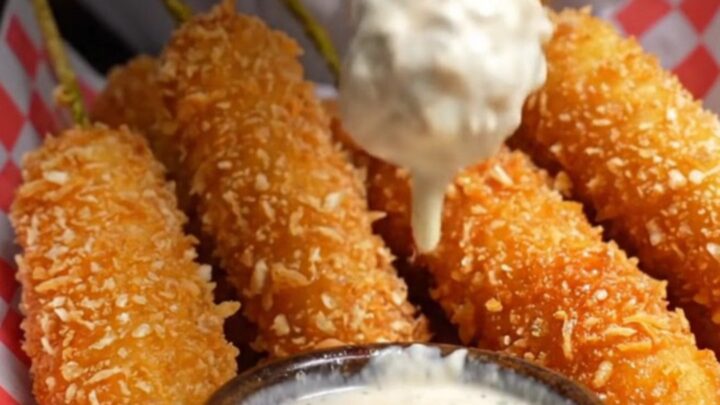
- Serve ImmediatelyArrange the fried pickle spears on a plate lined with checkered paper or a serving board. Serve hot with the Cajun ranch dip on the side, encouraging everyone to dip and enjoy the double crunch.Look for The spears are hot, crisp, and ready to be dipped.Tip Serve right away—fried pickles are best within minutes of frying.
The Cajun ranch dip is smooth, creamy, and flecked with spices. The fried pickles are arranged on a serving platter, golden and inviting. When you bite into one, the crust shatters with a satisfying crunch, revealing a juicy, tangy pickle inside. The dip cools the heat and adds a rich, herby finish.
Common mistakes
The most common mistake is not drying the pickles thoroughly, which causes the breading to slide off during frying. Another pitfall is overcrowding the pot, which drops the oil temperature and makes the coating greasy.
Also, be careful not to overmix the egg wash—whisk gently to avoid creating too many bubbles, which can make the coating uneven. Finally, let the oil come back up to temperature between batches; rushing this step leads to soggy results.
How to tell it’s done
The fried pickles are done when the crust is deep amber-gold and the pickle is heated through. To check, insert an instant-read thermometer into the center of a spear; it should register at least 160°F (71°C).
The crust should be crisp and shatter when bitten, and the pickle inside should be hot but still snappy. If the pickles brown too quickly, lower the oil temperature slightly and fry in smaller batches.
- Egg dishes: 160°F (71°C) in the thickest part
Up next · Part 3 of 3
4 variations · storage & make-ahead · 5 answers · printable card
Tips, FAQ & printable recipe (Part 3)← Back to the ingredients (Part 1)