Dinner · Part 2 of 3: Instructions
Crispy One-Pan Herb-Roasted Chicken Dinner Step-by-step instructions
- Prep
- Cook
- Total
- Serves
- 4
Before you start
Before beginning the roasting process, gather all necessary ingredients and equipment. Pat the chicken thighs completely dry with paper towels, as excess moisture is the greatest enemy of crispy skin. Wash the baby potatoes and carrots thoroughly.
Cut the potatoes in half and chop the carrots into uniform one-inch pieces. Chop the fresh thyme. Preheat the oven to 425 degrees Fahrenheit (218 degrees Celsius) to ensure a hot cooking environment from the very start.
Ingredients at a glance (5)
- 3 lb bone-in skin-on chicken thighs
- 1 lb baby potatoes, halved
- 1 lb carrots, peeled and cut into 1-inch chunks
- 1 tbsp chopped fresh thyme
- 4 fresh thyme sprigs
Instructions
Prepping and Arranging
- Toss the VegetablesIn a large baking dish, combine the halved baby potatoes and chopped carrots. Toss the vegetables with the chopped fresh thyme until they are evenly coated with the herbs. Spread them out into an even layer in the dish to ensure they roast uniformly.Look for The vegetables should be evenly mixed with the chopped herbs.Tip Cut the carrots to a similar thickness as the halved potatoes for even cooking.
- Arrange the Chicken and HerbsPlace the bone-in skin-on chicken thighs skin-side up directly on top of the vegetable layer in the baking dish, leaving some space between the pieces. Scatter the fresh thyme sprigs around the chicken and vegetables to infuse them with aromatic flavor during roasting.Look for The chicken thighs should be arranged skin-side up on top of the vegetables.Tip Drying the chicken skin thoroughly with a paper towel before arranging helps it get extra crispy.
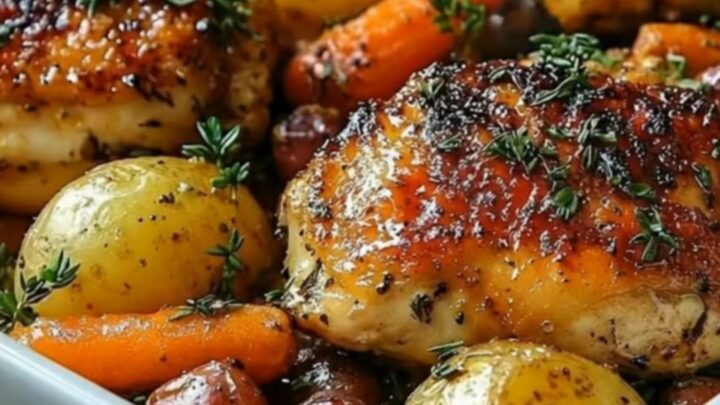
At the end of this prep phase, the baby potatoes and carrots should be thoroughly tossed with the chopped herbs. The chicken thighs should be dry and arranged skin-side up on top of the vegetable bed. The baking dish should look colorful, organized, and ready for the hot oven, with no crowded or overlapping chicken pieces.
Initial Roasting
- Roast the Chicken and VegetablesPlace the baking dish on the center rack of the preheated oven. Roast at 425 degrees Fahrenheit (218 degrees Celsius) for 40 to 45 minutes. Watch as the chicken skin begins to render and turn golden-brown, and the savory pan juices start to bubble vigorously around the tenderizing potatoes and carrots.Look for The pan juices should be bubbling vigorously and the skin turning golden.Tip Do not open the oven door too often, as this lets precious heat escape.
Midway through roasting, the kitchen will fill with the rich, savory aroma of roasting chicken and toasted thyme.
You will hear a steady, gentle sizzling sound as the chicken fat begins to render and drip onto the vegetables below. The chicken skin will start to lose its pale color, showing hints of light golden-brown around the edges.
Crisping and Finishing
- Check Temperature and RestInsert an instant-read meat thermometer into the thickest part of the chicken thigh, avoiding the bone. The chicken is safe and ready when the internal temperature reaches 165 degrees Fahrenheit (74 degrees Celsius). Remove the dish from the oven and let it rest for 5 minutes before serving.Look for The thermometer must read 165 degrees Fahrenheit (74 degrees Celsius) and the skin should sound crunchy when tapped.Safe temperature 165°F (74°C) internal temperature (poultry)Tip Letting the chicken rest helps the juices redistribute, keeping the meat incredibly moist.
At the final checkpoint, the pan juices should be bubbling vigorously, and the chicken skin must be a deep, uniform golden-brown and visibly crispy. When tapped gently with a knife, the skin should make a distinct, hollow, crunchy sound. The potatoes and carrots should be tender, caramelized, and glistening with seasoned pan juices.
Common mistakes
One common mistake is crowding the baking dish with too many vegetables or chicken pieces. If the ingredients are packed too tightly, they will release moisture and steam instead of roasting, resulting in soggy chicken skin and mushy vegetables.
Another error is failing to dry the chicken skin thoroughly before roasting. Any surface moisture will prevent the fat from rendering properly, stopping the skin from achieving that perfect, shatteringly crisp texture.
How to tell it’s done
To ensure the chicken is perfectly cooked and safe to eat, always rely on an instant-read meat thermometer rather than visual cues alone. Insert the probe into the thickest part of the meat without touching the bone.
The chicken is fully done when it registers 165 degrees Fahrenheit (74 degrees Celsius). The juices should run clear, the meat should feel tender, and the vegetables should be easily pierced with a fork while retaining their shape.
- Poultry: 165°F (74°C) in the thickest part
Up next · Part 3 of 3
2 variations · storage & make-ahead · 3 answers · printable card
Tips, FAQ & printable recipe (Part 3)← Back to the ingredients (Part 1)