Desserts · Part 2 of 3: Instructions
Crispy Matcha Mochi Taiyaki: A Warm Japanese Street Treat Step-by-step instructions
- Prep
- Cook
- Total
- Serves
- 4
Before you start
Prepare your workspace by organizing all filling components within reach. Ensure the matcha pastry cream is chilled and the mochi cubes are ready to be placed. Preheat the cast-iron taiyaki press over a medium flame for several minutes to ensure it is evenly heated throughout.
Have a small bowl of oil and a pastry brush nearby to grease the iron before the first batch, and keep a heat-resistant spatula or wooden skewer close by to assist with lifting the finished waffles from the hot metal.
Ingredients at a glance (4)
- 1 cup sweet waffle batter
- 1/2 cup thick matcha pastry cream
- 1/4 cup sweet red azuki beans
- 8 pieces chewy mochi cubes
Instructions
Mould Preparation
- Prepare the MouldsPlace the fish-shaped cast-iron taiyaki press over medium heat until it is thoroughly preheated. Lightly grease the interior of the moulds with a thin layer of oil or butter to ensure the batter does not stick during the cooking process. Carefully pour a small amount of the sweet waffle batter into the bottom half of each fish-shaped mould, filling them about one-third of the way up to create a base for the fillings.Look for The mould should be hot enough that a drop of water sizzles instantly upon contact.Tip Do not overfill the moulds with batter at this stage to allow room for the fillings.
The iron must be hot enough that a drop of water sizzles immediately. The light coating of oil should be applied evenly across all details of the fish scales to ensure a perfect release. The first layer of batter should be just enough to coat the bottom, creating a protective barrier for the fillings that will follow.
Filling Assembly
- Add FillingsDistribute the thick matcha pastry cream into the center of each batter-filled fish mould. Add a portion of the sweet red azuki beans alongside the cream. Place two chewy mochi cubes into the center of each fish, pressing them slightly into the batter and fillings. Top each assembly with the remaining waffle batter, ensuring the fillings are completely covered to prevent them from leaking out during the baking process.Look for The fillings should be centered to ensure even distribution within the waffle.Tip Use a pastry bag to pipe the matcha cream cleanly into the moulds.
The fillings should be placed precisely in the center of the mould. The matcha cream, azuki beans, and mochi should form a neat mound that does not touch the edges of the iron.
Covering the fillings with the final layer of batter requires a steady hand to ensure the entire fish is sealed completely before the iron is closed.
Final Baking
- Bake and ServeClamp the fish-shaped taiyaki press shut tightly. Bake at 375°F (190°C) for 4 minutes, flipping the press occasionally to ensure even browning. The eggs in the batter must reach an internal temperature of 160°F (71°C) to be fully set. Once the fish scales turn a crisp amber-gold color, remove from the heat. Carefully open the press and remove the warm taiyaki. Serve immediately while the mochi is stretchy and the waffle is crispy.Look for The taiyaki are ready when the exterior is golden brown and crisp to the touch.Safe temperature 160°F (71°C) internal temperature (egg dishes)Tip Use a wooden skewer to gently loosen the edges if they stick to the iron.
The taiyaki are perfectly baked when they are a crisp, golden brown. The iron should be flipped every minute to ensure heat penetrates the center and the batter is cooked through. The finished pastry should release easily from the iron, showing crisp, defined scales and a warm, yielding center that holds its shape.
Common mistakes
A common mistake is failing to preheat the iron sufficiently, which leads to the batter sticking to the metal rather than forming a crisp crust. Another error is overfilling the moulds, which causes the batter to overflow and burn on the exterior of the iron.
Ensure that the fillings are placed centrally; if they touch the edges of the mould, they may leak and prevent the two halves of the fish from sealing properly during the baking process.
How to tell it’s done
The taiyaki is finished when the exterior reaches a deep, uniform amber-gold color. The waffle should feel crisp and firm to the touch, not soft or doughy.
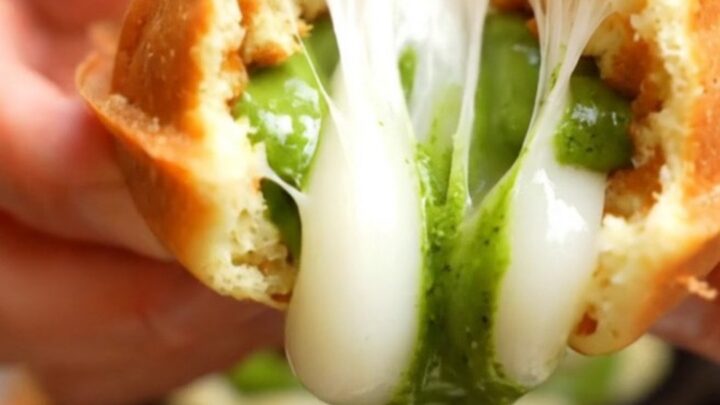
When you gently pull the taiyaki apart, the matcha custard should be warm and lush, and the mochi should stretch into a long, thin ribbon, indicating it has reached the ideal temperature of 160°F (71°C) to ensure the egg-based batter is fully cooked through.
- Egg dishes: 160°F (71°C) in the thickest part
Up next · Part 3 of 3
2 variations · storage & make-ahead · 3 answers · printable card
Tips, FAQ & printable recipe (Part 3)← Back to the ingredients (Part 1)