Dinner · Part 1 of 3: Ingredients
Crispy Layered Turkish Su Böreği with Feta and Parsley
- Prep
- Cook
- Total
- Serves
- 8
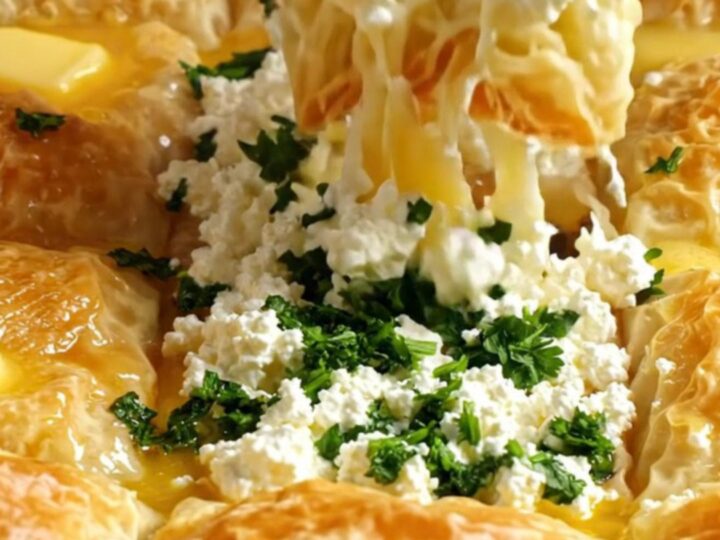
Golden, buttery layers of paper-thin phyllo, boiled briefly then stacked with salty white cheese and fresh parsley—this Turkish Su Böreği is the queen of all böreks.
The contrast of crisp exterior and tender, noodle-like interior makes it unforgettable. Perfect for a special dinner or a celebratory gathering, this traditional recipe delivers authentic flavor and texture that will impress anyone who tries it.
Su böreği, meaning 'water börek,' is a beloved Turkish classic that stands apart from other böreks because the phyllo sheets are boiled before baking. This technique creates uniquely tender, almost pasta-like layers that soak up clarified butter and cheese.
The result is a savory pie with a crisp golden crust and a moist, flavorful center. This recipe follows the traditional method, using simple ingredients to produce a dish that is both rustic and elegant. Serve it warm as a main course or as a show-stopping side.
Ingredients
Dough
- 4 cups all-purpose flour
- 4 large eggs
- 1 tsp salt
- 1/2 cup water
Filling
- 300 g Turkish white cheese (feta or beyaz peynir), crumbled
- 1 bunch flat-leaf parsley, chopped
- 1 cup clarified butter, melted
Why this recipe works
Boiling the phyllo sheets is the defining step of su böreği. The brief dip in boiling water pre-cooks the flour, making the sheets tender and pliable, while the ice-water shock stops the cooking and sets the texture. This process gives the layers their characteristic soft, noodle-like bite that contrasts beautifully with the crisp baked top and bottom.
Clarified butter is brushed generously between every layer, ensuring each sheet stays moist and flavorful. The butter also promotes even browning and creates a rich, nutty aroma as the börek bakes. Using a raw sheet as the base and top seals in the filling and produces a sturdy, golden crust that holds everything together.
Notes and substitutions
Turkish white cheese, or beyaz peynir, is a salty, crumbly cheese similar to feta. If unavailable, a good-quality feta is an excellent substitute.
The saltiness of the cheese is essential to balance the rich butter and neutral dough. Flat-leaf parsley adds a fresh, herbal note that cuts through the richness; use the whole bunch, chopped, including the tender stems.
The dough is simple—flour, eggs, salt, and water—but rolling it paper-thin takes practice. A thin rolling pin, like an oklava, helps achieve the required thinness.
If the dough tears, don't worry; the layers hide imperfections. Clarified butter is preferred for its higher smoke point and pure flavor, but unsalted butter can be used in a pinch, though it may brown more quickly.
- Turkish white cheese: Feta cheese works well; for a milder flavor, use ricotta salata or a mixture of feta and mozzarella.
- Clarified butter: Regular unsalted butter can be used, but clarified butter gives a richer, nuttier flavor and higher smoke point.
- Flat-leaf parsley: Dill or a mix of dill and parsley adds a fresh herbal note; use the same amount.
Equipment
- Large mixing bowl
- Rolling pin (oklava or thin rolling pin)
- Large pot for boiling
- Slotted spoon
- Ice water bath
- 12-inch round baking tray or copper tray
- Pastry brush
- Sharp knife
Up next · Part 2 of 3
6 steps · 50 min of cooking · what to look for at each stage
Step-by-step instructions (Part 2)