Dinner · Part 2 of 3: Instructions
Crispy Korean Sweet & Spicy Yangnyeom Chicken Tenders Step-by-step instructions
- Prep
- Cook
- Total
- Serves
- 4
Before you start
Before starting, pat the chicken tenderloins dry with paper towels. Grate the ginger and mince the garlic. Measure all ingredients for the glaze and coating.
Set up a wire rack over a baking sheet for draining the fried chicken. Heat the oil in a deep, heavy pot—a wok or Dutch oven works well—and have a deep-fry thermometer ready to monitor the temperature.
Ingredients at a glance (12)
- 500 g chicken tenderloins
- 1 tbsp fresh ginger, grated
- 2 tbsp soy sauce
- 1 cup potato starch
- 3 tbsp gochujang (Korean chili paste)
- 3 tbsp ketchup
- 3 tbsp honey
- 2 tbsp brown sugar
- 4 cloves garlic, minced
- 1/4 cup crushed roasted peanuts
- 1 tbsp sesame seeds
- 4 cups vegetable oil, for frying
Instructions
Coating and First Fry
- Season and Coat the ChickenIn a large bowl, toss the chicken tenderloins with grated ginger and soy sauce. Let them sit for 10 minutes while you prepare the coating. Place the potato starch in a shallow dish. Dredge each tenderloin in the starch, pressing firmly so it adheres and forms craggy, flaky shards. Shake off excess and set on a plate.Look for The coating should look rough and shaggy, not smooth.Tip Let the coated chicken rest for a few minutes so the starch sets and adheres better.
- First Fry at 170°CHeat the vegetable oil in a large wok or Dutch oven to 170°C (338°F). Carefully add the coated chicken tenders in batches, without crowding. Fry for 5 minutes, turning occasionally, until the coating is set and lightly golden. Remove with tongs and drain on a wire rack.Look for The chicken should be pale golden and cooked through at this stage.Safe temperature 165°F (74°C) internal temperature (poultry)Tip Maintain the oil temperature; adjust the heat as needed between batches.
After this phase, the chicken should be coated in a jagged, flaky layer of potato starch and lightly golden after the first fry.
The coating should be set and the chicken cooked through but not yet deeply browned. The oil temperature should be maintained at 170°C (338°F) throughout.
Second Fry and Glaze
- Second Fry at 190°CIncrease the oil temperature to 190°C (375°F). Return the fried tenders to the hot oil in batches and fry for 90 seconds, until deep golden brown and shatteringly crisp. The coating should blister and sound crunchy when tapped. Remove and drain on a wire rack.Look for The crust should be deeply golden and very crunchy.Safe temperature 165°F (74°C) internal temperature (poultry)Tip The second fry is quick—watch closely to avoid burning.
- Simmer the GlazeIn a small saucepan, combine gochujang, ketchup, honey, brown sugar, and minced garlic. Place over medium heat and simmer, stirring frequently, until the sauce thickens, becomes glossy, and bubbles steadily. This takes about 3 to 4 minutes. Remove from heat and keep warm.Look for The glaze should coat the back of a spoon and be shiny.Tip If the glaze gets too thick, add a teaspoon of water to loosen it.
The second fry should transform the coating into a deep golden, blistered crust that crackles when tapped. The glaze should be thick, shiny, and bubbling, with a balanced sweet-spicy aroma. The kitchen will smell of garlic, gochujang, and honey.
Tossing and Serving
- Toss in the GlazePlace the hot fried chicken tenders in a large bowl. Pour the warm glaze over them and toss quickly with tongs until every piece is evenly coated. The glaze will cling and create a sticky, glossy finish.Look for Each tender should be thoroughly coated but still crispy.Tip Toss gently to avoid breaking the crust.
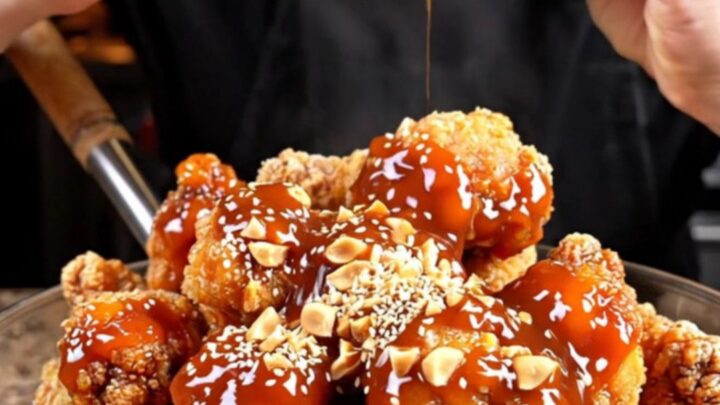
- Garnish and ServeTransfer the glazed tenders to a serving platter. Sprinkle with crushed roasted peanuts and sesame seeds. Serve immediately while hot and crispy.Look for The peanuts and sesame add crunch and nutty aroma.Tip Serve with extra glaze on the side if desired.
The final phase should yield tenders evenly coated in a sticky, glossy red glaze, with crushed peanuts and sesame seeds clinging to the surface. Each bite should produce a loud, satisfying crunch. Serve immediately while the coating is still crisp.
Common mistakes
One common mistake is overcrowding the pot during frying, which lowers the oil temperature and results in soggy, greasy chicken. Fry in batches and allow the oil to return to temperature between batches.
Another is skipping the second fry—this step is crucial for achieving the ultra-crispy texture. Also, avoid tossing the chicken in the glaze too early; the glaze should be warm but the chicken hot from the fryer.
How to tell it’s done
The chicken is done when it reaches an internal temperature of 165°F (74°C) and the coating is deep golden brown and very crisp.
The second fry should produce a loud crunch when you bite into a piece. The glaze should be thick and glossy, coating the chicken evenly without pooling. Serve immediately for the best texture.
- Poultry: 165°F (74°C) in the thickest part
Up next · Part 3 of 3
4 variations · storage & make-ahead · 5 answers · printable card
Tips, FAQ & printable recipe (Part 3)← Back to the ingredients (Part 1)