Dinner · Part 1 of 3: Ingredients
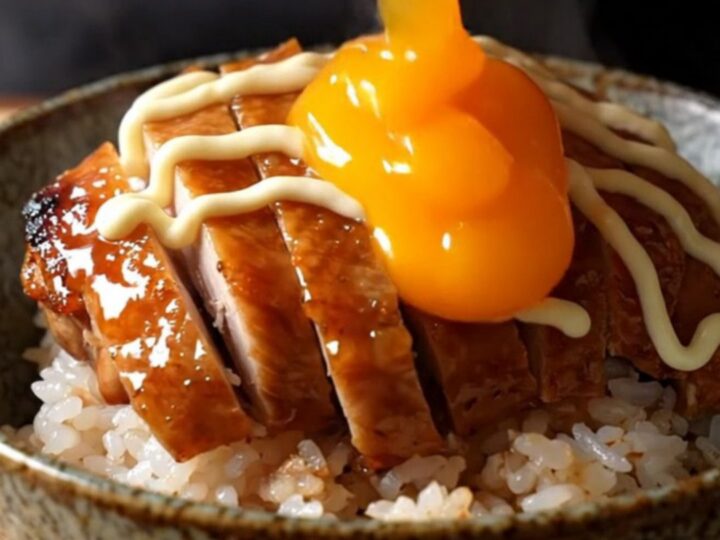
Crispy Japanese Teriyaki Chicken Rice Bowl with Onsen Egg & Kewpie
- Prep
- Cook
- Total
- Serves
- 4
This Japanese teriyaki chicken rice bowl brings together crispy-skinned chicken thighs glazed in a homemade teriyaki sauce, served over steamed short-grain rice with a jammy onsen egg and a drizzle of Kewpie mayo.
The contrast of textures — shatteringly crisp skin, tender juicy meat, creamy egg yolk, and sticky-sweet glaze — makes every bite irresistible. It's a restaurant-quality bowl that comes together in one skillet, perfect for a weeknight dinner that feels special.
Teriyaki is one of those sauces that seems simple but rewards attention. The key is balance: soy sauce for salt, mirin for sweetness and shine, sake for depth, and a touch of sugar to help the glaze cling to the chicken.
Here, the chicken is seared skin-side down until the skin is deeply browned and crackling, then finished in the bubbling sauce until it turns into a thick, mirror-like glaze. The onsen egg, with its silky white and glossy yolk, adds richness that ties everything together. A final drizzle of Kewpie mayo — creamy, tangy, and slightly sweet — completes the bowl with a familiar Japanese twist.
Ingredients
- 1 1/2 lb boneless, skin-on chicken thighs
- 1/2 tsp kosher salt
- 1/4 tsp black pepper
Teriyaki Sauce
- 1/4 cup soy sauce
- 1/4 cup mirin
- 2 tbsp sake
- 2 tbsp brown sugar
- 2 cloves garlic, minced
- 1 tbsp fresh ginger, grated
- 2 cups cooked short-grain rice, warm
- 4 onsen eggs (soft-cooked eggs)
- 1/4 cup Kewpie mayonnaise, for drizzling
- 2 tbsp sliced scallions, for garnish
Why this recipe works
The method of searing the chicken skin-side down in a dry skillet is what creates that shatteringly crisp skin. Starting with a hot pan and leaving the chicken untouched for six minutes allows the fat to render and the skin to brown deeply without steaming.
The result is a crackling crust that contrasts beautifully with the tender meat underneath. This technique is the foundation of the dish, and it's simple to master at home.
The teriyaki sauce is cooked in the same pan after the chicken is seared, so it picks up all the browned bits and chicken fat, adding depth and complexity. Reducing the sauce in the pan thickens it into a glossy glaze that coats each slice of chicken. The sugar and mirin caramelize slightly, giving the sauce a sticky texture that clings to the rice and egg. This one-pan approach maximizes flavor while minimizing cleanup.
Notes and substitutions
Boneless, skin-on chicken thighs are ideal here because they have enough fat to keep the meat moist while the skin crisps. If using bone-in thighs, increase the cooking time and adjust the internal temperature check.
Short-grain rice, like sushi rice or Calrose, is essential for the authentic sticky texture that holds up to the sauce and egg. Onsen eggs are traditionally cooked low and slow, but you can achieve a similar jammy yolk by simmering eggs at 167°F (75°C) for 13 minutes.
Kewpie mayonnaise is a Japanese-style mayo made with rice vinegar and egg yolks, giving it a distinct tang and creaminess. If unavailable, a blend of regular mayo, rice vinegar, and a pinch of sugar is a close substitute. The scallions add a fresh, sharp contrast to the rich bowl. For a gluten-free version, use tamari instead of soy sauce and ensure the mirin and sake are gluten-free.
- Kewpie mayonnaise: Regular mayonnaise mixed with a splash of rice vinegar and a pinch of sugar for a similar tangy creaminess.
- Mirin: Dry sherry or white wine mixed with 1 teaspoon sugar per tablespoon of mirin.
- Sake: Dry white wine or chicken broth (use broth for a non-alcoholic version).
- Boneless, skin-on chicken thighs: Bone-in, skin-on chicken thighs (increase cooking time by 5-7 minutes and check internal temperature).
Equipment
- Large skillet (12-inch)
- Tongs
- Small bowl for sauce
- Cutting board
- Chef's knife
- Measuring cups and spoons
- Spatula
- Serving bowls
Up next · Part 2 of 3
7 steps · 20 min of cooking · what to look for at each stage
Step-by-step instructions (Part 2)