Appetizers · Part 2 of 3: Instructions
Hot Honey Lemon Pepper Wings: Crispy Sticky Game Day Favorite Step-by-step instructions
- Prep
- Cook
- Total
- Serves
- 4
Before you start
Before you start, set up your frying station. Pat the chicken wings dry with paper towels—this is crucial for crispness. Measure out all the ingredients and have them ready. Set a wire rack over a baking sheet to hold the cooked wings.
Fill a deep-fryer or heavy pot with peanut oil and attach a deep-fry thermometer. Have a slotted spoon or spider ready for removing the wings from the oil. If using a skillet for the glaze, keep it nearby. The entire process moves quickly, so being organized helps.
Ingredients at a glance (9)
- 2 lb chicken wings, patted dry
- 2 tbsp baking powder
- 1 tbsp kosher salt
- 2 tbsp lemon pepper seasoning
- 4 cups peanut oil, for frying
- 1/2 cup hot honey
- 3 tbsp unsalted butter
- 1 cup buttermilk ranch dressing, for serving
- 1 tsp fresh lemon zest, for garnish
Instructions
Preparation and Coating
- Prep and Season the WingsPat the chicken wings dry with paper towels. In a large mixing bowl, combine the wings with the baking powder, kosher salt, and lemon pepper seasoning. Toss well to coat every wing evenly. Place the wings on a wire rack set over a baking sheet and let them sit at room temperature for 10 minutes while the oil heats.Look for The wings should look evenly coated with a dusty, pale yellow seasoning.Tip Drying the wings thoroughly is key to achieving a shatteringly crisp skin.
- Heat the Frying OilPour the peanut oil into a deep-fryer or a heavy-bottomed pot, ensuring the oil is at least 2 inches deep. Heat the oil to 375°F (190°C) over medium-high heat. Use a deep-fry thermometer to maintain the temperature.Look for The oil should shimmer and a small piece of bread should sizzle immediately when dropped in.Tip Do not overcrowd the pot; fry in batches if necessary to keep the oil temperature steady.
At the end of this phase, the wings should be evenly coated with the baking powder and seasoning mixture. The coating should look like a dry, dusty layer that clings to the skin.
The wings should be arranged on a wire rack, ready for frying. The oil should be heating to 375°F (190°C), and you should have your frying tools within reach.
Double Frying
- First Fry: Cook ThroughCarefully lower the seasoned wings into the hot oil in a single layer. Fry for 6 minutes, turning occasionally, until the wings are cooked through and lightly golden. Use a slotted spoon or spider to transfer the wings to a wire rack. Let them rest for 5 minutes.Look for The wings should be pale golden and the meat should be opaque and tender.Safe temperature 165°F (74°C) internal temperature (poultry)Tip The first fry cooks the meat without browning too much; the second fry will crisp the skin.
- Second Fry: Crisp and BlisterReturn the oil to 375°F (190°C) if needed. Add the par-fried wings back to the oil in batches. Fry for 3 to 4 minutes, turning occasionally, until the skin is deeply golden, blistered, and shatteringly crisp. Remove with a slotted spoon and drain on a wire rack.Look for The skin should be deeply golden, blistered, and make a loud crunch when pressed.Safe temperature 165°F (74°C) internal temperature (poultry)Tip The double-fry method drives out moisture and creates a thicker, crunchier crust.
After the first fry, the wings should be pale golden and cooked through, with the meat tender and juicy. After the second fry, the skin should be deeply golden, blistered, and shatteringly crisp. The wings should feel light and crunchy, with no greasy residue. They should be resting on a wire rack to drain.
Glazing and Serving
- Make the Hot Honey Butter GlazeIn a large skillet over medium heat, combine the hot honey and unsalted butter. Stir until the butter is melted and the mixture is bubbling and glossy. Reduce the heat to low to keep warm.Look for The glaze should be smooth, glossy, and slightly thickened with a sweet-spicy aroma.Tip Keeping the glaze warm helps it coat the wings evenly without seizing.
- Toss the Wings in the GlazeAdd the hot crispy wings to the skillet with the hot honey butter. Toss gently with tongs until every wing is evenly coated in the glossy amber glaze. The glaze should cling to the crispy skin without making it soggy.Look for The wings should be evenly coated in a sticky, shiny glaze with visible specks of lemon pepper.Tip Toss quickly and serve immediately to preserve the crunch.
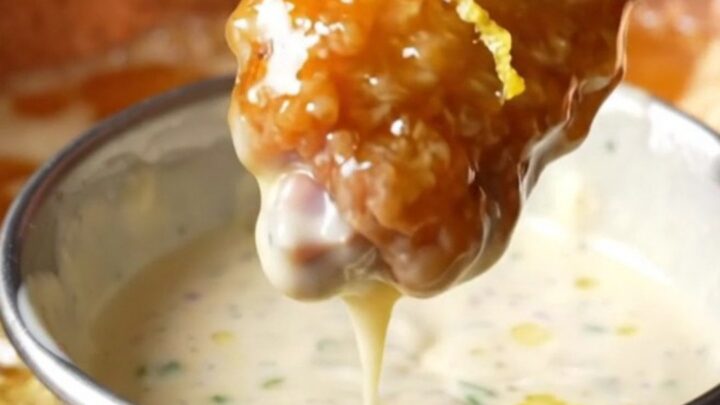
- Serve and GarnishTransfer the glazed wings to a serving platter. Sprinkle with fresh lemon zest and serve hot with buttermilk ranch dressing on the side for dipping.Look for The wings should be glossy, fragrant with lemon and honey, and irresistible.Tip Serve with extra lemon wedges if desired, but the video only shows zest.
The glaze should be bubbling and glossy, with the hot honey and butter fully combined. When the wings are tossed in the glaze, they should be evenly coated with a sticky, amber sheen. The lemon zest adds a bright, fresh aroma. The wings should be served immediately, with ranch on the side for dipping.
Common mistakes
The most common mistake is not drying the wings thoroughly before coating, which leads to steaming instead of crisping. Another is overcrowding the fryer, which drops the oil temperature and results in greasy wings.
Skipping the first fry or not letting the wings rest between fries can also compromise crispness. Finally, adding the glaze to cold wings can make it clump, so keep the glaze warm and toss the wings while they're still hot.
How to tell it’s done
The wings are done when the internal temperature reaches 165°F (74°C) in the thickest part, and the skin is deeply golden and blistered. To test for crispness, press a wing with a finger—it should feel firm and make a crackling sound.
The meat should be juicy and pull away from the bone easily. After tossing in the glaze, the wings should still be crunchy, with the glaze clinging to the surface. If the wings start to soften, serve immediately.
- Poultry: 165°F (74°C) in the thickest part
Up next · Part 3 of 3
4 variations · storage & make-ahead · 5 answers · printable card
Tips, FAQ & printable recipe (Part 3)← Back to the ingredients (Part 1)