Dinner · Part 2 of 3: Instructions
Crispy Herb-Roasted Christmas Chicken Step-by-step instructions
- Prep
- Cook
- Total
- Serves
- 6
Before you start
Before beginning the roasting process, gather all ingredients and equipment to ensure a smooth workflow. Remove the whole chicken from the refrigerator no more than 30 minutes before prep to take the chill off, keeping it within safe handling guidelines.
Ensure the herb butter is softened at room temperature and ready for brushing onto the poultry. Preheat the oven to 375°F (190°C) and ensure the oven rack is positioned in the center of the oven for even heat distribution.
Ingredients at a glance (2)
- 1 whole chicken (4 to 5 pounds), patted dry
- 1/2 cup herb butter, softened
Instructions
Preparation and Buttering
- Prepare and season the poultryPat the whole chicken completely dry with paper towels to ensure the skin crisps up properly. Place the chicken in a sturdy roasting pan. Using a pastry brush or clean hands, generously apply the softened herb butter all over the exterior of the raw poultry, covering the breast, legs, and wings evenly.Look for The chicken should be completely coated in a thick layer of herb butter.Tip Drying the skin thoroughly is the secret to getting a truly crackling exterior.
At the end of this initial preparation phase, the raw poultry is completely dry and thoroughly coated in a rich, aromatic layer of softened herb butter. The kitchen should already smell faintly of fresh herbs and rich butter.
Before moving the roasting pan into the preheated oven, double-check that the herb butter is evenly distributed across the entire chicken so that the skin cooks uniformly without any dry patches.
Roasting and Basting
- Roast and baste the chickenPlace the roasting pan in the preheated oven. Roast the chicken, and every 20 minutes, carefully pull the pan forward and use a basting spoon to scoop up the hot roasting juices and melted herb butter from the bottom of the pan, spooning them generously over the sizzling skin.Look for The skin will begin to sizzle, turn golden, and release savory aromas.Tip Work quickly while basting so the oven temperature does not drop too much.
- Check for donenessContinue roasting and basting until the skin is deep golden brown and crackling. Insert a digital meat thermometer into the thickest part of the thigh, making sure not to touch the bone. The chicken is fully cooked when it registers a safe internal temperature of 165°F (74°C).Look for The juices should run completely clear when the thigh is pierced.Safe temperature 165°F (74°C) internal temperature (poultry)Tip Always measure the temperature in both the thigh and the breast to be sure.
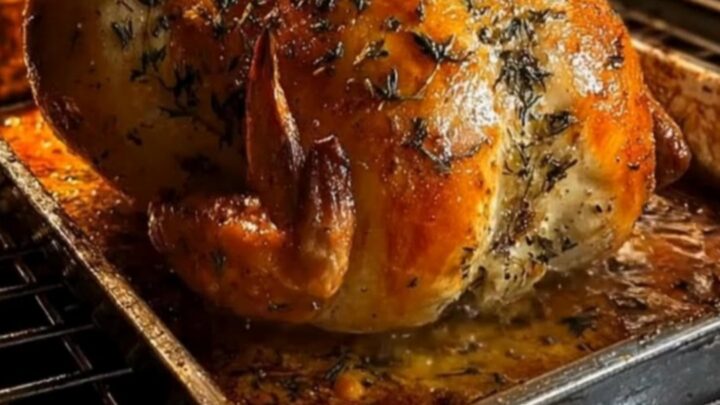
By the end of the roasting phase, the kitchen will be filled with the rich, savory aroma of roasting poultry and bubbling herb butter. The chicken skin should look deeply golden, incredibly crisp, and be covered in tiny, sizzling bubbles of fat.
Before removing the pan from the oven, verify with a digital meat thermometer that the thickest part of the meat has reached a safe internal temperature of 165°F (74°C).
Resting and Carving
- Rest and carve the chickenRemove the roasting pan from the oven. Let the chicken rest in the warm pan for 15 minutes before carving to allow the juices to redistribute throughout the meat. Use a sharp carving knife to slice into the crackling golden skin and serve immediately.Look for Steam and savory clear juices will release as you slice through the crisp skin.Tip Do not tent the chicken tightly with foil, as trapped steam can soften the crispy skin.
After resting, the chicken is ready to be carved. When the carving knife slices through the breast, you should hear a distinct crackling sound from the crispy skin, followed by a gentle release of steam and clear, savory juices. The meat should look tender, glistening, and perfectly cooked, ready to be plated and served immediately to your holiday guests.
Common mistakes
One common mistake is roasting a wet chicken. If the skin is not dried thoroughly with paper towels before applying the herb butter, the moisture will steam under the fat, resulting in a soggy, rubbery texture instead of crackling skin.
Another error is skipping the basting process. Regular basting with the hot pan drippings keeps the breast meat incredibly moist and helps build a deep, flavorful, and crispy golden glaze on the exterior.
How to tell it’s done
To guarantee the chicken is cooked safely and remains juicy, always use a digital meat thermometer to check for doneness. Insert the probe into the thickest part of the thigh, avoiding any contact with the bone. The poultry is fully cooked and safe to eat when it reaches an internal temperature of 165°F (74°C). The juices should also run completely clear, and the meat should feel tender when pierced.
- Poultry: 165°F (74°C) in the thickest part
Up next · Part 3 of 3
2 variations · storage & make-ahead · 3 answers · printable card
Tips, FAQ & printable recipe (Part 3)← Back to the ingredients (Part 1)