Appetizers · Part 2 of 3: Instructions
Saganaki-Style Crispy Cheese and Potato Cake Step-by-step instructions
- Prep
- Cook
- Total
- Serves
- 4
Before you start
Before starting, gather all ingredients. Peel and grate the potatoes, then squeeze them thoroughly in a clean kitchen towel to remove as much liquid as possible. Cut the cheese into small cubes. Have the egg, oregano, and flour ready.
Heat the olive oil in a cast-iron skillet over medium-high heat. The oil should be hot but not smoking. Prepare a plate with paper towels for draining, though the cake is best served immediately. Have the lemon and honey ready for the final finish.
Ingredients at a glance (8)
- 400 g waxy potatoes, peeled and grated
- 200 g Greek Kefalograviera or Kasseri cheese, cubed
- 1 large egg
- 1 tsp dried Greek oregano
- 2 tbsp all-purpose flour, for dusting
- 3 tbsp extra-virgin olive oil
- 1 lemon, halved
- 1 tbsp wild thyme honey
Instructions
Prepare the Mixture
- Prepare the potato-cheese mixturePlace the grated potatoes in a clean kitchen towel and squeeze out as much liquid as possible. Transfer to a large bowl. Add the cubed cheese, egg, and oregano. Mix well until everything is evenly combined.Look for The mixture should hold together when pressed; if it seems too wet, squeeze again.Tip Squeezing the potatoes well is key to a crisp crust – excess moisture prevents browning.
- Form the cakeShape the mixture into a compact disk about 2 cm thick. Dust both sides lightly with flour, pressing the flour into the surface to help form a crust.Look for The disk should be firm and hold its shape without cracking.Tip If the mixture is too sticky, wet your hands slightly to shape it without sticking.
The grated potatoes are squeezed dry and combined with cubed cheese, egg, and oregano. The mixture should hold together when pressed. The cake is shaped into a 2 cm thick disk and dusted with flour. At this point, the mixture should be firm and not too wet – if it feels sticky, squeeze out more moisture. The flour coating will help create a crispy crust.
Pan-Fry to Golden
- Heat the skilletHeat the olive oil in a cast-iron skillet over medium-high heat until it shimmers. The oil should be hot enough that a pinch of flour sizzles immediately.Look for The oil should ripple and shimmer but not smoke.Tip Use a heavy pan like cast iron to hold steady heat and create an even crust.
- Pan-fry the cakeCarefully slide the potato-cheese cake into the hot oil. Cook for 4 minutes per side, until deeply golden and crispy. Use a fish spatula to flip gently. The internal temperature should reach 160°F (71°C) to ensure the egg is set.Look for The bottom should be a deep golden brown with visible crispy edges before flipping.Safe temperature 160°F (71°C) internal temperature (egg dishes)Tip Do not move the cake while it cooks – let the crust form and release naturally.
The cake sizzles in hot olive oil, developing a deep golden crust. The air fills with the aroma of toasting cheese and potatoes. The edges turn brown and crispy, and the cheese melts and bubbles.
After 4 minutes per side, the cake should be deeply caramelized and firm to the touch. The internal temperature reaches 160°F (71°C), ensuring the egg is fully cooked.
Finish and Serve
- Finish with lemon and honeyTransfer the cake to a serving plate. Squeeze fresh lemon juice over the top while it is still sizzling. Drizzle with honey and serve immediately.Look for The lemon should sizzle on contact, and the honey should drizzle slowly over the warm crust.Tip Serve right away – the contrast of hot, crispy cake and cool lemon is best immediate.
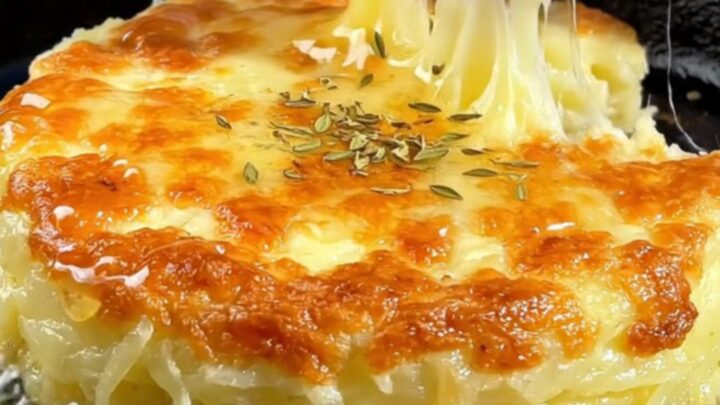
The cake is transferred to a serving plate, and fresh lemon juice is squeezed over the hot surface, causing a satisfying sizzle. A drizzle of honey adds a glossy, sweet finish. The cheese is molten and stretches when pulled. The cake should be served immediately, while the crust is still crackling and the cheese is gooey.
Common mistakes
One common mistake is not squeezing the potatoes well enough, which leads to a soggy cake that doesn’t crisp up. Make sure to wring out every drop of moisture. Another is flipping the cake too early – wait until the bottom is deeply golden and the crust has set.
Use a wide spatula and flip confidently. Overcrowding the pan or using too low heat can also cause the cake to absorb oil and become greasy. Finally, don’t skip the lemon – it brightens the dish and prevents it from being too heavy.
How to tell it’s done
The cake is done when it is deeply golden brown on both sides and the cheese is melted and bubbling. The internal temperature should reach 160°F (71°C) to ensure the egg is set.
The crust should be crisp and crackling when you tap it with a spatula. If the cake is browning too quickly, lower the heat slightly. Let it rest for a minute before slicing, but serve while still hot.
- Egg dishes: 160°F (71°C) in the thickest part
Up next · Part 3 of 3
4 variations · storage & make-ahead · 5 answers · printable card
Tips, FAQ & printable recipe (Part 3)← Back to the ingredients (Part 1)