Dinner · Part 2 of 3: Instructions
Crispy Garlic Parmesan Chicken with Creamy Spaghetti Step-by-step instructions
- Prep
- Cook
- Total
- Serves
- 4
Before you start
Before beginning, organize all your ingredients and equipment to ensure a seamless cooking process. Pound the chicken breasts to a uniform thickness, then pat them completely dry with paper towels so the cheese coating adheres properly.
Mince the fresh garlic cloves, chop the parsley, and measure out the heavy cream, butter, and cheeses. Set up a boiling pot of salted water for the spaghetti. Having these components ready to go prevents the garlic or cheese crust from burning while you scramble to prepare the next step.
Ingredients at a glance (11)
- 4 boneless skinless chicken breasts, pounded to even thickness
- 1 tsp kosher salt
- 1/2 tsp black pepper
- 1 tsp garlic powder
- 1 cup grated parmesan cheese, divided
- 4 tbsp unsalted butter, divided
- 1 cup shredded mozzarella cheese
- 12 oz spaghetti pasta
- 4 cloves garlic, minced
- 1 1/2 cups heavy cream
- 2 tbsp chopped fresh parsley
Instructions
Searing the Parmesan-Crusted Chicken
- Season and Coat the ChickenSeason the pounded chicken breasts evenly on both sides with kosher salt, black pepper, and garlic powder. Press each seasoned breast firmly into half of the grated parmesan cheese to create a solid, even coating that will form a crispy crust when seared.Look for The chicken should be fully and evenly coated in cheese.Tip Pound the chicken breasts to an even half-inch thickness before seasoning to ensure fast and uniform cooking.
- Sear the ChickenMelt two tablespoons of unsalted butter in a large skillet over medium-high heat. Add the coated chicken breasts to the hot skillet and cook for about five to six minutes per side until the parmesan coating turns into a deep golden-brown, crispy crust.Look for Look for a deeply browned cheese crust.Tip Do not move the chicken around in the pan immediately after adding it, allowing the cheese crust to set properly.
At the end of this phase, the chicken breasts should sport a gorgeous, deeply golden-brown crust of caramelized parmesan cheese. The aroma of toasted cheese and sizzling butter should fill the kitchen.
The crust should feel firm and crispy when tapped lightly with tongs, indicating that the cheese has successfully bonded to the meat and set.
Boiling Pasta and Melting Mozzarella
- Boil the SpaghettiBring a large pot of salted water to a rolling boil. Add the spaghetti pasta and cook according to the package instructions until it reaches an al dente texture. Drain the pasta in a colander, reserving a half cup of the starchy cooking water for the sauce later.Look for The pasta should be tender but still have a slight bite.Tip Salting the pasta water generously is crucial as this is the only opportunity to season the spaghetti itself.
- Melt the MozzarellaTop each seared chicken breast with shredded mozzarella cheese. Cover the skillet with a tight-fitting lid and reduce the heat to low, letting the cheese melt completely into a rich, gooey blanket over the crispy chicken. Remove the chicken from the skillet and transfer to a plate to rest.Look for The mozzarella should be fully melted and bubbly.Safe temperature 165°F (74°C) internal temperature (poultry)Tip A splash of water in the skillet before covering can create steam to help melt the cheese faster.
The chicken is now blanketed under a perfectly melted, gooey layer of mozzarella cheese, while the spaghetti is boiled to an al dente texture. The pasta should be tender but retain a firm bite in the center. The melted mozzarella on the chicken should be soft, bubbly, and slightly draped over the sides of the golden crust.
Creating the Cream Sauce and Combining
- Build the Garlic Cream SauceIn the same skillet over medium heat, melt the remaining butter. Add the minced garlic and sauté for about one minute until fragrant. Pour in the heavy cream and bring the mixture to a gentle simmer, scraping up any browned bits from the bottom of the pan.Look for The cream should be bubbling gently and turning slightly golden.Tip Keep the heat at medium-low to prevent the heavy cream from boiling too vigorously and separating.
- Toss Pasta and ServeWhisk the remaining grated parmesan cheese into the simmering cream sauce until smooth. Add the cooked spaghetti and chopped fresh parsley to the skillet, tossing constantly until the noodles are fully coated in the glossy sauce. Slice the rested chicken and serve immediately alongside the pasta.Look for The sauce should cling beautifully to the spaghetti strands.Tip If the cream sauce feels too thick, splash in a little of the reserved pasta water to loosen it up.
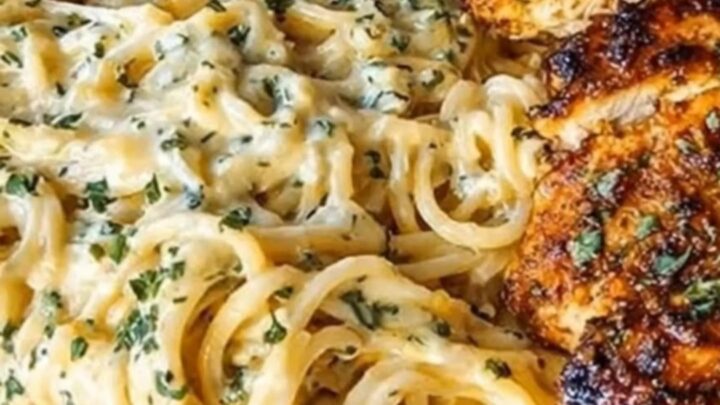
The garlic cream sauce should be thick, glossy, and bubbling gently, clinging beautifully to the spaghetti. The pasta should look thoroughly coated and flecked with bright green parsley, while the sliced chicken sits proudly alongside, showcasing its crispy crust, melted cheese, and juicy interior.
Common mistakes
A common mistake is using a skillet that is not hot enough when adding the chicken, which causes the parmesan cheese to melt into a puddle rather than forming a crispy crust. Ensure the butter is fully melted and foaming before placing the chicken in the pan.
Another error is boiling the heavy cream too aggressively, which can cause the dairy to split and become greasy. Always keep the cream sauce at a gentle simmer, stirring constantly, and lower the heat immediately if it begins to boil rapidly.
How to tell it’s done
The chicken is perfectly cooked when it reaches an internal temperature of 165°F (74°C) measured with a digital meat thermometer inserted into the thickest part of the breast. At this point, the juices will run clear, and the meat will feel firm to the touch.
The melted mozzarella on top should be completely liquid and bubbly. The pasta is perfectly done when it is al dente, meaning it is cooked through but still offers a pleasant, firm resistance when bitten.
- Poultry: 165°F (74°C) in the thickest part
Up next · Part 3 of 3
3 variations · storage & make-ahead · 4 answers · printable card
Tips, FAQ & printable recipe (Part 3)← Back to the ingredients (Part 1)