Appetizers · Part 2 of 3: Instructions
Crispy Garlic Butter Parmesan Fries with Homemade Garlic Aioli Step-by-step instructions
- Prep
- Cook
- Total
- Serves
- 4
Before you start
Before starting, fill a large bowl with ice water. Cut the potatoes into uniform sticks, about 1/4-inch thick, and place them in the ice water to soak for 30 minutes. While they soak, prepare the aioli by sautéing the garlic in olive oil, then whisking it with mayonnaise, Dijon mustard, and lemon juice.
Cover and refrigerate. Set up your frying station with a deep-fry thermometer, a slotted spoon, and a baking sheet lined with paper towels. Have all ingredients measured and ready to go.
Ingredients at a glance (12)
- 2 lb russet potatoes
- 1 tbsp cornstarch
- 4 cups vegetable oil, for frying
- 3 tbsp unsalted butter
- 3 cloves garlic, minced
- 1/2 cup freshly grated parmesan cheese
- 2 tbsp fresh parsley, chopped
- 1/2 cup mayonnaise
- 1 tsp Dijon mustard
- 1 tbsp fresh lemon juice
- 2 cloves garlic, sautéed
- 2 tsp olive oil
Instructions
Preparation and Aioli
- Prep the Potatoes and AioliCut the russet potatoes into 1/4-inch thick sticks. Place them in a large bowl of ice water and soak for 30 minutes. While the potatoes soak, make the aioli: sauté the garlic in olive oil until fragrant, about 1 minute. In a small bowl, whisk together the mayonnaise, Dijon mustard, lemon juice, and sautéed garlic until smooth. Cover and refrigerate until ready to serve.Look for The potatoes are fully submerged in ice water; the aioli is thick and silky.Tip Soaking removes excess starch, which helps the fries become extra crisp.
- Dry and Coat the PotatoesDrain the potatoes and pat them completely dry with a clean kitchen towel or paper towels. In a large bowl, toss the dried potato sticks with the cornstarch until every piece is lightly coated. This thin coating helps create a shatteringly crisp exterior.Look for The potatoes are dry and dusted with a fine white coating.Tip Make sure the potatoes are very dry before adding cornstarch to prevent clumping.
At the end of this phase, the potatoes are soaking in ice water, and the aioli is made and chilling in the refrigerator. The aioli should be smooth, thick, and well-blended, with a pleasant aroma of sautéed garlic and lemon. The potatoes are cut into even sticks, which will ensure even cooking later.
Frying the Potatoes
- First Fry at 325°FHeat the vegetable oil in a large pot or Dutch oven over medium heat until a deep-fry thermometer registers 325°F (163°C). Carefully add the potato sticks in batches, making sure not to overcrowd the pot. Fry for 5 minutes, until the potatoes are tender but not yet browned. Remove with a slotted spoon and drain on paper towels.Look for The fries are pale and soft, with no color.Tip Frying at a lower temperature first cooks the inside without browning the outside.
- Second Fry at 400°FIncrease the oil temperature to 400°F (204°C). Working in batches again, add the blanched fries and fry for 3 minutes, until golden brown and crispy. Remove from the oil and drain on fresh paper towels. Immediately season with salt while hot.Look for The fries are deep golden and make a crisp sound when tapped.Tip The second fry at high heat creates the shatteringly crisp crust.
After the first fry, the potatoes are pale, soft, and tender but not browned. After the second fry, they are deep golden brown, crispy, and make a crisp sound when tapped. The fries should be drained on paper towels and seasoned with salt immediately after coming out of the oil.
Garlic Butter and Assembly
- Make the Garlic ButterIn a small saucepan over low heat, melt the butter with the minced garlic. Cook gently for 1 to 2 minutes, until the garlic is fragrant but not browned. Remove from heat and keep warm.Look for The butter is melted and the garlic is aromatic.Tip Low heat prevents the garlic from burning and turning bitter.
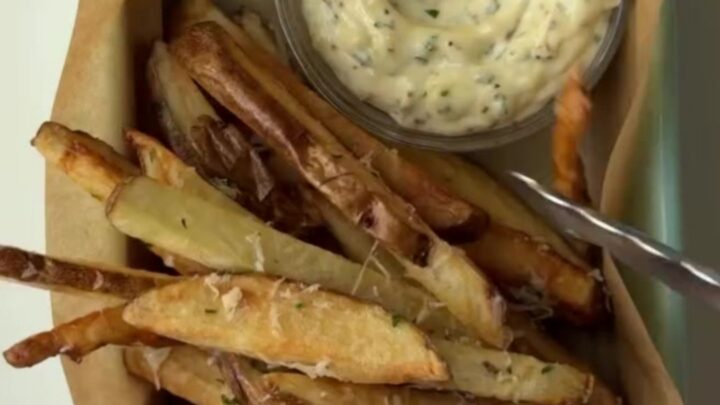
- Toss Fries with Garlic Butter and ParmesanPlace the hot fries in a large mixing bowl. Drizzle the garlic butter over the fries and toss gently to coat. Sprinkle with the grated parmesan cheese and chopped parsley, tossing again until everything is evenly distributed.Look for The fries are glossy with butter and coated with cheese and green herbs.Tip Toss gently to avoid breaking the fries.
- Serve with Garlic AioliTransfer the seasoned fries to a serving platter. Serve immediately with the chilled garlic aioli on the side for dipping. Dunk generously and enjoy the crunch.Look for Fries are hot, crispy, and ready to be dipped.Tip Serve right away for the best texture; the fries soften as they sit.
The garlic butter is melted and fragrant, with the garlic softened but not browned. The fries are tossed in the butter, then coated with parmesan and parsley. The final dish is glossy, cheesy, and herb-flecked, with the aioli served on the side. The fries are best eaten immediately while still hot and crispy.
Common mistakes
One common mistake is overcrowding the pot during frying, which lowers the oil temperature and results in greasy, soggy fries. Fry in small batches to keep the oil temperature steady.
Another mistake is not drying the potatoes thoroughly before frying; excess water can cause the oil to splatter and the fries to steam instead of crisp.
Be sure to pat them completely dry. Also, avoid using pre-shredded parmesan, as it contains anti-caking agents and doesn't melt as smoothly. Finally, don't skip the ice water soak—it's essential for the best texture.
How to tell it’s done
The fries are done when they are golden brown and crispy, and they emit a hollow sound when tapped. The internal temperature of the oil should be maintained at 400°F for the final fry. When you bite into a fry, it should shatter with a crisp crunch, revealing a fluffy interior.
The aioli should be thick and creamy, with a balanced flavor of garlic, lemon, and Dijon. Since there is no raw protein in this recipe, there is no specific internal temperature to check, but the visual and textural cues are key.
Up next · Part 3 of 3
4 variations · storage & make-ahead · 5 answers · printable card
Tips, FAQ & printable recipe (Part 3)← Back to the ingredients (Part 1)