Dinner · Part 2 of 3: Instructions
Firecracker Chicken Bites with Sticky Sriracha Glaze Step-by-step instructions
- Prep
- Cook
- Total
- Serves
- 4
Before you start
Before starting, cut the chicken thighs into uniform bite-size pieces, about 1-inch cubes. Whisk the egg whites in a large bowl until frothy—this helps the starch stick. Measure out the potato starch, buffalo sauce, brown sugar, sriracha, and rice vinegar.
Set up a wire rack over a baking sheet to drain the fried chicken. Have the glaze ingredients measured and ready to go, as the frying and glazing happen quickly. If using a deep fryer, preheat the oil to 380°F (193°C) while you coat the chicken.
Ingredients at a glance (9)
- 1 1/2 lb boneless, skinless chicken thighs, cut into bite-size pieces
- 1 cup potato starch
- 2 egg whites
- 1/3 cup buffalo sauce
- 1/4 cup brown sugar, packed
- 2 tbsp sriracha
- 1 tbsp rice vinegar
- Sliced red Fresno chilies, for garnish, to taste
- Sliced scallions, for garnish, to taste
Instructions
Coating and Glaze Prep
- Coat the ChickenIn a large bowl, whisk the egg whites until frothy. Add the cubed chicken thighs and toss to coat evenly. Sprinkle the potato starch over the chicken and toss again until every piece is lightly and evenly coated. Shake off any excess starch.Look for The chicken pieces should look dry and powdery, with no wet spots.Tip Work in batches if needed to keep the coating light and even.
- Whisk the GlazeIn a small bowl, whisk together the buffalo sauce, brown sugar, sriracha, and rice vinegar until the sugar is fully dissolved. Set the glaze aside near the stove.Look for The glaze should be smooth and glossy, with no sugar granules remaining.Tip Taste the glaze and adjust the heat level with extra sriracha if desired.
The chicken pieces are evenly coated with a light, powdery layer of potato starch and egg white. The glaze is smooth, with the sugar fully dissolved, and has a balanced sweet-and-spicy aroma. The coating should feel dry to the touch, not wet or clumpy. If any pieces look bare, give them an extra sprinkle of starch. The glaze should be glossy and pourable, ready to be heated in the skillet.
Frying and Caramelizing
- Flash-Fry the ChickenHeat oil in a deep fryer or heavy-bottomed pot to 380°F (193°C). Carefully add the coated chicken pieces in batches, without crowding, and fry for 5 minutes, turning occasionally, until golden brown and cooked through. Remove with a slotted spoon and drain on paper towels.Look for The chicken should be deep golden brown and very crisp to the touch.Safe temperature 165°F (74°C) internal temperature (poultry)Tip Maintain the oil temperature between batches to ensure even cooking.
- Caramelize in the GlazeHeat a large skillet over medium-high heat and add the prepared glaze. Bring to a simmer, then add the fried chicken pieces. Toss constantly for 60 seconds, until the glaze thickens and coats each piece in a sticky, glossy layer.Look for The glaze should cling to the chicken and turn deep red and shiny.Safe temperature 165°F (74°C) internal temperature (poultry)Tip Work quickly to avoid burning the sugar in the glaze.
The chicken is golden brown and crisp, with a shattering crunch when tapped. The glaze is bubbling and thick, turning a deep red as it caramelizes. The kitchen smells of sweet heat and toasted chili.
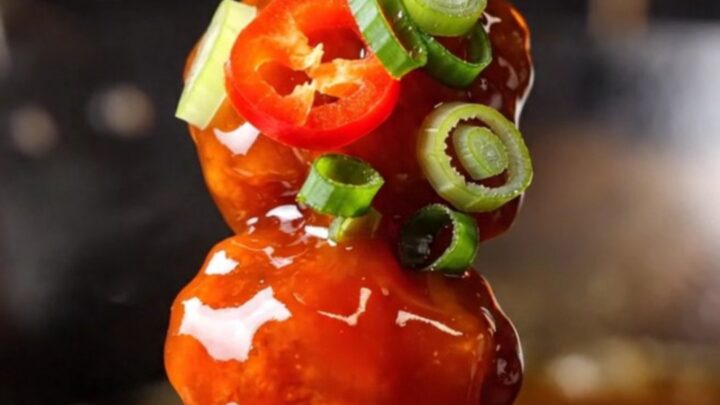
The chicken pieces are evenly coated in a sticky, glossy glaze that clings to every nook and cranny. The texture should be crunchy on the outside, tender inside, and the glaze should not be runny or watery.
Garnishing and Serving
- Garnish and ServeTransfer the glazed chicken bites to a serving platter. Sprinkle with sliced Fresno chilies and scallions. Serve immediately while hot and crispy.Look for The chicken should be glossy and garnished with bright red and green.Tip Skewer the bites for easy appetizer-style serving.
The firecracker chicken bites are glossy, garnished with bright red Fresno chilies and green scallions. The glaze is set and sticky, not dripping. The chicken is hot, crispy, and inviting, with a sweet-spicy aroma. The final dish looks vibrant and appetizing, with a beautiful caramelized sheen. Serve immediately to enjoy the contrast of textures at its peak.
Common mistakes
A common mistake is overcrowding the fryer, which drops the oil temperature and results in soggy, greasy chicken. Fry in small batches and allow the oil to return to temperature between batches. Another mistake is adding the glaze too early or over-reducing it—the sugar can burn and turn bitter.
Toss the chicken in the glaze for exactly 60 seconds over medium-high heat, just until the sauce thickens and clings. Also, be sure to shake off excess starch before frying, as too much coating can become gummy.
How to tell it’s done
The chicken is done when it reaches an internal temperature of 165°F (74°C) and the coating is deep golden brown and crisp. The glaze should be thick, glossy, and cling to the chicken when tossed.
To check, cut into one piece—the meat should be opaque and juicy, not pink. The glaze will darken slightly as it caramelizes; it should smell sweet and spicy, and the sugar should be fully dissolved. Serve immediately for the best texture.
- Poultry: 165°F (74°C) in the thickest part
- Egg dishes: 160°F (71°C) in the thickest part
Up next · Part 3 of 3
4 variations · storage & make-ahead · 5 answers · printable card
Tips, FAQ & printable recipe (Part 3)← Back to the ingredients (Part 1)