Dinner · Part 2 of 3: Instructions
Crispy Eggplant Parmesan Stacks with Molten Mozzarella in One Skillet Step-by-step instructions
- Prep
- Cook
- Total
- Serves
- 4
Before you start
Gather every ingredient before you turn on the stove, because the breading and frying move quickly. Trim the eggplant, slice it into even 1/2-inch rounds on a wooden cutting board, and lay them out in a single layer on a tray. Set out three shallow bowls: one with flour seasoned with a pinch of salt, one with the beaten eggs, and one with the breadcrumbs mixed with the finely grated hard aged Parmesan.
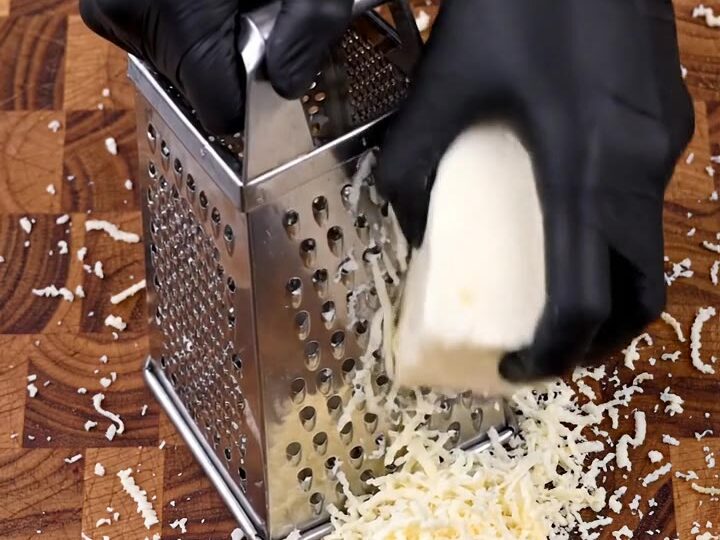
Shred the mozzarella with a box grater or buy it already shredded, drain the marinara if it looks watery, and tear the basil leaves. Lightly smash the garlic cloves with the flat side of your knife. Pour the oil into the black cast iron skillet and set a wire rack or a plate lined with paper towels next to the stove.
Ingredients at a glance (12)
- 1 whole purple eggplant, about 1 1/2 lb, trimmed and sliced into 1/2-inch rounds
- 1/2 cup all-purpose flour
- 2 large eggs, beaten
- 1 cup plain dried breadcrumbs
- 1/2 cup finely grated hard aged Parmesan cheese, shredded with a box grater
- 1 tsp kosher salt, plus more to taste
- 1/2 cup neutral frying oil, such as canola, for shallow frying
- 3 cloves garlic, lightly smashed
- 2 cups red tomato sauce, or marinara
- 8 oz low-moisture mozzarella cheese, shredded
- 1 ball of burrata
- 1/2 cup fresh basil leaves, for garnish
Instructions
Slice and bread the eggplant
- Slice and set up breadingTrim the eggplant and slice it into 1/2-inch rounds on a wooden cutting board. Set out three shallow bowls: flour seasoned with salt, beaten eggs, and breadcrumbs mixed with the finely grated Parmesan. Keep the garlic cloves and basil leaves nearby.Look for Rounds are even, about half an inch thick, with the skin still on.Tip Salt the rounds lightly and let them rest 10 minutes to release moisture for a crisper result.
- Bread the eggplant roundsDredge each round in flour, dip it in the beaten eggs, then press it into the Parmesan breadcrumbs until fully coated. Set the breaded rounds on a plate in a single layer while you finish the rest.Look for Each round has an even, dry coating with no bare patches.Tip Use one hand for dry flour and the other for wet egg to keep your fingers from clumping.
The eggplant rounds should be even, about half an inch thick, and fully coated in the Parmesan breadcrumb mixture with no bare spots. The flour layer should look dry and powdery, and the egg should cling to each round in a thin, smooth coat. Before you move on to frying, check that the coating is firm enough to hold its shape when you lift a round. If the crumbs slide off or the coating looks patchy, press them back on by hand and let the breaded rounds rest on a plate for a few minutes so the coating sets before the oil.
Fry until golden and crisp
- Fry until golden and crispHeat the oil in the black cast iron skillet over medium-high heat until it bubbles around a bread crumb. Fry the eggplant rounds in batches for 2 to 3 minutes per side, until golden and crisp. Drain them on paper towels or a wire rack.Look for Oil bubbles steadily and the coating turns deep golden in about 2 to 3 minutes per side.Tip Do not crowd the pan, or the rounds will steam and lose their crunch.
- Build the first layerPour off excess oil and return the skillet to medium heat. Arrange a layer of fried eggplant rounds in the skillet, spoon marinara over each one, and add the garlic cloves to the sauce. Cover the layer generously with shredded mozzarella.Look for Sauce is bubbling at the edges and mozzarella begins to soften and melt.Tip Spoon sauce in small pools so each round stays crisp underneath.
- Melt the cheese in the skilletCook the layer over medium heat for 3 to 4 minutes, until the mozzarella melts and bubbles at the edges of the skillet. Remove the garlic cloves before serving if you do not want to bite into them.Look for Mozzarella is fully melted, glossy and bubbling along the skillet walls.Tip Keep the heat moderate so the cheese melts without scorching on the bottom.
The fried rounds should be deep golden on both sides, with a crackling, even crust and no pale or greasy patches. The oil should bubble steadily around each round as it cooks, and the edges should look dry rather than wet. When you lift a round with the slotted spatula, the underside should be firm and crisp. Before you assemble the layers, drain the rounds on paper towels or a wire rack so the crust stays crisp, and pour off the excess oil from the skillet, leaving just enough to lightly coat the base for the next steps.
Stack, melt and finish the cheese
- Stack the layersStack a second fried eggplant round on top of the melted cheese layer, then spoon more marinara over it and cover with more shredded mozzarella. Top the stack with a crisp breaded eggplant round and scatter a few basil leaves over it.Look for Stack stands upright with cheese visible between the layers.Tip Press each round gently so the layers hold together when served.
- Finish with burrata and basilTear the burrata over the top of the stack so its creamy center spills over the crust. Add the remaining basil leaves, and then spoon the warm marinara around the base of the stack before serving.Look for Burrata is soft and creamy and cheese pulls from the stack when lifted.Tip Serve the stack immediately while the cheese is still molten and the crust is crisp.
The cheese should be fully melted and glossy, bubbling at the edges of the skillet, and the marinara should be warm and visibly simmering around the stack. The stacked eggplant should stand upright with cheese visible between the layers.
Burrata should look soft and creamy when torn over the top, and the basil should be bright green. Before you serve, check that the cheese pulls from the stack when you lift a slice and that the crust remains crisp at the top layer. If the cheese has not melted through, return the skillet to medium heat for another minute.
Common mistakes
The most common mistake is frying too many rounds at once, which drops the oil temperature and makes the coating soak up grease instead of crisping. Work in batches and let the oil return to a steady bubble between them. Another frequent problem is spooning too much sauce over the crisp rounds, which softens the breading and turns the crust soggy within minutes.
Use a measured spoonful over each layer, not a flood. Cooking the mozzarella over high heat is also a trap: the cheese can burn on the bottom of the skillet before the top has melted. Keep the heat at medium so the cheese bubbles and softens without scorching. Finally, do not cut the stack while it is still piping hot and loose; wait a few minutes so the layers settle and hold together when you plate them.
How to tell it’s done
The eggplant is done when the breaded rounds are deep golden and crisp on both sides, with a firm, dry crust that holds its shape when lifted, and the inside is soft and tender when pierced with a fork. The cheese is done when the mozzarella is fully melted, glossy and bubbling at the edges of the skillet, with no pale or dry patches.
The sauce should be simmering and warm throughout the stack. This recipe contains eggs only in the breading, which is set when fried; the eggs are cooked through during frying, so no separate egg temperature applies. Use a fork test on the eggplant and a visual check on the cheese, and let the stack rest briefly before serving so the layers hold together.
Up next · Part 3 of 3
4 variations · storage & make-ahead · 6 answers · printable card
Tips, FAQ & printable recipe (Part 3)← Back to the ingredients (Part 1)