Dinner · Part 2 of 3: Instructions
Crispy Eggplant Parmesan Skillet with Melted Mozzarella and Burrata Step-by-step instructions
- Prep
- Cook
- Total
- Serves
- 4
Before you start
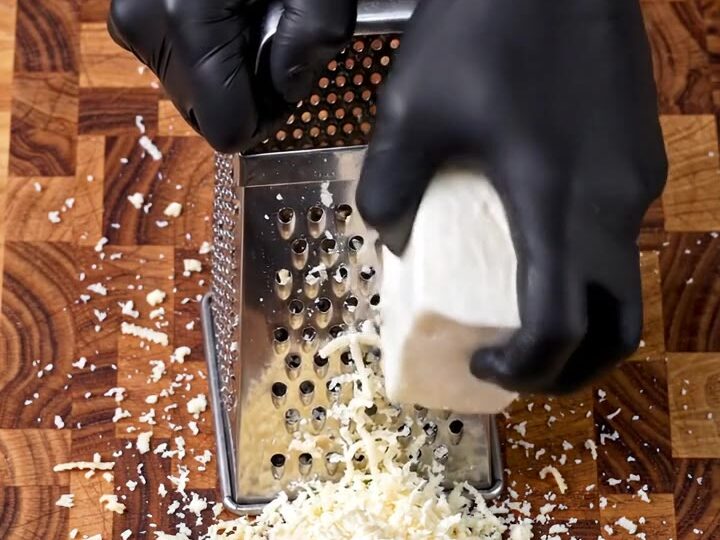
Set up your station before the heat goes on. Trim the eggplant, slice it into 1/2-inch rounds on a wooden board and salt both sides, then lay them on paper towels to rest. Grate the Parmesan finely with a box grater and slice the garlic thinly. Slice the fresh mozzarella and set the burrata on a small plate.
Line one plate with paper towels for draining the fried rounds, and set three shallow dishes in a row with flour, beaten eggs and breadcrumbs. Pat the eggplant dry, dredge each round and place it on a clean tray. Keep the skillet, spatula and oven rack ready so the transition from frying to baking is smooth and quick.
Ingredients at a glance (13)
- 1 large eggplant, sliced into 1/2-inch rounds
- 1 cup finely grated Parmesan cheese, plus more for topping
- 8 oz fresh mozzarella, sliced
- 1 ball burrata (about 4 oz), for serving
- 1/2 cup all-purpose flour
- 2 large eggs, beaten
- 1 cup plain breadcrumbs
- 1 tsp kosher salt, plus more to taste
- 1/3 cup olive oil, for frying
- 4 cloves garlic, thinly sliced
- 2 cups rich tomato sauce
- 1 tsp dried Italian herbs
- fresh basil leaves, for garnish, to taste
Instructions
Crispy eggplant rounds ready
- Slice and salt the eggplantTrim the ends of the eggplant and slice it into 1/2-inch rounds on a wooden cutting board. Season the rounds on both sides with kosher salt and lay them on paper towels for about 10 minutes to draw out moisture. Meanwhile, slice the garlic thinly and finely grate the Parmesan over the board with a box grater.Look for Slices look slightly glossy and beads of moisture appear on the surface.Tip Pat the rounds dry before breading so the crust sets and browns instead of steaming.
- Set up the breading stationPlace the flour, the beaten eggs and the breadcrumbs in three shallow dishes. Slice the fresh mozzarella and set it aside with the burrata, ready for layering. Dredge each eggplant round first in flour, then in egg, then in breadcrumbs, pressing gently so the coating adheres.Look for Each round is evenly coated with no bare patches of eggplant showing.Tip Shake off excess crumbs so the coating fries crisp rather than clumpy.
Once the rounds are fried, they should be deep golden on both sides, with a crisp coating that sounds firm when tapped with a spatula. The breading should look even, with no pale patches or loose crumbs clinging to the skillet. Check that the rounds are drained on paper towels and that the surface feels dry rather than oily. A slight give in the center means the eggplant is tender inside. If a round looks pale or soft, fry it for another 30 seconds per side before moving to the next phase, so the crust will hold its texture under the sauce and cheese.
Garlic tomato sauce bubbling
- Fry the eggplant until goldenHeat the olive oil in the cast iron skillet over medium-high heat until it shimmers. Fry the breaded eggplant rounds in batches for 2 to 3 minutes per side, until deep golden and crisp. Transfer them to a plate lined with paper towels and sprinkle lightly with salt.Look for Edges turn deep golden and the coating sounds crisp when tapped.Tip Work in batches so the oil stays hot and the rounds do not turn greasy.
- Simmer the garlicky tomato saucePour off most of the oil, leaving a thin film in the skillet. Add the sliced garlic and cook for about 30 seconds until fragrant. Stir in the tomato sauce and dried Italian herbs, then simmer over medium heat for 5 minutes until hot and bubbling around the edges.Look for The sauce bubbles steadily and the garlic smells sweet and toasted.Tip Lower the heat slightly if the garlic starts to brown, which would make it bitter.
- Layer the eggplant and cheeseArrange the crispy eggplant rounds over the bubbling sauce, overlapping them in a single layer. Tuck the mozzarella slices between and on top of the rounds. Scatter a generous handful of the finely grated Parmesan over the eggplant and sauce.Look for The Parmesan covers the surface and the sauce still bubbles around the slices.Tip Keep some sauce visible between the slices so the bottom layers stay moist.
At this stage the tomato sauce should be bubbling steadily around the edges of the skillet, with the garlic fragrant and mellow rather than browned. The herbs should smell warm and savory, and the sauce should look glossy and thick enough to coat a spoon.
Stir once, then check that the sauce spreads evenly across the base of the skillet and that no pieces of garlic have darkened. Before you add the eggplant, make sure the sauce is hot all the way through, because the eggplant rests directly on it and needs to stay warm during the final bake. A quick taste will confirm the seasoning.
Cheese melted and layers set
- Melt the cheese in the ovenBake the skillet on the middle rack at 400°F (200°C) for 8 to 10 minutes, until the sauce is hot and the mozzarella and Parmesan soften and melt. Remove from the oven and let rest for 5 minutes so the layers hold together.Look for Mozzarella is fully melted and the Parmesan turns golden at the edges.Tip Use a hot skillet handle guard, since the cast iron stays very hot after baking.
- Finish with burrata and basilLift the eggplant stack out of the skillet with a spatula and plate it. Spoon some tomato sauce around the stack and sprinkle it with a little more Parmesan. Set a spoonful of burrata on top, tear it open gently, and finish with fresh basil leaves.Look for The burrata is creamy and the basil is bright green and fresh.Tip Add the burrata just before serving so its creamy center stays soft and cool.
When the skillet comes out of the oven, the mozzarella should be fully melted and stretching slightly when lifted, and the Parmesan should be golden at the edges. The sauce should still bubble gently around the eggplant, and the top layer should look glossy rather than dry. Let the skillet rest for 5 minutes so the layers firm up enough to lift cleanly with a spatula. If the cheese has not melted through, return the skillet to the oven for 2 more minutes and check again. A light golden crust on the top is the sign that the layers are ready to plate.
Common mistakes
The most common mistake is skipping the salting and drying step. Eggplant holds a lot of water, and without drawing it out the rounds steam in the pan, the breading slides off and the crust turns soft. Another frequent problem is crowding the skillet during frying, which drops the oil temperature and makes the coating greasy.
Work in batches and let the oil return to heat between rounds. Avoid adding burrata before the bake, because the cheese will melt into the sauce and lose its creamy center. Finally, do not overload the skillet with sauce, since the breaded rounds need to sit above the liquid to stay crisp. Keep the sauce warm and spoon it around the eggplant instead of covering it completely.
How to tell it’s done
The dish is done when the eggplant is golden and crisp at the edges, the tomato sauce is hot and bubbling around the slices, and the mozzarella is fully melted and stretchy. The Parmesan should be golden and lightly browned at the edges of the layers. Each slice of eggplant should feel tender when pierced with a fork, with no firm or raw center.
Because this dish contains eggs only in the breading, check that the coating has set and is golden, and make sure the eggplant is heated through to the center before serving. The cheese should look melted throughout the stack, not just on the surface. Let the skillet rest for 5 minutes before lifting, so the layers hold their shape on the plate.
Up next · Part 3 of 3
4 variations · storage & make-ahead · 5 answers · printable card
Tips, FAQ & printable recipe (Part 3)← Back to the ingredients (Part 1)