Dinner · Part 2 of 3: Instructions
Crispy-Edged Lasagna Roll-Ups with Blush Sauce Step-by-step instructions
- Prep
- Cook
- Total
- Serves
- 6
Before you start
Preheat the oven to 400°F (200°C). Bring a large pot of salted water to a boil. Have ready a clean kitchen towel or parchment paper for draining the noodles.
Measure out all ingredients and set them within reach. The ricotta mixture can be prepared while the noodles cook, and the skillet should be greased lightly or left ungreased if well-seasoned.
Ingredients at a glance (7)
- 12 wavy lasagna noodles
- 450 g herb ricotta
- 1 large egg
- 100 g grated Parmesan
- 400 ml marinara cream sauce
- 200 g shredded mozzarella
- fresh basil leaves, for garnish, to taste
Instructions
Phase 1: Noodles and Filling
- Prepare the noodles and fillingBring a large pot of salted water to a boil and cook the lasagna noodles according to package directions until al dente. Drain and lay them flat on a clean kitchen towel or parchment paper to cool slightly. In a medium bowl, combine the herb ricotta, egg, and grated Parmesan. Stir until well blended.Look for The noodles should be pliable but not overcooked; they will be rolled later.Tip Keep the noodles separated on the towel so they don't stick together.
- Spread the ricotta mixtureSpread a generous spoonful of the ricotta mixture over each noodle, covering the surface evenly. Use the back of the spoon or a spatula to create a thin, even layer, leaving a small border at the edges.Look for Each noodle should be coated with filling, but not overflowing.Tip If the mixture is too thick, add a tablespoon of milk or water to loosen it.
- Roll the noodlesStarting at one short end, roll each noodle tightly into a spiral. Place the rolled noodles seam-side down on a plate or baking sheet while you finish the rest.Look for The rolls should hold their shape and not unroll.Tip Roll gently but firmly to keep the filling inside.
The noodles are cooked al dente and laid flat to cool. The ricotta mixture is smooth and spreadable. Each noodle is coated with a thin, even layer of filling and rolled tightly. The rolls hold their shape and are ready to be placed in the skillet.
Phase 2: Assembly and Baking
- Assemble the skilletPour the marinara cream sauce into the bottom of a cast-iron skillet or baking dish, spreading it evenly. Arrange the rolled noodles upright in the skillet, nestling them close together.Look for The rolls should fit snugly in one layer.Tip If using a larger skillet, place the rolls in a single layer with a little space between them.
- Top with mozzarellaSprinkle the shredded mozzarella evenly over the tops of the rolls and any exposed sauce. Gently press the cheese down so it adheres.Look for The cheese should cover the tops and fill the gaps between rolls.Tip For extra crispy edges, tuck some mozzarella against the sides of the skillet.
- Bake until golden and bubblingPreheat the oven to 400°F (200°C). Bake the skillet uncovered for 25 minutes, until the cheese is melted, bubbly, and deeply golden at the edges. The noodle ridges should crisp and caramelize.Look for The top is golden brown and the sauce is bubbling around the edges.Safe temperature 160°F (71°C) internal temperature (egg dishes)Tip If the top browns too quickly, tent loosely with foil for the last 5 minutes.
The skillet is filled with sauce and the rolls are nestled upright. Mozzarella is sprinkled generously over the top.
The skillet is baking, and as it cooks, the cheese melts and bubbles, and the noodle edges begin to crisp and caramelize. The kitchen fills with the aroma of marinara and roasted cheese.
Phase 3: Rest and Serve
- Rest and garnishRemove the skillet from the oven and let it rest for 5 minutes. Garnish with fresh basil leaves before serving.Look for The rolls are set and the cheese has settled.Tip Resting helps the rolls hold together when lifted.
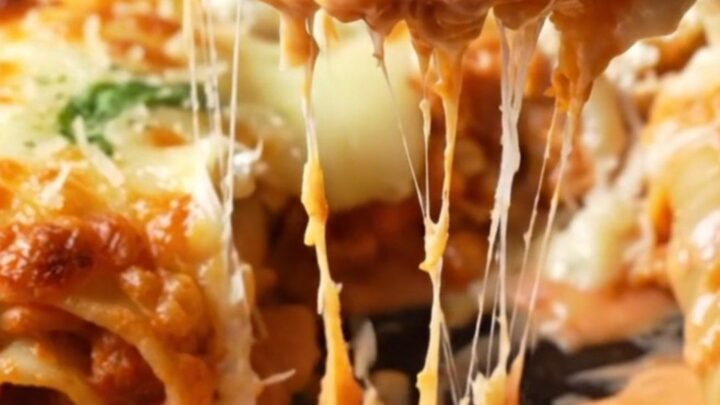
- Serve individual portionsUse a spatula or tongs to lift each roll-up out of the skillet, letting any excess sauce drip back. Serve warm, with extra basil if desired.Look for The rolls come out cleanly with a crispy cheese edge.Tip For a dramatic cheese pull, lift the roll with a fork and let the cheese stretch.
The skillet has rested for a few minutes, allowing the cheese to set slightly. The rolls are lifted out cleanly, with a satisfying cheese pull. The edges are crispy and golden, and the basil adds a fresh, herbal note.
Common mistakes
Overcooking the noodles makes them too soft to roll; aim for al dente. Spreading too much filling can cause the rolls to burst open during baking.
Not using enough sauce can leave the rolls dry, while too much sauce can make them soggy. Avoid overcrowding the skillet if using a smaller pan; use two skillets or bake in batches.
How to tell it’s done
The lasagna roll-ups are done when the cheese on top is melted, bubbly, and deeply golden, and the edges of the noodles are crispy and caramelized.
The internal temperature of the filling should reach at least 160°F (71°C) to ensure the egg is fully cooked. Let the skillet rest for a few minutes before serving.
- Egg dishes: 160°F (71°C) in the thickest part
Up next · Part 3 of 3
4 variations · storage & make-ahead · 5 answers · printable card
Tips, FAQ & printable recipe (Part 3)← Back to the ingredients (Part 1)