Desserts · Part 2 of 3: Instructions
Crispy Edge Chocolate Chip Cookies With Two Chips Step-by-step instructions
- Prep
- Cook
- Total
- Serves
- 24
Before you start
Before starting, make sure the butter is softened to room temperature so it creams easily with the sugars. Measure all ingredients and have them ready. Line your baking sheets with parchment paper so the cookies do not stick and the edges brown evenly.
Preheat the oven to 375°F (190°C) while you prepare the dough. If you plan to chill the dough, allow extra time. Have a wire rack ready for cooling the baked cookies.
Ingredients at a glance (11)
- 1 cup unsalted butter, softened
- 1 cup dark brown sugar, packed
- 1/2 cup granulated sugar
- 2 large cold eggs
- 2 tsp vanilla bean extract
- 2 1/4 cups all-purpose flour
- 1 tsp baking soda
- 1 tbsp cornstarch
- 1 cup milk chocolate chips
- 1 cup dark chocolate chunks
- flaky sea salt, for finishing, to taste
Instructions
Creaming and Mixing
- Cream the Butter and SugarsIn a large bowl, beat the softened butter with the dark brown sugar and granulated sugar on medium speed until the mixture is light and fluffy, about 2 minutes. Add the cold eggs one at a time, beating well after each addition, then beat in the vanilla bean extract. Scrape down the sides of the bowl as needed.Look for The mixture should look pale, airy, and creamy, with the sugar mostly dissolved.Tip Use cold eggs straight from the fridge to help the dough stay firm and bake up thick.
- Whisk the Dry IngredientsIn a separate bowl, whisk together the all-purpose flour, baking soda, and cornstarch until evenly combined. This step ensures the leavener and thickener are distributed throughout the flour.Look for The dry mixture should look uniform with no visible streaks of baking soda.Tip Sifting or whisking well prevents clumps and helps cookies spread evenly.
After creaming, the butter-sugar mixture should be pale, light, and fluffy, with no visible grains of sugar. When you add the eggs and vanilla, the mixture should look glossy and well combined.
The dry ingredients should be fully incorporated without any streaks of flour. The dough will be thick and slightly sticky, and the chocolate chips and chunks should be evenly distributed. At this point, the dough is ready to scoop.
Scooping and Baking
- Combine the DoughReduce the mixer speed to low and gradually add the flour mixture to the butter mixture, mixing just until no streaks of flour remain. Use a rubber spatula to fold in the milk chocolate chips and dark chocolate chunks until they are evenly distributed throughout the dough.Look for The dough should be thick and cohesive, studded with chocolate in every spoonful.Tip Do not overmix after adding the flour; stop as soon as the dough comes together to keep cookies tender.
- Portion the DoughScoop large dough balls, about 3 tablespoons each, and place them on parchment-lined baking sheets, spacing them at least 2 inches apart. For extra height, chill the scooped dough for 30 minutes before baking, though it is not required.Look for The dough balls should be tall and round, not flat.Tip Using a large cookie scoop helps keep the portions uniform for even baking.
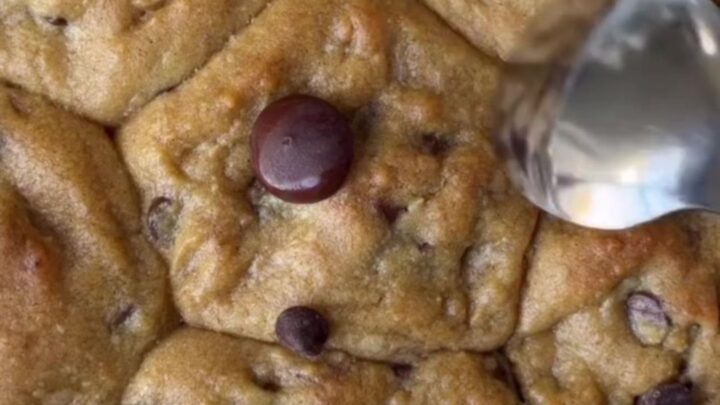
The dough balls should be large, about 3 tablespoons each, and spaced at least 2 inches apart on the baking sheet. As they bake, the edges will start to brown and caramelize, while the centers remain pale and slightly puffy. The kitchen will smell of butter and chocolate. After 11 minutes, the edges should be golden and firm, and the centers will still look soft. They will set as they cool.
Finishing and Cooling
- Bake the CookiesBake the cookies in a preheated 375°F (190°C) oven for 11 minutes, or until the edges are golden brown and caramelized while the centers still look slightly soft and puffy. The cookies will continue to set as they cool on the hot baking sheet.Look for Edges are browned and crisp, centers are pale and slightly domed.Safe temperature 160°F (71°C) internal temperature (egg dishes)Tip Rotate the baking sheets halfway through if your oven bakes unevenly.
- Finish and CoolRemove the baking sheets from the oven and immediately sprinkle the hot cookies with flaky sea salt. Let the cookies cool on the baking sheet for 5 minutes, then transfer them to a wire rack to cool completely. The residual heat will finish setting the centers while keeping them soft.Look for The salt crystals glisten on the caramelized edges.Safe temperature 160°F (71°C) internal temperature (egg dishes)Tip Cooling on the sheet for a few minutes helps the centers set without overbaking.
Immediately after removing from the oven, sprinkle the hot cookies with flaky sea salt. Let them cool on the baking sheet for 5 minutes; the edges will crisp up and the centers will set slightly. When you transfer them to a wire rack, they should hold their shape but still be soft in the middle. Once completely cool, the cookies will have a crisp edge and a chewy, gooey center.
Common mistakes
One common mistake is overmixing the dough after adding the flour, which results in tough, dense cookies. Mix just until the flour disappears. Another is using melted butter, which makes the cookies spread too thin; use softened butter instead.
If the cookies spread too much, your dough may be too warm—chill it for 30 minutes before baking. Conversely, if the cookies are too thick and barely spread, your oven might be too hot or you added too much flour. Finally, do not skip the flaky sea salt; it balances the sweetness and adds a pleasant crunch.
How to tell it’s done
The cookies are done when the edges are deeply golden and caramelized, and the centers are just set but still soft to the touch. They will look slightly puffy and underdone in the middle, but they will continue to set as they cool on the hot baking sheet.
If you insert a toothpick into the center, it should come out with a few moist crumbs, not raw batter. For food safety, the eggs in the dough must reach 160°F (71°C); because the cookies are baked until the centers are set, they will be fully cooked. Let them cool for 5 minutes on the sheet before transferring to a rack.
- Egg dishes: 160°F (71°C) in the thickest part
Up next · Part 3 of 3
4 variations · storage & make-ahead · 5 answers · printable card
Tips, FAQ & printable recipe (Part 3)← Back to the ingredients (Part 1)