Appetizers · Part 2 of 3: Instructions
Crispy Double-Fried Buffalo Blue Cheese Wings Step-by-step instructions
- Prep
- Cook
- Total
- Serves
- 4
Before you start
Before you begin, ensure your workspace is organized and all ingredients are measured. Pat the chicken wings completely dry using paper towels; excess surface moisture is the enemy of a crispy crust.
Set up your deep fryer or a heavy-bottomed pot with enough oil to submerge the wings, and have a wire cooling rack placed over a baking sheet ready for the resting and cooling stages. Keep your thermometer handy to monitor oil temperatures, as precision is vital for the double-fry technique to work correctly.
Ingredients at a glance (7)
- 2 lb chicken wings, split into flats and drums
- 2 tbsp vodka
- 1 tsp salt
- 1 cup potato starch
- 1/2 cup cayenne pepper sauce
- 6 tbsp cold butter, cubed
- Gorgonzola blue cheese crumbles, for serving
Instructions
Coating and Preparation
- Prepare and Coat the WingsPlace the chicken wings in a large mixing bowl. Add the vodka and salt, tossing thoroughly to coat each piece. Sprinkle the potato starch over the wings and toss again until every wing is evenly dusted with a thin layer of starch, which will create the microscopic blisters needed for that signature crunch.Look for Wings should be evenly coated with a dry, white layer of starch.Tip Ensure the wings are patted dry with paper towels before adding the vodka to prevent clumping.
The wings should be coated in an even, dry, and opaque layer of potato starch. There should be no visible clumps of wet flour or pools of liquid at the bottom of the mixing bowl. The mixture should feel tacky and well-adhered to the surface of the chicken, ensuring no bald spots remain on the skin.
Double-Frying
- Double-Fry TechniqueHeat oil to 350°F (177°C) and fry the wings for 8 minutes. Remove and let them rest on a wire rack for 4 minutes to allow the moisture to redistribute. Increase the oil temperature to 390°F (199°C) and flash-fry the wings for an additional 3 minutes, or until the internal temperature reaches 165°F (74°C).Look for Wings should be deep golden brown and feel rigid to the touch.Safe temperature 165°F (74°C) internal temperature (poultry)Tip Using a wire rack prevents the bottom of the wings from becoming soggy during the rest period.
After the first fry, the wings will be lightly golden but still soft. After the second fry, the wings should have a deep, mahogany-golden color, feel very rigid, and sound crispy when moved. The oil should be clear and bubbling actively around the wings, and no lingering raw spots should be visible.
Emulsification and Finishing
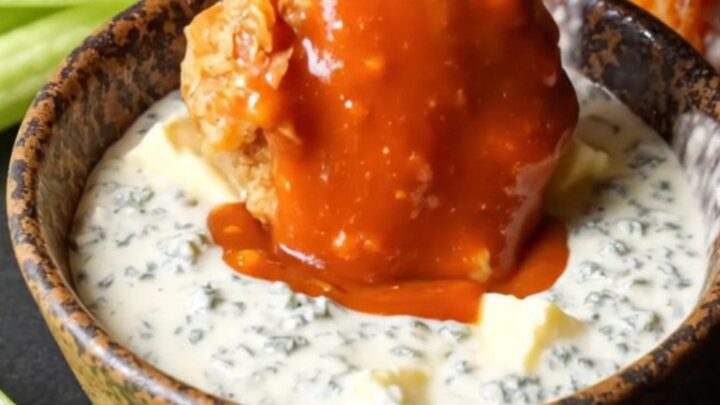
- Emulsify Sauce and ServeIn a small saucepan over low heat, combine the cayenne pepper sauce and cold butter. Whisk constantly as the butter melts, emulsifying it into the sauce to create a velvety, glossy consistency. Toss the double-fried wings in the buffalo butter sauce immediately, then top with crumbled Gorgonzola blue cheese before serving.Look for The sauce should be thick enough to coat the back of a spoon.Tip Adding the butter while cold helps the emulsion stay stable and prevents the sauce from breaking.
The buffalo sauce must be smooth, opaque, and glossy, with no visible pools of melted butter on the surface. When tossed, the sauce should cling to every crevice of the crispy skin. The blue cheese crumbles should look fresh and distinct, providing a sharp, cold contrast to the hot, spicy wings.
Common mistakes
A common mistake is overcrowding the fryer, which drops the oil temperature and leads to soggy, greasy wings. Always fry in small batches to maintain a steady temperature.
Another error is failing to let the wings rest between the two frying stages; this rest period is critical for moisture release, and skipping it will prevent the second fry from achieving maximum crispness.
Finally, be careful not to overheat the buffalo sauce; if the butter melts too fast or the sauce boils, the emulsion will break and become oily.
How to tell it’s done
The chicken wings are fully cooked when the internal temperature reaches 165°F (74°C) as measured by a meat thermometer inserted into the thickest part of the wing. Visually, the skin should be a deep, vibrant golden brown, and the crust should appear blistered and rigid.
If you tap the skin with a utensil, it should sound hollow and feel firm, indicating that the starch coating has achieved the desired level of crispness and is ready to be tossed in the buffalo butter sauce.
- Poultry: 165°F (74°C) in the thickest part
Up next · Part 3 of 3
2 variations · storage & make-ahead · 3 answers · printable card
Tips, FAQ & printable recipe (Part 3)← Back to the ingredients (Part 1)