Dinner · Part 2 of 3: Instructions
Crispy Crushed Potatoes with Melted Raclette Step-by-step instructions
- Prep
- Cook
- Total
- Serves
- 4
Before you start
Heat the oven to 450°F (230°C) and arrange a rack in the upper third. Bring a large pot of salted water to a boil. Have a baking sheet ready, along with a potato masher or the bottom of a glass for crushing.
Set out the duck fat or olive oil, sea salt, and cracked black pepper.
Slice the Raclette cheese if not pre-sliced, and have the pickled pearl onions and cornichons ready for serving. Line the baking sheet with parchment paper for easy cleanup.
Ingredients at a glance (7)
- 600 g baby Charlotte potatoes
- Sea salt, to taste
- 3 tbsp duck fat or olive oil
- Cracked black pepper, to taste
- 200 g sliced Swiss Raclette cheese
- Pickled pearl onions, for serving
- Cornichons, for serving
Instructions
Boil and Crush
- Boil and Crush the PotatoesPlace the baby Charlotte potatoes in a large pot and cover with cold salted water. Bring to a boil and cook for 15 minutes, until tender when pierced with a knife. Drain well and let cool just enough to handle. On a baking sheet, gently crush each potato with a potato masher or the bottom of a glass until about 1.5 cm thick. Drizzle with duck fat or olive oil and season with sea salt and cracked black pepper, turning to coat evenly.Look for Potatoes are tender but still hold their shape; crushed to 1.5 cm thick and coated in fat.Tip Keep the skins on for extra texture and rustic appeal.
- Roast Until Golden and CrispHeat the oven to 450°F (230°C). Arrange the crushed potatoes in a single layer on the baking sheet. Roast for 25 minutes, flipping halfway through, until the edges are deeply golden and crispy.Look for Potatoes are golden brown, crisp on the outside, and tender inside.Tip Don't overcrowd the pan; give each potato room to crisp up.
The potatoes are boiled until fork-tender, then crushed to about 1.5 cm thick. They should be coated evenly with fat and seasoned well. The surface is rough and craggy, ready to crisp up in the oven.
Roast and Melt
- Melt the RaclettePreheat the broiler to 500°F (260°C). Arrange the roasted potatoes in a single layer in a broiler-safe skillet or baking dish. Lay the sliced Swiss Raclette cheese over the top, covering the potatoes evenly. Place under the broiler for 3-5 minutes, until the cheese is melted, blistered, and bubbling.Look for Cheese is melted, browned in spots, and bubbling.Tip Watch closely to avoid burning; the cheese should blister, not blacken.
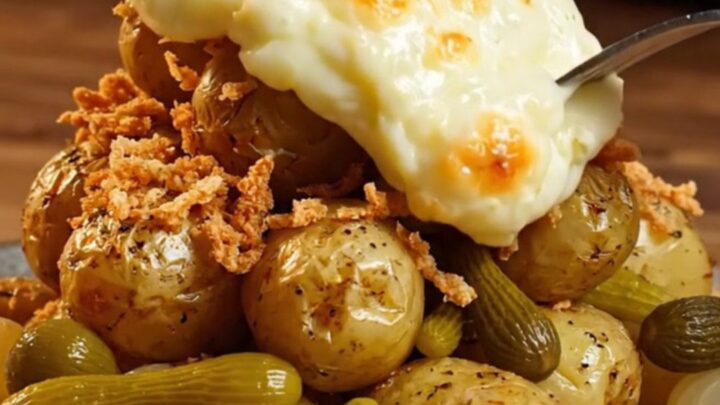
The potatoes emerge from the oven with golden, crispy edges and a tender interior. The Raclette cheese is melted under the broiler until it blisters and bubbles, with browned spots that signal a deep, nutty flavor.
Scrape and Serve
- Scrape and ServeRemove from the broiler and immediately scrape the molten cheese and potatoes onto serving plates. Top with pickled pearl onions and cornichons. Serve hot, letting the cheese stretch with each forkful.Look for Cheese is stretchy and gooey; potatoes are crisp underneath.Tip Serve right away while the cheese is at its most luscious.
The molten cheese is scraped directly onto the potatoes, creating a luscious, stretchy layer. Pickled pearl onions and cornichons add a bright, tangy finish. The dish is served immediately, with cheese pulling in long ribbons.
Common mistakes
One common mistake is undercooking the potatoes before crushing them; if they’re not tender, they won’t crush properly and will be hard in the center. Another is overcrowding the baking sheet, which traps steam and prevents crisping.
When broiling the cheese, keep a close eye on it — it can go from perfectly blistered to burnt in seconds. Finally, don’t skip the pickles; their acidity is essential to balance the richness.
How to tell it’s done
The potatoes are done when they are deeply golden and crispy on the outside, with a tender interior that gives easily when pierced with a fork.
The cheese is done when it is fully melted, bubbly, and browned in spots — this usually takes 3 to 5 minutes under a hot broiler. The dish should be served immediately, while the cheese is still molten and stretchy.
Up next · Part 3 of 3
4 variations · storage & make-ahead · 5 answers · printable card
Tips, FAQ & printable recipe (Part 3)← Back to the ingredients (Part 1)