Dinner · Part 2 of 3: Instructions
Crispy Copycat McChicken Sandwich You Can Make at Home Step-by-step instructions
- Prep
- Cook
- Total
- Serves
- 4
Before you start
Before starting, clear your counter and gather all the ingredients. Mix the ground chicken with the seasonings in a large bowl, then shape four even patties. Place them on a parchment-lined baking sheet and freeze for at least 1 hour; this is crucial for the crust.
While the patties chill, whisk together the batter ingredients and the sauce. Set up your frying station with the oil in a deep skillet and a thermometer. Have a wire rack lined with paper towels ready for draining. Toast the buns just before frying so they stay warm and crisp.
Ingredients at a glance (13)
- 2 lb ground chicken
- 1 tsp garlic powder
- 1 tsp onion powder
- 1/2 tsp black pepper
- 1 cup all-purpose flour
- 1/2 cup cornstarch
- 1 cup water
- 1 cup mayonnaise
- 1 tbsp yellow mustard
- 1 tsp white vinegar
- 4 brioche buns, split
- 2 cups shredded iceberg lettuce
- 4 cups vegetable oil, for frying
Instructions
Prepare and Chill the Patties
- Season and Shape the Chicken PattiesIn a large bowl, combine the ground chicken with the garlic powder, onion powder, and black pepper. Mix gently with your hands until the seasonings are evenly distributed; avoid overworking the meat. Divide the mixture into 4 equal portions and shape each into a round patty about 1/2 inch thick. Place the patties on a parchment-lined baking sheet and freeze for 1 hour, or until firm.Look for The patties should hold together firmly and feel cold to the touch.Safe temperature 160°F (71°C) internal temperature (ground meat)Tip Chilling the patties helps them hold their shape during frying.
- Make the BatterIn a shallow dish, whisk together the all-purpose flour, cornstarch, and water until smooth. The batter should be thick enough to coat the back of a spoon but still pourable. If it seems too thin, add a little more flour; if too thick, add a splash of water. Set the batter aside while the chicken chills.Look for The batter should be velvety and lump-free.Tip A thick batter clings better and creates a craggy crust.
After shaping, the patties should be uniformly round and about 1/2 inch thick. They should feel cold and firm after freezing. The batter should be smooth and thick enough to coat the back of a spoon.
The sauce should be well blended and creamy. At this stage, your kitchen should smell of garlic and onion, and the patties are ready for coating.
Fry to Golden Perfection
- Whisk the Creamy SauceIn a small bowl, combine the mayonnaise, yellow mustard, onion powder (a pinch, if desired), and white vinegar. Whisk until smooth and well blended. Taste and adjust the seasoning with a little salt or extra vinegar if you like. Cover and refrigerate the sauce while you prepare the chicken.Look for The sauce should be pale yellow and glossy.Tip Chilling the sauce lets the flavors meld.
- Heat the Frying OilPour the vegetable oil into a deep skillet or Dutch oven to a depth of about 1 inch. Heat over medium-high until the oil reaches 360°F (182°C) on a deep-fry thermometer. Adjust the heat to maintain the temperature while frying. Line a wire rack with paper towels and set it nearby.Look for The oil should shimmer but not smoke.Tip Use a thermometer for accurate temperature control.
- Coat the Frozen PattiesWorking with one frozen patty at a time, dip it into the batter, turning to coat all sides. Let the excess batter drip off for a second. The cold patty will help the batter cling and create a craggy crust. Place the coated patty on a plate and repeat with the remaining patties.Look for Each patty should be fully covered with a smooth, even layer.Tip Keep the patties frozen until just before coating.
- Fry the Chicken PattiesCarefully lower 2 coated patties into the hot oil. Fry for 3 to 4 minutes per side, turning once, until golden brown and the internal temperature reaches 160°F (71°C). Use tongs to transfer the cooked patties to the prepared wire rack. Repeat with the remaining patties, keeping the oil at 360°F (182°C).Look for The crust should be deep golden and very crunchy.Safe temperature 160°F (71°C) internal temperature (ground meat)Tip Do not overcrowd the pan; fry in batches.
As the patties fry, the oil should bubble vigorously around them. The crust will turn a deep golden brown and become craggy and crisp. The internal temperature must reach 160°F (71°C). The fried patties should feel light and crunchy when lifted, with no greasy residue. The kitchen fills with the savory aroma of fried chicken.
Assemble and Serve
- Toast the Brioche BunsWhile the chicken rests, split the brioche buns and toast them cut-side down in a dry skillet over medium heat until golden and lightly crisped. Alternatively, toast them in a toaster oven. Set the toasted buns aside.Look for The buns should be golden and fragrant.Tip Toasting adds structure and prevents sogginess.
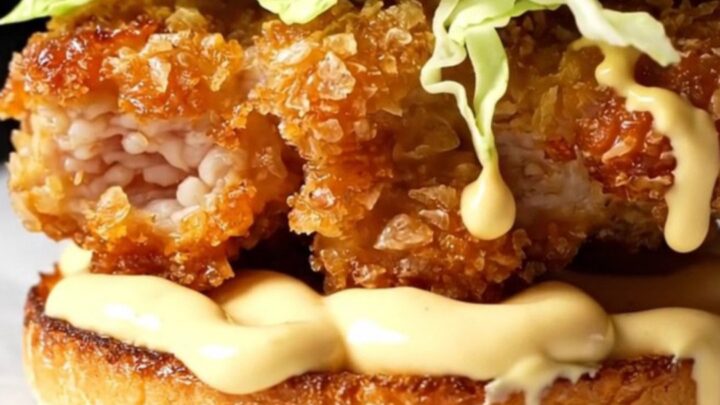
- Assemble the SandwichesSpread a generous amount of the creamy sauce on the cut side of each bottom bun. Place a crispy chicken patty on top, then pile on the shredded iceberg lettuce. Spread more sauce on the cut side of the top bun and place it over the lettuce. Press gently to set the sandwich together.Look for The sandwich should look tall and inviting, with lettuce peeking out.Tip Sauce both buns for extra flavor in every bite.
- Serve ImmediatelyCut each sandwich in half if desired, and serve right away while the chicken is still hot and the crust is at its crunchiest. The lettuce should stay crisp and the sauce cool against the warm patty. Enjoy the sandwich as a main dish with your favorite sides.Look for The crust crackles when pressed.Safe temperature 165°F (74°C) internal temperature (poultry)Tip Serve immediately—the crunch fades as it sits.
The toasted buns should be golden and slightly crisp. The sauce should be spread generously on both cut sides. The lettuce should be cold and crunchy. When the sandwich is assembled, it should look tall and inviting, with the lettuce peeking out. Pressing gently should produce a satisfying crackle from the crust. Serve immediately.
Common mistakes
One common mistake is overworking the ground chicken mixture, which can make the patties dense and tough. Mix just until the seasonings are incorporated. Another is skipping the freezing step; without it, the batter may slide off and the patties can fall apart in the oil.
Also, do not overcrowd the pan—frying too many patties at once lowers the oil temperature and leads to soggy crusts. Finally, avoid saucing the buns too early; the moisture can soften the bread. Assemble the sandwiches right before serving to keep everything crisp.
How to tell it’s done
The chicken patties are done when they are golden brown and crunchy on the outside, and the internal temperature reaches 160°F (71°C) on an instant-read thermometer. This ensures the ground chicken is fully cooked and safe to eat. The crust should crackle when pressed, and the patty should feel firm but juicy.
If the oil temperature drops too low, the crust will absorb oil and become greasy; maintain 360°F (182°C) throughout frying. Let the patties rest for a minute on the wire rack before assembling, but serve them hot for the best crunch.
- Ground meat: 160°F (71°C) in the thickest part
- Poultry: 165°F (74°C) in the thickest part
Up next · Part 3 of 3
4 variations · storage & make-ahead · 5 answers · printable card
Tips, FAQ & printable recipe (Part 3)← Back to the ingredients (Part 1)